Technology and Science21 August, 20262 min read
U.S. Orders Steep Colorado River Water Cuts for California, Nevada, and Arizona
Two-year mandatory Colorado River cuts target California, Nevada, and Arizona. Total reductions amount to about 1.25 million acre-feet annually.

Federal cuts begin 2027
The U.S. Department of the Interior ordered steep Colorado River water cuts for California, Nevada and Arizona, reducing deliveries by 1.25 million acre-feet of water each year for the next two years beginning in 2027.
The plan sets state-by-state reductions, with Arizona facing a reduction of 760,000 acre-feet, California facing 440,000 acre-feet, and Nevada losing 50,000 acre-feet.

The Interior Department also encouraged the three states to "voluntarily conserve and store at least 700,000 acre-feet of water over the two-year period" to protect the system.
Interior Secretary Doug Burgum said "Forty million people, millions of acres of farmland and ranchland" depend on the Colorado River, while the operating guidelines aim to keep Lake Powell at or above 3,510 feet.
The Interior Department said it did not mandate reductions to Upper Basin states including Colorado, Utah, Wyoming and New Mexico, while asking them to agree to operate Flaming Gorge, Navajo and Aspinall reservoirs to send water down and protect Glen Canyon Dam.
Voices frame it as bridge
Interior's Assistant Secretary of Water and Science Andrea Travnicek said, "We've been in this 26-year prolonged drought period," and added, "So continuing to work together as a whole within the basin is going to be extremely important." Arizona Department of Water Resources Director Tom Buschatzke said the reductions "will provide substantial stability" for 2027 and 2028 while negotiations continue on a longer-term framework. California's chief Colorado River negotiator JB Hamby described the agreement as "some badly needed near-term certainty at a moment of extraordinary risk," while stressing it is "a bridge, not a permanent solution."
The plan also comes as federal officials said the current rules governing the river expire in October and the seven basin states have yet to reach a long-term agreement on sharing its water. CNN reported the new two-year operating plan covers the first of the two-year periods through 2028, with California at 440,000 acre-feet, Nevada at 50,000 acre-feet, and Arizona at 760,000 acre-feet.
Reservoir risk and next steps
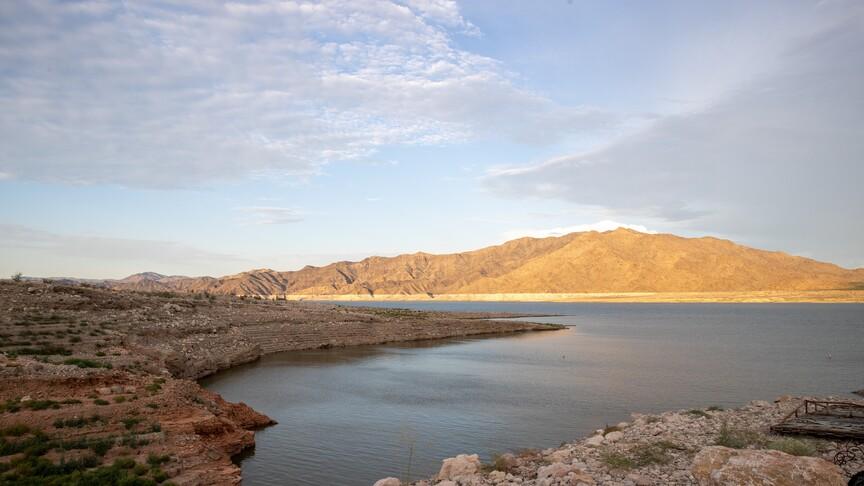
The cuts are tied to record-low reservoir conditions, with ABC News saying DOI will try to keep Lake Powell at or above 3,510 feet, 20 feet above the point at which Glen Canyon Dam could no longer generate hydropower. CNN said Lake Mead and Lake Powell have both fallen to record lows, and it warned the plan is intended to help stave off an escalating crisis in the Colorado River system. In Nevada, Kyle Roerink, senior adviser at the Great Basin Water Network, said efforts to build a new airport and shopping malls and some public land sales have stalled, reflecting the severe hydrological situation described in the federal documents.
ABC News said the DOI could order additional cuts over the next 10 years, depending on hydrology, even as it leaves room for consensus agreements among basin stakeholders. The stakes extend to water and power supplies, and Burgum said "industries that power the American West" and "some of our nation's fastest growing metropolitan areas" depend on the river.