Technology and Science26 March, 20262 min read
Apple overhauls App Store Connect with 100 new metrics for developers.
This article is an automated aggregation of coverage from news outlets. Our editorials offer in-depth analysis curated by the NewsCord team.
App Store Connect Analytics adds more than 100 new metrics, including monetization and subscription data. New cohort capabilities and expanded reporting/benchmarks accompany the metric expansion.
Major Analytics Overhaul
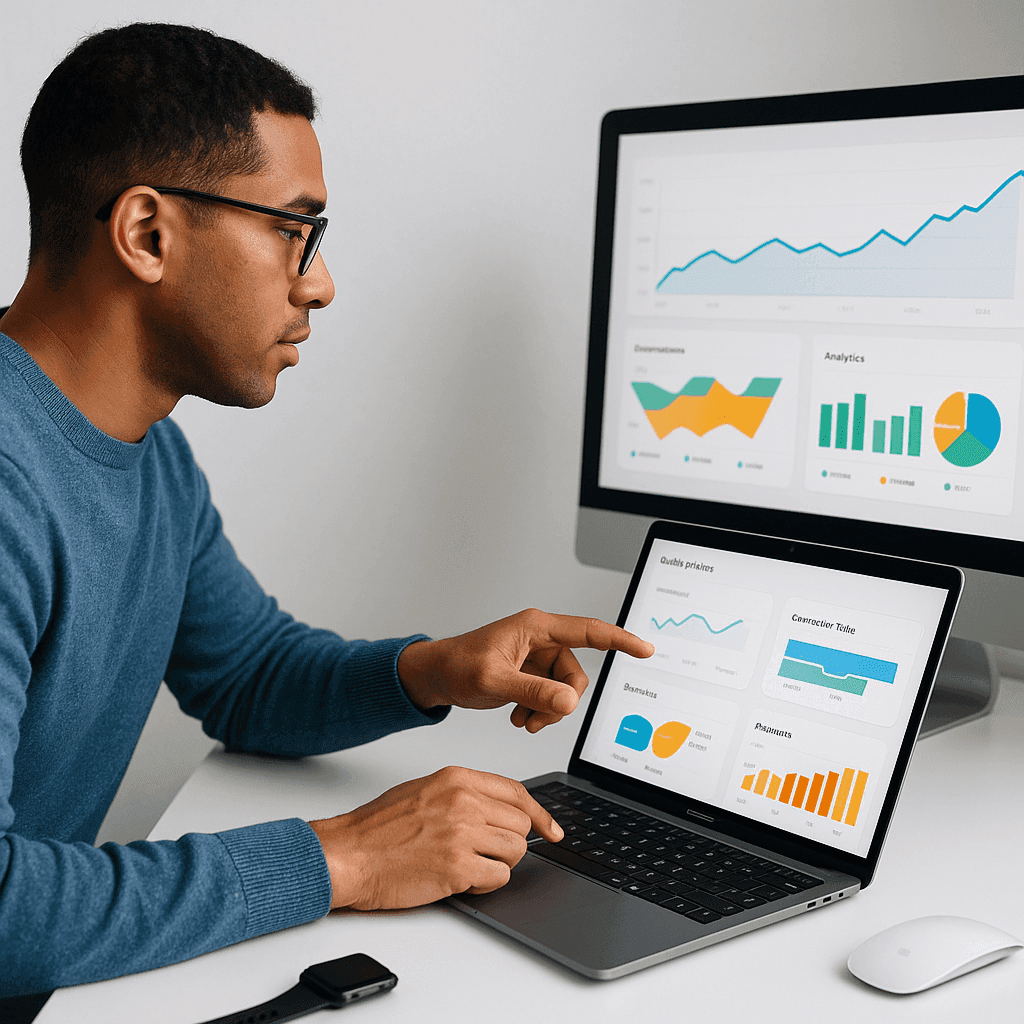
Apple has announced a comprehensive overhaul of App Store Connect, rolling out more than 100 new analytics metrics. This represents the biggest update to the platform since its launch, providing unprecedented visibility. The enhancement covers monetization, subscription conversion, user retention, and engagement metrics.
“Apple is giving developers a much deeper lens on their businesses, rolling out a major overhaul of App Store Connect that adds more than 100 new first-party metrics, expanded reporting, peer benchmarks, and fresh tools to slice performance data.”
The update touches nearly every part of the Analytics experience through the App Store Connect app. It features a refreshed interface and deep new data capabilities previously requiring third-party tools.

Apple aims to create a more self-sufficient platform for developers. Developers can now understand how downloads translate into sustainable revenue.
Monetization Enhancements
Monetization and subscription analytics represent particularly significant improvements for developers. These updates provide granular insights into in-app purchase performance and subscription conversion rates. Developers can now see exactly where users abandon purchase flows and which subscription tiers perform best.
This native visibility into revenue data is described as a substantial upgrade. The update centers on richer monetization and subscription analytics.
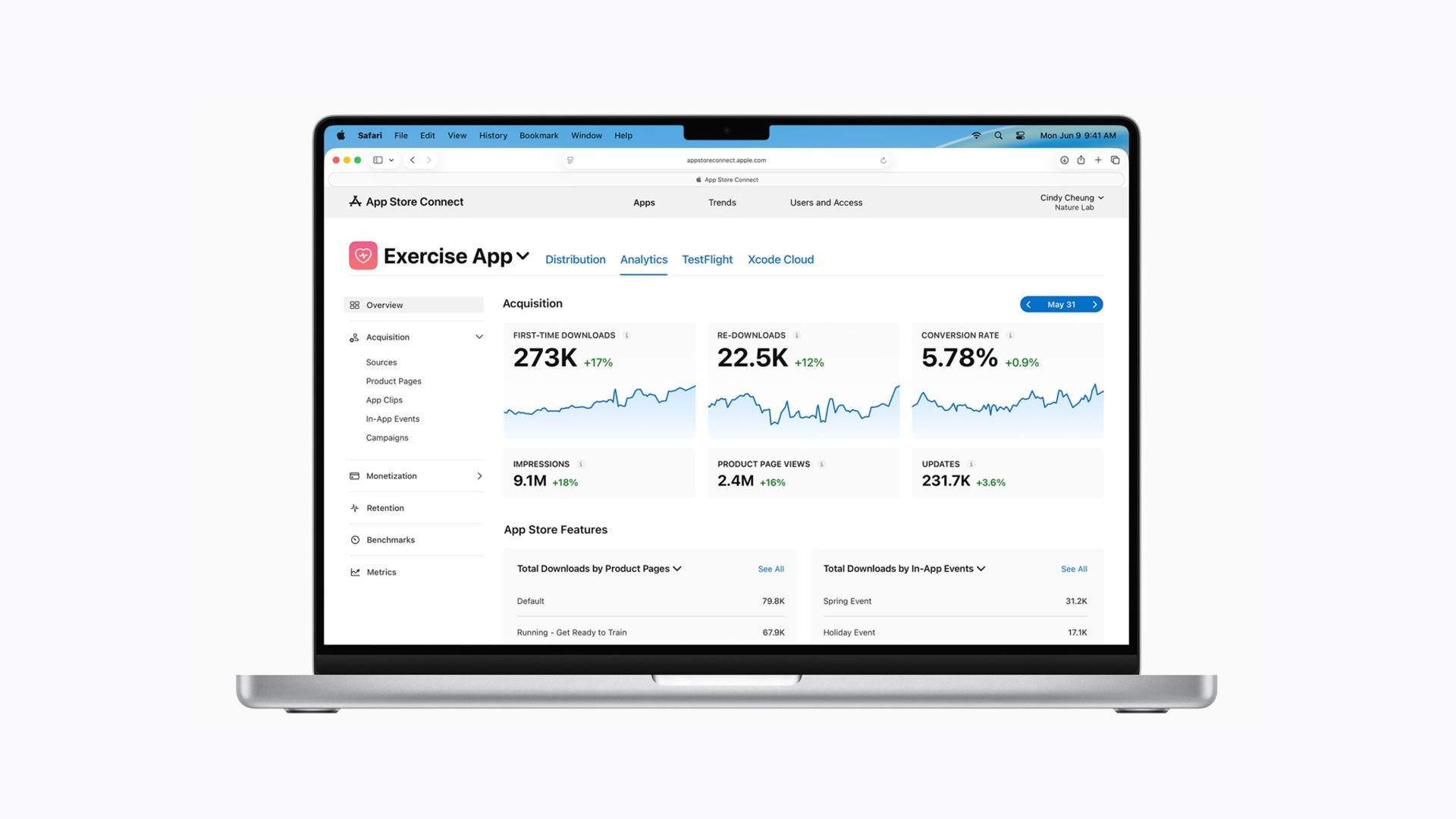
Developers can export subscription reports via an API for offline analysis. These capabilities are particularly valuable for subscription-based business models.
Cohort Analysis Features
Advanced cohort analysis capabilities represent another major enhancement in the App Store Connect update. Developers can analyze user behavior based on download date, download source, and offer start date. This helps measure how particular groups of users perform over time.
“App Store Connect now allows cohorting by factors such as download date, source, and offer start date, letting teams analyze how specific promotions, geographies, or product changes influenced trial starts, conversions, renewals, and reactivations over time. Apple says developers can apply up to seven filters simultaneously, making it possible to zoom in on, for example, users acquired from a particular campaign during a regional rollout who accepted an introductory offer and then lapsed after a price change.”
Practical applications include monitoring purchase timing across different regions. Apple emphasizes that all cohort data is aggregated to protect user privacy.
The platform incorporates differential privacy techniques to shield individual developer performance. Developers can apply up to seven filters simultaneously for detailed analysis.
Peer Benchmarks
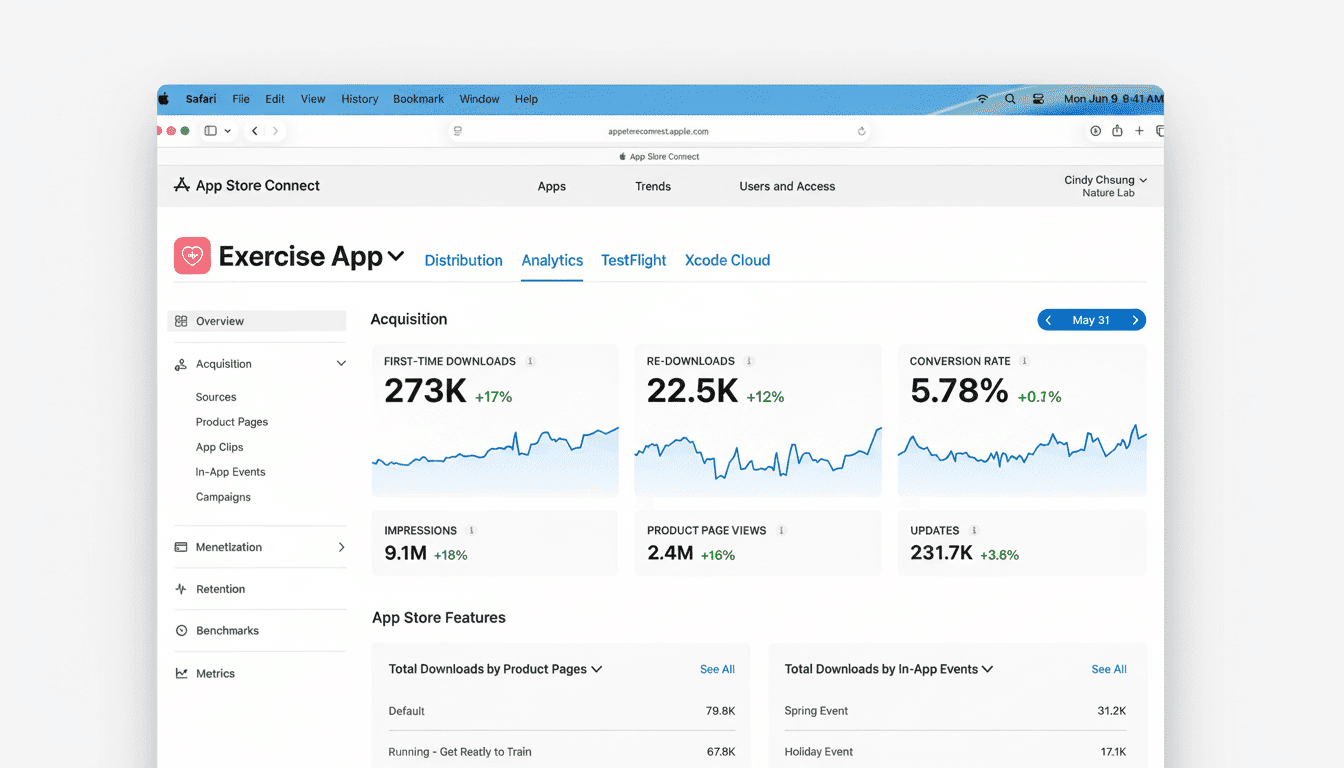
Apple has introduced peer group benchmarks to help developers calibrate performance. These benchmarks allow comparison of download-to-paid conversion rates and proceeds per download. Developers can determine if metric drops are app-specific or market-wide issues.
This feature is particularly valuable for subscription apps with similar dynamics. Unlike third-party platforms, Apple's benchmarks use the App Store's own transaction records.
The benchmarks incorporate differential privacy techniques to protect individual performance. This provides actionable insights for strategic decision-making.
Developer Reactions
The App Store Connect update has elicited mixed reactions from the developer community. Many developers expressed excitement about the comprehensive analytics upgrade. Notable developer Steve Troughton-Smith raised serious criticisms about the redesign.
“While many developers seemed enthusiastic about the changes, some complained. Some noticed push-notifications-per-sale are still not a feature, for example. Others said the revamped tool is hard to use. And well-known developer Steve Troughton-Smith noted the redesign feels like it's optimized for big developers, 'completely screwing over developers whose life depends on the 24 hours or last 30 days reports across all their apps. If the 'Trends' module is going away in 2027, like it implies, this is a disaster,' he wrote in a post on Mastodon. 'Every app's sales data would now be buried inside the individual app's analytics page, rather than somewhere you can see all apps,' he added.”
He suggested it's optimized for big developers while negatively impacting smaller developers. Troughton-Smith warned that losing consolidated reporting could be 'a disaster'.

Other developers noted missing features like push-notifications-per-sale. Some simply complained that the revamped tool is difficult to use.
Strategic AI Timing
The timing of Apple's App Store Connect overhaul appears strategically aligned with broader technology shifts. This includes the rise of AI-driven app interactions and workflows. Industry reporting suggests Apple is preparing a more capable Siri for developer conferences.
AI agents acting inside apps are changing the definition of 'engagement'. Developers need first-party telemetry to understand AI-driven automation impacts.
The new App Store Connect suite lays groundwork for this AI-driven future. This move positions Apple to keep its app ecosystem competitive as AI evolves.