Technology and Science25 March, 20264 min read
BRINC Unveils Guardian, Starlink-Connected First-Responder Drone With Narcan and Vehicle-Pursuit Capability
This article is an automated aggregation of coverage from news outlets. Our editorials offer in-depth analysis curated by the NewsCord team.
Guardian features Starlink connectivity on every unit. Top speed reaches 60 mph.
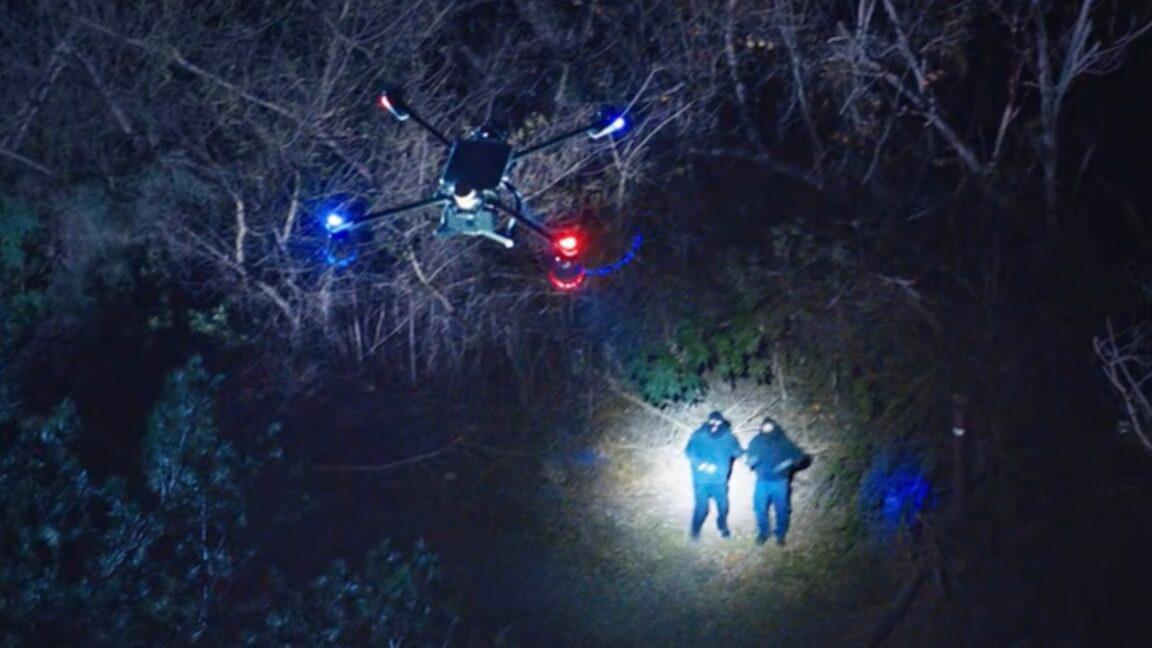
Technical Specifications
BRINC has unveiled the Guardian drone, marking a significant advancement in public safety technology with unprecedented capabilities designed to replace traditional police helicopters and enhance emergency response. The Guardian represents the first commercially available drone with Starlink connectivity integrated directly into its airframe, giving it worldwide operational capability. With a top speed of over 60 miles per hour and flight time exceeding 62 minutes, the drone can respond to calls up to eight miles away, dramatically outperforming current systems limited to three-mile ranges.
“BRINC announced Tuesday a significant upgrade for its law enforcement drones. BRINC's newest model, Guardian, will have Starlink connectivity on every unit—a first for commercially available drones. This new model, which will enter production later this year, has a flight time of over an hour and can reach a top speed of over 60 miles per hour. BRINC calls it the 'first drone that can pursue vehicles.'”
Guardian's technical specifications include IP55 weather resistance, dual 4K cameras with 640x total zoom, and groundbreaking dual HD thermal zoom cameras that provide clear visibility in conditions where other drones cannot operate. The drone is engineered to launch within seconds of a 911 call and maintain continuous operations through its automated charging system.
Starlink Connectivity
The Guardian's Starlink integration represents a revolutionary breakthrough in drone connectivity, setting it apart from all previous commercial quadcopters. According to BRINC founder and CEO Blake Resnick, Starlink has never been built into a commercially produced quadcopter before, which gives the Guardian airframe unlimited range anywhere in the world. This satellite connectivity ensures reliable command-and-control and HD video transmission even when cellular networks are congested or completely unavailable, particularly crucial for disaster response and rural coverage scenarios.
The drone's integrated Starlink panel enables it to maintain operations in environments where traditional communication infrastructure fails, addressing a major limitation that has constrained previous drone-as-first-responder programs. This connectivity breakthrough positions Guardian as a truly global platform capable of supporting emergency response operations virtually anywhere on Earth, including remote and disaster-stricken areas where traditional communications infrastructure has been compromised.
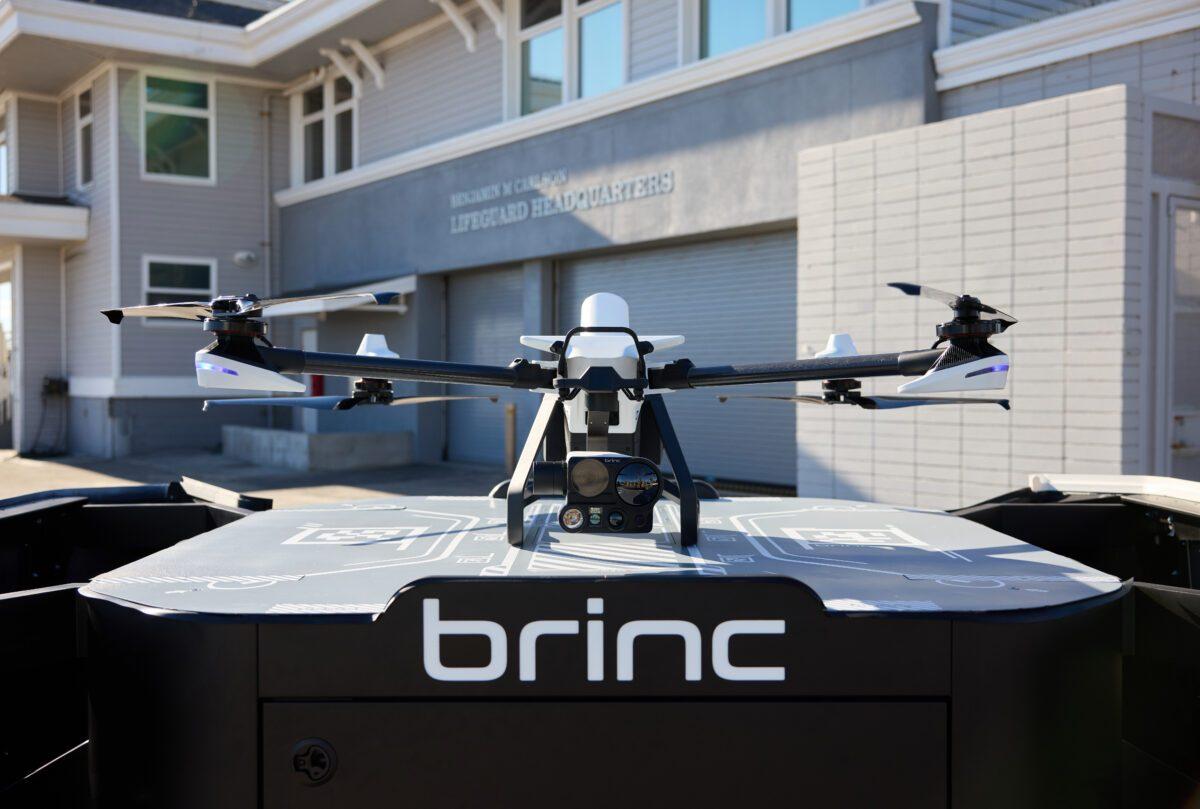
Emergency Capabilities
Beyond its advanced imaging and connectivity, the Guardian drone offers life-saving emergency response capabilities through its innovative payload delivery system. The drone's charging 'nest' can automatically deploy critical medical supplies including defibrillators, flotation devices, epipens, and the overdose-reversal drug Narcan, all without human intervention. This capability allows remote pilots to deliver potentially life-saving aid ahead of first responders, potentially reducing response times and improving survival rates in emergency situations.
“Additionally, Guardian can carry numerous payloads from its charging 'nest,' including a floatation device, a defibrillator, epipens, the overdose-reversal drug Narcan, and more. The nest can also robotically swap batteries in about a minute, the company claims.”
The Guardian's operational versatility extends to vehicle pursuit capabilities, with BRINC marketing it as the 'first drone that can pursue vehicles' due to its 60+ mph speed and extended flight time. The drone is also equipped with a high-candela spotlight and a loudspeaker that produces three times the volume of a standard police siren, enabling clear communication and coordination in noisy emergency scenes. These features represent a significant evolution in drone technology, transforming the devices from passive observation tools to active participants in emergency response and public safety operations.
Market Strategy
BRINC views the Guardian drone as addressing a massive market opportunity in the public safety sector, with estimates suggesting potential revenue of $6 billion to $8 billion across the United States alone. Blake Resnick has projected that approximately half of America's 20,000 police departments, 30,000 fire departments, and 80,000 police and fire stations will eventually adopt 911 response drones in recharging nests. The company is positioning itself to capitalize on growing demand for domestically sourced drone platforms that meet NDAA-compliance standards, particularly as federal and state restrictions continue to phase out Chinese-made drones from public procurement.
BRINC, valued at nearly $500 million after its latest funding round with backing from prominent figures including Sam Altman, is working to establish itself as the 'leading drone manufacturer for security agencies in the West.' The Guardian launch coincides with broader industry trends as drone innovation shifts from early development phases to operational deployment at scale, with success increasingly dependent on reliability, availability, and integration with existing public safety infrastructure.

Public Safety Integration
The Guardian drone's integration with public safety workflows and command centers represents a fundamental shift in how emergency response operations are conducted. Through BRINC's strategic partnership with Motorola Solutions, Guardian drones can connect directly to public safety command centers via CommandCentral Aware, allowing dispatchers to incorporate real-time drone data into emergency operations. This integration enables agencies to get 'eyes on the scene faster' and deliver lifesaving support before first responders arrive, while also providing secure capture and storage of drone footage within digital evidence management systems.
“BRINC's partnership with Motorola Solutions connects its drones directly to public safety command centers. Guardian can integrate with CommandCentral Aware, allowing dispatchers to incorporate drone data into real-time operations. 'Motorola Solutions is excited to enable the next generation of DFR programs through our strategic alliance with BRINC by connecting their drones to public safety agencies' central nervous systems—their command centers. Agencies can get eyes on the scene faster, deliver lifesaving support before first responders arrive, and securely capture and store drone footage in our integrated digital evidence management software.'”
The drone's capabilities extend beyond traditional police applications to include de-escalation scenarios where officers can assess situations remotely before physical confrontation, potentially reducing risks to both officers and community members. According to BRINC, more than 900 public safety agencies and over 20% of SWAT teams in the United States already use its systems, indicating growing adoption of drone technology in emergency response. However, experts note that while automated launch capabilities enhance efficiency, best-practice policies endorsed by groups like the International Association of Chiefs of Police and the ACLU still call for strict use-case definitions, audit logs, short retention windows for non-evidentiary footage, and prohibitions on face recognition unless expressly authorized by law, ensuring that technological advancement proceeds with appropriate safeguards.
