Published

Other

Chris Murphy Says Trump Has Lost Iran War, Supports Bad Deal to Reopen Strait of Hormuz

Murphy backs a bad deal

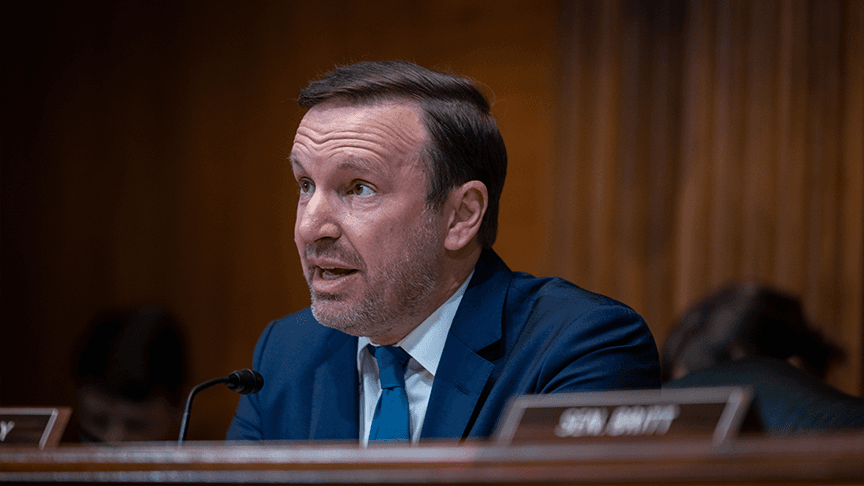
Democratic Sen. Chris Murphy told NBC News that President Donald Trump has "lost this war" with Iran, arguing that continued fighting is weakening Washington while strengthening Tehran.

Image via Anadolu Ajansı

At a glance

  1. Sen. Murphy says Trump has lost the Iran war, with US weaker and Iran stronger.
  2. He would support a bad deal to end the war and reopen the Strait.
  3. Trump policy emphasizes economic pressure, avoiding new strikes while Iran demands terms to reopen Hormuz.

Murphy said he would support even a "bad deal" to end the war and reopen the Strait of Hormuz, warning that the cost of restoring traffic through the strategic waterway is increasing as negotiations remain stalled.

Iranian Foreign Minister Abbas Araghchi said Sunday that there were no direct talks between Tehran and Washington, and insisted that the Strait of Hormuz would not reopen until the US meets Iran's demands, including ending its naval blockade.

Murphy tied his position to rising prices, saying, "The war needs to end because every day that the war continues, America gets weaker, Iran gets stronger, and people here in the United States get screwed as prices go up and up and up."

Trump signals economic pressure

CNN reported that President Donald Trump signaled an emphasis on increasing economic pressure on Iran, saying that Washington is “low-keying” negotiations with the country.

In the same CNN account, Tehran said it was not engaging in talks with the US, while CNN political and national security analyst David Sanger said Trump is looking for any way to open the Strait of Hormuz, “declare that he’s won his victory and leave.”

CNN also said the Pentagon has asked the US defense industry to ramp up production as stockpiles run low during the Iran war, and that the issue has frustrated Trump as he seeks to maintain leverage over Tehran.

Retired US Air Force Colonel Cedric Leighton said a “considerable number of people in the administration” echo the view that the war with Iran needs to end, and that munitions stockpiles necessary to defend US troops have a “considerable impact” on Washington’s ability to conduct military operations.
Rezaei elevated as conditions harden

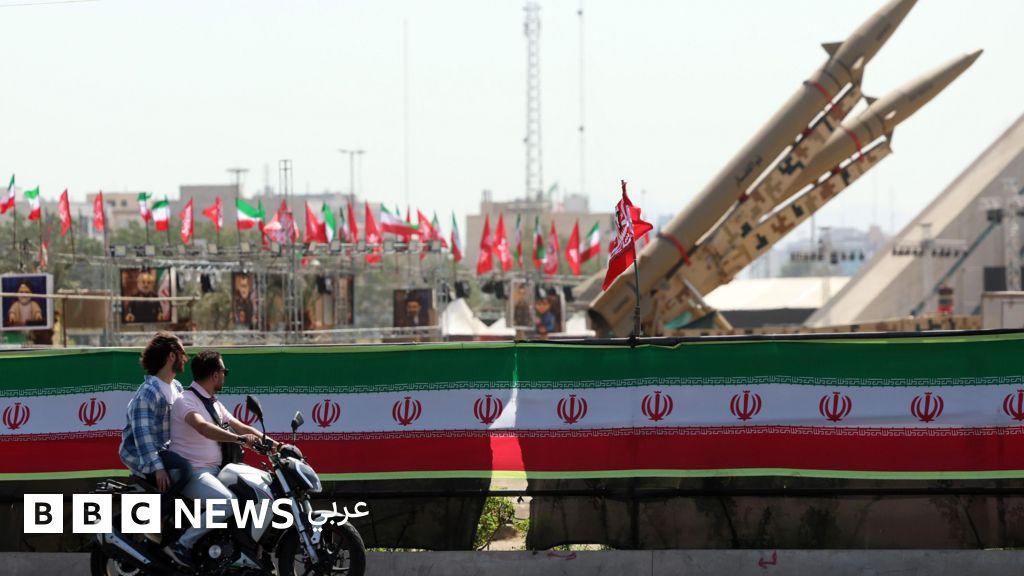
CNN said Iran’s supreme leader replaced his national security chief, appointing Moshen Rezaei, a veteran Revolutionary Guards commander, as secretary of the Supreme National Security Council.

CNN reported that Rezaei has voiced skepticism about talks with the United States, and said he recently described Trump as suffering from “a lack of wisdom and prudence.”

In a separate report, LaSexta said Tehran will not open the Strait of Hormuz until the United States finishes its attacks on Iran, Lebanon, Palestine, Yemen, and Iraq, and that the Iranian Supreme National Security Council reiterated it will only reopen the strait when it sees the completion of U.S. and Israeli military operations and the lifting of sanctions and payment of war-damage compensations.

LaSexta also said the United States Army asserted it has diverted a total of 55 commercial ships, disabled two vessels and boarded two others, within the framework of the naval blockade, and that CENTCOM has more than 20 American warships deployed in the Middle East to support missions including strict enforcement of the blockade.

Explore the original reporting

Compare all 17 sources

How each outlet frames it

Every outlet we compared, the headline it ran, and a link to the original article.

West Asian

Anadolu Ajansı
Anadolu Ajansı

US senator says Trump has ‘lost’ Iran war

10 August, 2026

CNN Arabic
CNN Arabic

Hamad bin Jassim comments on Iran’s “stalling” in negotiations with America

10 August, 2026

Mehr News Agency
Mehr News Agency

US senator Murphy says Trump has ‘lost’ war on Iran

10 August, 2026

Roya News
Roya News

US senator Murphy says Trump has ‘lost’ war on Iran

09 August, 2026

Al-Jazira Net
Al-Jazira Net

Two divergent speeches in Iran… whom should the world listen to?

10 August, 2026

Al-Sharq Al-Akhbar
Al-Sharq Al-Akhbar

Trump is moving to change Iran war strategy, with Hormuz negotiations stalling

10 August, 2026

Western Mainstream

BBC
BBC

Trump says Washington is handling Iran with “calm,” as Tehran lays out شروط for reopening the Hormuz Strait

09 August, 2026

CNN
CNN

Live updates: Trump emphasizes economic pressure on Iran over negotiations

10 August, 2026

CNN en Español
CNN en Español

Live: U.S. war with Iran – attacks, updates on the Strait of Hormuz, and more, including a potential deal with Oman

09 August, 2026

LaSexta
LaSexta

Iran War Live | US estimates 55 ships diverted as part of its blockade against Iran

10 August, 2026

NBC News
NBC News

Chris Murphy says he’d ‘support a bad deal’ with Iran because ‘war needs to end’: Full interview

09 August, 2026

Other

Diario Público
Diario Público

Trump’s war in Iran upends U.S. armament plans and leaves it short on its crucial missiles

08 August, 2026

El Español
El Español

Iran war, live updates | Israel continues bombing southern Lebanon despite progress in the negotiations

09 August, 2026

Western Alternative

HuffPost
HuffPost

‘America Is Weaker’: Democrat Warns Trump Has Already Lost The War On Iran

10 August, 2026

Washington Examiner
Washington Examiner

Sen. Chris Murphy says he’d ‘support a bad deal’ to end Iran war: ‘Trump has lost’

09 August, 2026

Washington Times
Washington Times

Trump needs to find a way out of Iran war, even if it is a ‘bad deal,’ Dem Sen. Murphy says

09 August, 2026

Asian

NDTV
NDTV

"We're Low-Keying It": Trump On US-Iran Negotiations

09 August, 2026

Read stored source text: Anadolu Ajansı

Chris Murphy says continued fighting is weakening US, strengthening Iran and driving up prices Gizem Nisa Demir 10 August 2026•Update: 10 August 2026 ISTANBUL US Democratic Senator Chris Murphy said Sunday that President Donald Trump has “lost this war” with Iran, arguing that continued fighting is weakening the US while strengthening Tehran. “America is weaker. Iran is stronger,” Murphy told NBC, saying he would support even a “bad deal” to end the war and reopen the Strait of Hormuz. He said the cost of reopening the strategic waterway was rising as negotiations remained stalled. Iranian officials have demanded reparations, the lifting of sanctions and a halt to US military operations, according to The Washington Times. “The war needs to end because every day that the war continues, America gets weaker, Iran gets stronger, and people here in the United States get screwed as prices go up and up and up,” Murphy said. Murphy said he would oppose funding to continue the war but would support replenishing US munitions after the conflict ends.

Read stored source text: BBC

Trump says Washington is handling Iran with “calm,” as Tehran lays out شروط for reopening the Hormuz Strait U.S. President Donald Trump announced on Sunday that the United States is currently moving to continue economic pressure on Iran, instead of launching a new military operation, while Tehran continues to challenge Washington on a number of files, including reopening the Hormuz Strait. In remarks carried by the American Axios site during a brief phone call, Trump said Washington is “dealing with the matter calmly,” explaining that the United States is engaging in limited negotiations with Iran while monitoring its economic situation. Trump added that Iran is facing “enormous inflation” and a severe financial crisis, noting that it is in a very bad economic position and does not have enough money to pay its forces’ salaries. These remarks come a week after signs he was weighing issuing an order to return to wide-scale military operations against Iran, before moving to de-escalate for the time being. His latest talk did not include any new threat of military action. Regarding the Hormuz Strait, Trump did not publicly express anger at the delay in reaching a deal between Iran and Oman to reopen the strait for navigation. Tehran had on Saturday presented a new set of demands to allow ships to resume traffic through the strategic waterway. Trump pointed out that the U.S. naval blockade has increased pressure on the Iranian economy, while saying that a drop in oil prices to just above $75 per barrel has alleviated the economic impact of the war on American consumers. Trump concluded by saying that negotiations and mutual pressure with Iran resemble a “chess game,” adding: “Things will end well. They always end well.” On Sunday, the Iranian Revolutionary Guard Corps announced that it would not reopen the Hormuz Strait, vital to the global economy, unless the United States accepts Tehran’s terms, including paying compensation for war damages. Iran has maintained de facto control over the Hormuz Strait since the outbreak of the war, with the United States and Israel having launched the first strikes on it on February 28, and ships are currently required to coordinate with Tehran and pass along a corridor along its coast, while Tehran plans to impose a “service fee” on ships wishing to use it. The repeated attacks in this sea lane led to the collapse of the ceasefire agreement signed in April, while mediators urged both sides to return to honoring the terms of the later memorandum of understanding signed in June, which outlined a path for peace talks. The Iranian presidency announced on Sunday that Mohsen Rezaei, who previously led the IRGC, was named secretary of the National Security Council, replacing Mohammad Baqir Zadeh-Kodar. Rezaei had previously stated that the Hormuz Strait is more important than the nuclear program. Mohammad Baqir Zadeh-Kodar had proposed on Saturday in a message three preconditions for Washington before opening Hormuz, including that it end “its war and aggression against Iran and Iran’s allies in Lebanon, the Palestinian territories, Yemen, and Iraq” forever. Zadeh-Kodar conditioned Washington to lift the “naval blockade and withdraw its military, naval and aerial forces from the vicinity of Iran,” and to lift the unjust and illegal sanctions imposed on the Iranian people, according to him. He demanded that Washington “unfreeze, unconditionally, the Iranian people’s frozen and stolen funds” and “pay in full, without deduction, compensation for damages caused by the two war incursions imposed on Iran.” In this context, the Iranian Revolutionary Guard Corps stressed that its strategy is to keep the Hormuz Strait closed “until the enemy accepts all of our conditions… the strait has become, for us, a real battlefield, not merely a waterway.” Meanwhile, Iranian Foreign Minister Hossein Amir-Abdollahian denied that there were negotiations with the United States, saying that the two sides were merely “exchange messages” through intermediaries, despite earlier stating that reopening Hormuz depends on certain conditions. Prime Minister Benjamin Netanyahu, for his part, emphasized preventing Iran from obtaining a nuclear weapon, telling a cabinet meeting that “I want to reiterate that whether an agreement is reached or not, as long as I am prime minister, Iran will not have nuclear weapons.”

Read stored source text: CNN

• State of talks: President Donald Trump signaled an emphasis on increasing economic pressure on Iran, saying that Washington is “low-keying” negotiations with the country. Tehran said it was not engaging in talks with the US. Oil futures rose 1.2% on the news. • Tehran’s leadership: Iran’s supreme leader has replaced his national security chief, appointing Moshen Rezaei, a regime stalwart and veteran Revolutionary Guards commander who has previously voiced skepticism about talks with the United States. Iran is in talks with Oman to approve safe passage through the Strait of Hormuz, but Tehran has issued a list of conditions for reopening the waterway. • US weapons supply: The Pentagon has asked the US defense industry to ramp up production as stockpiles run low during the Iran war. The issue has frustrated Trump, sources previously told CNN, as he seeks to maintain leverage over Tehran. Iran is well aware of Washington’s diminishing options and patience as the conflict drags on, and Tehran’s leaders are increasingly sensing that President Donald Trump wants a way out, analysts say. CNN political and national security analyst David Sanger said that as the war enters its sixth month, Trump is looking for any way to open the Strait of Hormuz, “declare that he’s won his victory and leave.” “The war does not poll very well, even among Republicans,” he added. Over the last few weeks, Trump’s top general has privately made clear to other Trump advisers that the US needs to find an off-ramp from the war with Iran. Retired US Air Force Colonel Cedric Leighton said a “considerable number of people in the administration” echo that view, and think the war with Iran needs to end. From a military standpoint, munitions stockpiles necessary to defend US troops, including dwindling stocks of missiles for Patriot and Terminal High-Altitude Area Defense (THAAD) systems, have a “considerable impact” on Washington’s ability to conduct military operations, he added. Iran’s new national security chief is a military veteran and prominent regime figure who has voiced skepticism of negotiations with the United States. Mohsen Rezaei, 71, has been named secretary of the Supreme National Security Council, replacing Mohammad Bagher Zolghadr, who had only been appointed in March. Rezaei was already part of Supreme Leader Ayatollah Mojtaba Khamenei’s small circle of trusted aides, serving as his military advisor, but the appointment elevates him into one of the regime’s most influential roles. Who is he? Rezaei appointed commander-in-chief of the Islamic Revolutionary Guards Corp (IRGC) during the Iran-Iraq war in the 1980s, and has spent more than five decades at the heart of Iran’s political, security and military establishment. Nasr said Rezaei “has far more authority” with the IRGC than his predecessor Zolghadr. Revolutionary figure: Rezaei had carved out a path fighting with Islamist guerrilla groups during the 1979 Islamic Revolution, and helped draft the IRGC’s founding charter. He was the force’s longest serving commander, and helped shape it into one of the country’s most powerful institutions. In his book “Iran’s Grand Strategy,” Nasr said Rezaei had “argued for perpetual conflict in the region and with the United States” after the Iran-Iraq war ended. Hardline pragmatist: Deeply rooted in Iran’s security establishment, Rezaei later joined the Expediency Council, which advises the supreme leader, and served as a vice president under former President Ebrahim Raisi. Rezaei also ran for president four times but never won. Trump “defeated”: Rezaei recently described Trump as suffering from “a lack of wisdom and prudence.” In an interview with the state broadcaster IRIB, he said Iran’s counter attacks during the most recent flare up in fighting had forced the relocation of American forces in the region. On Strait of Hormuz: If the US blockade of Iranian ports continues, “American vessels and forces will face serious risks and casualties,” Rezaei said in a post on X last week. Rezaei says that Iran and Oman have sovereignty of the key waterway. On negotiations: Rezaei declared negotiations with the US “over” last month, and also described talks as “merely a bridge to cross, not a lasting commitment.” Speaking to CNN’s Fred Pleitgen in June, Rezaei said that should talks fail, Iran is prepared for a potential US invasion of its territory, “then the world will understand Iran’s true capabilities.” Somehow President Donald Trump has maneuvered himself into a more vulnerable spot regarding Iran than any president since Jimmy Carter. As in the 1979-80 hostage crisis, the Islamic Republic is exerting political pressure that it can dial up on the US leader ahead of a national election. A week ago, Trump’s team predicted a deal to reopen the Strait of Hormuz was imminent. But Tehran, now dictating terms to the US global superpower, has imposed tough new conditions. At the same time, Trump faces a separate but related problem at home. The war’s impact on energy prices is further souring voter perceptions of the economy. In 1980, Iran exerted leverage over a US election after holding 52 Americans in Tehran in a standoff that eventually lasted 444 days. Forty-six years later, it’s not people being held hostage — but the Strait of Hormuz oil exporting route. This means the regime has another election-season pressure point as US voters — as they did with Carter — turn on a president over the economy. Read the full story here. President Donald Trump said the United States is “low-keying” talks with Iran in an interview Sunday, in which he highlighted Washington’s economic pressure campaign as a key tool while strikes remain on pause. “We are only semi-negotiating with them. We are just watching Iran with its huge inflation and the fact they have no money,” Trump told Axios. Iran has consistently said no direct talks can take place with the US until Washington honors the agreements from an interim deal signed in June. It has, however, been negotiating with Oman on a plan for the Strait of Hormuz. Here’s the latest: - US weapons supply: The Defense Department has urged US military contractors to ramp up weapons production amid concerns that stockpiles are running low during the war with Iran. The issue has frustrated President Donald Trump, sources previously told CNN, as he seeks to maintain leverage over Tehran. - Tehran’s leadership: Iran’s supreme leader has appointed regime stalwart Moshen Rezaei as the new national security chief. Rezaei, a former IRGC commander, has been serving as Ayatollah Mojtaba Khamenei’s military advisor and has previously expressed skepticism about negotiations with the US. - Strait of Hormuz: Iran is demanding the US lift its naval blockade, remove military forces from the region, compensate Iran for war damages, release frozen Iranian assets, and “correct its behavior” in order for the critical waterway to reopen. That Iran is issuing such a list underlines the perception that Tehran believes it has the upper hand. - Oil prices up: Oil prices rose on Monday as uncertainty continued over the reopening of the Strait of Hormuz as Iran said a deal with Oman defining new shipping lanes was in its final stages, Reuters reported. Brent crude futures rose above $84 on Sunday, after trading below $80 last week. - Widening conflict: Meanwhile, the Houthi militant group claimed Sunday strikes targeting Saudi Arabian forces in Yemen and a major oil refinery. Recent Houthi attacks underline the risk of Iranian proxy groups escalating the Middle East conflict. CNN’s Tim Lister, Aida Karimi, Ibrahim Dahman, Catherine Nicholls, Aileen Graef, Christian Sierra, Molly English and Maureen Chowdhury contributed to this report. Oil futures rose 1.2% on Sunday after Tehran said it was not engaging in negotiations with the United States and submitted a list of demands for reopening the Strait of Hormuz. Brent crude, the international benchmark, rose about 1.2% to $84.58 a barrel, and US crude rose about 1.1% to $79.28 a barrel. On Sunday, President Donald Trump said the US is “low-keying” negotiations with Iran. Tehran is demanding the US end its attacks on Iran and its regional allies, end the blockade of Iran’s ports, remove US military forces around Iran, lift US sanctions, unfreeze Iranian assets and compensate for war damages. Oil tankers have been largely unable to pass through the Strait of Hormuz since Iran closed the critical waterway after fighting resumed in July. The renewed tensions essentially undid the ceasefire agreement signed in June, which included reopening the strait, through which about 20% of the world’s oil flows. Tehran is in talks with Oman to approve safe passage through the strait but has warned that does not mean reopening the waterway. Stalled oil flows have been exacerbated by the Iran-backed Houthis effectively blocking the Bab al-Mandeb Strait connecting the Gulf of Aden and the Indian Ocean to the Red Sea. The Houthi rebels also attacked a Saudi oil refinery on the Red Sea coast. US gas prices have remained higher, as they follow the trend set by oil prices. The national average for a gallon of gas was $4.01 on Sunday, down eight cents from a week ago, but 34.6% higher than before the war began. Stock futures, meanwhile, opened flat. Iran’s Supreme Leader Mojtaba Hosseini Khamenei has appointed Mohsen Rezaei as his representative to the country’s Supreme National Security Council, replacing Mohammad Bagher Zolghadr, according to a decree published Sunday. Rezaei is a senior Iranian military adviser and former commander of the Islamic Revolutionary Guard Corps. Citing Rezaei’s “valuable experience,” Khamenei described him as a pioneer of the eight-year “Sacred Defense,” Iran’s term for the 1980-1988 Iran-Iraq War. “I wish you every success in carrying out this important responsibility,” the decree said. Khamenei also thanked Zolghadr for his “tireless efforts.” Over the weekend, state media published a list of demands from Zolghadr that included the lifting of US naval blockade, withdrawal of military forces, and a permanent end to the war. It is unclear whether Rezaei’s appointment affects the status of those demands. President Donald Trump said Sunday that the United States is “low-keying” negotiations with Iran and signaled an emphasis on increasing economic pressure on the country. The president’s comments came amid a new set of demands from the Iranians on reopening the Strait of Hormuz. “It will work out. It always works out. It’s like a chess game,” Trump said. But for its part, Tehran has insisted it won’t negotiate if Washington continues to breach the countries’ initial agreement from June. Foreign Minister Abbas Araghchi said Sunday that Iran and the US are not currently engaged in talks. The foreign minister did acknowledge that Iran continues to exchange messages through intermediaries, and that these intermediaries are trying to find ways to resume negotiations. Images of Iran’s supreme leader out in public will soon be released for the first time since his appointment in March, according to a report from Iran’s official state-run Mizan news agency. There has been wide speculation about the health of the country’s top political and religious authority for months. Images of Supreme Leader Mojtaba Khamenei “among the people and out in streets, as well in meetings with the commanders of armed forces” will be released in the future, Mizan said, citing Islamic Revolutionary Guard Corps official Qasem Qoraishi. Over the weekend, Iranian media shared an undated video of Khamenei, the first since his appointment following the assassination of his father Ali Khamenei at the start of the war. The footage showed Khamenei giving a religious lesson to a group of people and appears to have been taken before the war. The post provided no detail on the timing of the footage. There have been questions over the supreme leader’s health and whether he was injured during US-Israeli airstrikes earlier this year, with sources who spoke to CNN at the time of Mojtaba’s election saying he had suffered a fractured foot, as well as minor lacerations to his face. The are no signs of injury in the undated video released Saturday. The state-run Islamic Republic News Agency also reported Sunday that Khamenei had held a meeting with Iranian President Masoud Pezeshkian to discuss the nation’s “military and economic affairs.” CNN’s Hanna Ziady and Valey Arya contributed reporting.

Read stored source text: CNN Arabic

(CNN) -- Former Qatari prime minister Hamad bin Jassim expressed the Iranian government’s negotiating strategy with the United States and the statements it issues, which he described as “contending,” regarding the nature of the possible agreement. He explained that the aim may be to “confuse the scene” to serve the Iranian negotiator, and to prolong the negotiations, to quote him. Hamad bin Jassim wrote in a post on his official account on the X platform (formerly Twitter) on Sunday evening: “Iranian officials’ statements are characterized by contradictory descriptions regarding the nature of the possible agreement with the United States, and whether the agreement is permanent or temporary. The reason may be differences in views among Iranian officials, although I do not think these differences are large or fundamental.” He added in his post: “Perhaps the purpose of this divergence in statements is to confuse the scene to serve the Iranian negotiator and prolong the negotiations, which the Iranians believe serves their interest. However, the stalling could bring some surprises that may not be in Iran’s or the region’s interest in general. The important issue here is how to manage the negotiating process in a way that prevents the situation from reaching the brink.” The former prime minister continued: “Therefore, I think the Iranians should reconsider this policy and work toward reaching an understanding on the outstanding issues, which are fundamental for our region.” Hamad bin Jassim explained: “And achieving such an understanding could mark the start of a new era of economic relations that would benefit the Iranian economy and positively reflect on the Iranian people’s situation. While I respect the intelligence of Iranian officials and know their negotiating approach based on patience and prolonging negotiations, in the end a final and decisive decision must be made. A successful negotiator should know when to continue negotiating and when to end it, whether by acceptance or rejection.” Iranian Foreign Minister Mohammad Javad Zarif stated on Sunday that Iran and the United States are not currently in talks, and Tehran will not start any discussions if Washington continues to violate the temporary agreement between the two countries reached in June. Meanwhile, U.S. President Donald Trump said on Sunday evening that the United States is engaging in “calm” negotiations with Iran, describing the situation as akin to a “chess game,” noting that the focus is on increasing economic pressure on the country. Trump told Axios in a phone interview: “We’re having calm negotiations,” adding: “We are negotiating with them in a partial way. We are watching Iran closely and the enormous inflation it suffers from, and the fact that it is in a financial squeeze.”

Read stored source text: CNN en Español

Oil futures rose 1.2% on Sunday after Tehran said it would not participate in negotiations with the United States and presented a list of demands to reopen the Strait of Hormuz. Brent crude, the international benchmark, rose about 1.2% to $84.58 per barrel, and U.S. crude rose about 1.1% to $79.28 per barrel. On Sunday, President Donald Trump said the U.S. is “lowering its profile” in talks with Iran. Tehran is demanding that the U.S. end its attacks on Iran and its regional allies, lift the blockade of Iran’s ports, withdraw American military forces from around Iran, lift U.S. sanctions, unfreeze Iranian assets, and compensate for the damages of the war. Tankers have largely been unable to pass through the Strait of Hormuz since Iran closed the key maritime route after fighting resumed in July. The renewed tensions essentially reversed the ceasefire agreement signed in June, which included reopening the strait, through which nearly 20% of the world’s oil flows. Tehran is in talks with Oman to approve safe passage through the strait, but has warned that this does not mean reopening the maritime route. Stalled oil flows have been exacerbated by Iran-backed Houthi rebels who have effectively blocked the Bab al-Mandeb Strait, which connects the Gulf of Aden and the Indian Ocean to the Red Sea. The Houthi rebels also attacked a Saudi oil refinery on the Red Sea coast. Gasoline prices in the U.S. have remained higher as they follow the trend set by oil prices. The national average for a gallon of gasoline was $4.01 on Sunday, eight cents less than a week ago, but 34.6% higher than before the war started by the U.S. and Israel. Stock futures, meanwhile, opened unmoved.

Read stored source text: Diario Público

At this stage of the war, the head of the Joint Chiefs of Staff, General Dan Caine, is probably biting his tongue to avoid saying, “I told you so.” This week, military sources leaked to CNN and Reuters that the United States has already spent about 80% of the missile defense system in the Iran war. Specifically, the ammunition for the THAAD missiles and the Patriot interceptors, according to those same sources. This, beyond the obvious short-term problem it creates, also highlights a second structural problem: production times. THAAD and Patriot are two pillars of the U.S. military’s weaponry architecture. Part of Washington’s superiority rests on these defense systems, which it uses as a strategic lure to forge alliances. For example, of the eight THAAD units the U.S. has, one is located in Guam to deter China and another was, until recently, in South Korea to intimidate North Korea. Shortly after the Iran war began, Washington ordered the South Korean THAAD to be moved to the Middle East to reinforce the defensive systems, which were under high stress from Iranian drones. Meanwhile, Patriots have been key to Ukraine’s defense against Russian missiles. Much of the problem facing the Ukrainian army right now is the reduced stock of Patriots, something the Ukrainian president, Volodymyr Zelenskiy, is dealing with as he tries to obtain a license from Washington to manufacture his own missiles at home. But even if Kiev obtained the license, it would not be able to replenish Patriot reserves overnight. It is the same problem the United States faces, and that was the main reason Caine advised against President Donald Trump going to war with Iran. Firing a Patriot or a THAAD is a matter of seconds; producing one alone costs thousands of dollars and at least a year. Spending them at the pace they are consumed in the Middle East is incompatible with the Pentagon’s premise of maintaining minimum reserves to be able to sustain a second conflict with another major power, such as China now. This imbalance between how quickly the ammunition is consumed and how slowly it is produced is the second problem the White House is currently facing. A divergence that is the consequence of the drift of the United States’ arms industry over the past decades and that could become the Achilles’ heel of the world’s most powerful military. If we base ourselves on recent production history, the prospect of returning ammunition stock to pre-Iran war levels seems very distant. Last year, the Navy bought only 55 Tomahawks. And this year, the Pentagon wants to buy 785, an increase of more than 1,000%, as highlighted by the Cato Institute. Back in the early 2000s, George W. Bush’s Defense Secretary, Robert Gates, warned that weapons that formed the central pillar of U.S. military supremacy took years to build and, consequently, called for investment in a new generation of weapons that would represent the “75% of the solutions” but could be made faster and at lower cost. The gap Gates highlighted in the early 2000s has widened in recent years with the emergence of cheap drones, like Iranian Shaheds. The ayatollahs have not stopped sending Shahed swarms—cheap and quick to produce—against THAAD, which are expensive and slower to replenish. In March, Trump met with the CEOs of the United States’ major defense companies to agree to quadruple arms production. The companies committed to the new targets were BAE Systems, Boeing, Honeywell, L3Harris, Lockheed Martin, Northrop Grumman, and Raytheon. In parallel, Trump has also sounded out car manufacturers and other manufacturing companies to help accelerate arms production. A headline that seems straight out of World War II, but which The Wall Street Journal echoed last April. Even before the war, senior Defense officials had already spoken with executives from various companies, such as General Motors and Ford, according to sources familiar with the matter. Another element that has hovered over the situation in recent years is an explosion in 2021 that blew up the Pentagon’s only national black powder source to smithereens. It was a factory located in Minden, Louisiana, critical for the production of mortar shells, artillery ammunition, and Tomahawk missiles. Black powder, which is the original gunpowder, is an extremely combustible material with no substitute. This type of powder is used in small quantities to ignite more powerful explosives. Although the factory was rebuilt, production supplying the industry was completely halted for more than three years. The incident also underscored the fragility of the network of small suppliers who are key in providing the material needed by the large defense companies. The latest Defense Department analysis in 2025 on the Pentagon’s supplier landscape highlighted the following: “The Defense Industrial Base (DIB) has consolidated, moving from 51 suppliers after the Cold War to only five large contractors who today develop the most critical weapons systems. The DIB is stagnant: it builds the world’s best weapons systems in small quantities while continuing to depend on obsolete parts, outdated manufacturing processes, and stagnant innovation.”

Read stored source text: El Español

The President of the United States, Donald Trump, has acknowledged that there is a shortage of ammunition, though he says there is enough to continue with the offensive. On the other hand, Iran is continuing to finalize an agreement with Oman that excludes Washington from controlling the Strait of Hormuz. - Trump says the United States is acting discreetly in its relationship with Iran After months of U.S. military strikes against Iran, sanctions, and a blockade, President Donald Trump said on Sunday that his administration is watching how economic pressure on Iran is increasing, according to an interview with Axios. "We’re handling it discreetly," Trump said during a brief phone call. "We’re only negotiating with them partially. We’re just watching Iran, with its huge inflation and the liquidity shortage they are suffering." - Turkey and Egypt urge implementing Trump’s peace plan for Gaza after Israel’s rejection Turkey and Egypt, the two main mediators of the war in the Gaza Strip alongside the United States and Qatar, insisted on Sunday on implementing the peace plan for the Palestinian enclave by President Donald Trump after Israel announced its rejection of the new proposal. The call was issued during a telephone conversation between Egypt’s foreign minister, Badr Abdelaty, and his Turkish counterpart, Hakan Fidan, in which they insisted on "the need to implement Trump’s peace plan" in its first and second phases, which include "the Israeli withdrawal from Gaza," something Tel Aviv opposes. - Egypt urges not to obstruct progress in Gaza after Israel’s rejection of Trump’s plan Egypt’s Foreign Minister, Badr Abdelaty, urged on Sunday that progress toward implementing the ceasefire in the Gaza Strip not be obstructed, after Israel rejected the 15-point plan announced by U.S. President Donald Trump. "Minister Abdelaty stressed the need for all parties to honor their commitments and refrain from taking any action that could hinder the implementation process or undermine the progress achieved," he said in a call with the representative of the Peace Commission, Nikolai Mladenov, who also coordinates the UN for the Middle East Peace Process. In this regard, the Egyptian affirmed "the importance of continuing efforts to consolidate stability in the Gaza Strip and create the necessary conditions to move to the next phase of the peace plan." - Pezeshkian meets with Khamenei amid health speculation Iranian President Masoud Pezeshkian met with the country’s Supreme Leader, Ayatollah Ali Khamenei, according to Iranian media, amid speculation about the health of Iran’s top political and religious authority, who has not appeared in public since his appointment in March. Iran’s state television reported on Sunday that Pezeshkian held a meeting with Khamenei marking the start of his third year at the helm of the government, in which they discussed the country’s problems, including issues such as the deteriorating economy with 88% inflation and the war with the United States and Israel. Khamenei and Pezeshkian also exchanged views on ways to guarantee resources and manage expenses "in rials, currencies, and energy," as well as on economic interaction with foreign partners. - Netanyahu rejects the roadmap that sought to implement Trump’s plan in Gaza Israeli Prime Minister Benjamin Netanyahu rejected on Sunday the 15-point plan announced by U.S. President Donald Trump and published by his Peace Council to move toward the second phase of the ceasefire, and he reiterated that Israel will not leave Gaza until Hamas is disarmed. "Israel rejects the 15-point document. The Israeli Defense Forces will not implement any withdrawal until Hamas is truly disarmed and will continue thwarting threats against our forces and our citizens," Netanyahu said in a video message released by his Office at the start of the cabinet meeting. - Israel continues bombing southern Lebanon despite progress in negotiations The Israeli army continued artillery bombardment of several towns in southern Lebanon on Sunday, despite progress in talks between Beirut and Tel Aviv that ended last Thursday in Rome for the ceasefire. The National News Agency (ANN) reported on Sunday that the area between the towns of Mayfadoun and Zawtar al-Sharqiya, located in the southern Nabatieh District, "is being subjected to intermittent artillery shelling." It noted that Israeli artillery fired "intensely" on these areas from midnight Saturday into Sunday, and the hills of Ali Taher, the outskirts of Nabatieh al-Fawqa, and Kfar Ruman, also in Nabatieh, were also hit. - Iran says talks with the U.S. will not proceed while the provisional agreement is violated Iran and the United States are not starting talks, and Tehran will not begin them while Washington violates the provisional agreement signed in June, Foreign Minister Abbas Araghchi said on Sunday, adding that messages are being exchanged through intermediaries. Aragchi reaffirmed Iran’s stance that the deal on the Strait of Hormuz between Tehran and Muscat is in its final stage, but that it will not reopen this strategic sea lane. In statements carried by Mehr news agency, he said the agreement will establish the new maritime routes to be used once the United States fulfills the other conditions and the strait is reopened to traffic. - Iran presents a list of demands that the U.S. must meet for Hormuz to reopen Iran has presented a list of demands that the United States must meet for Tehran to reopen maritime traffic through the Strait of Hormuz. Among them are the end of the naval blockade, the lifting of sanctions, and payment of war reparations. "Until the United States corrects its behavior, the Strait of Hormuz will not be opened," said Mohamad Baqer Zolgadr, secretary of Iran’s Supreme National Security Council, in a statement carried by IRNA, the state news agency.

Read stored source text: HuffPost

Sen. Chris Murphy (D-Conn.) argued Sunday that President Donald Trump hasd already lost the war on Iran. Last week, the Trump administration said it was approaching an Iran deal to reopen the Strait of Hormuz, a key shipping chokepoint for global oil, but negotiations have remained stymied. Iranian leadership declared on Saturday that they won’t reopen the waterway unless the U.S. meets its sweeping demands, including war reparations. “Donald Trump has lost this war,” Murphy said. “America is weaker. Iran is stronger. The price to reopen the strait increases by the day. The supposed deal that’s on the table right now would pay Iran $100 million, excuse me, $100 billion a year, in order to reopen the Strait. That is one-third of Iran’s entire economy.” Murphy described the latest deal as a “victory for Iran” because at the end of the war, they will “get paid to reopen the Strait” and receive funding to rebuild their military. NBC’s “Meet the Press” moderator Kristen Welker asked Murphy if there was any deal that could be negotiated between the U.S. and Iran that he would support in order to “declare victory and move on.” “Yes, I will support a deal to end this war and reopen the strait. I am prepared to support a bad deal to end this war and reopen the strait because the only deal that is available at this point in time is a terrible bad deal.” Murphy then discussed the stress that Americans were experiencing as the prices of gas and food continued to rise. “But the war needs to end because every day that the war continues, America gets weaker, Iran gets stronger, and people here in the United States get screwed, as prices go up and up and up,” he said. Watch Murphy’s appearance on “Meet the Press” below. Skip to the 5:53 mark to hear his comments about the war in Iran:

Read stored source text: LaSexta

Australia is studying the construction of its first oil refinery since 1960 amid the uncertainty generated by the war in Iran - Mohsen Rezai, new head of Iran's National Security - Tehran will not open the Strait of Hormuz until the United States finishes its attacks on Iran, Lebanon, Palestine, Yemen, and Iraq - The United States estimates 55 commercial ships diverted as part of its naval blockade against Iran Australia is studying the construction of its first oil refinery in more than six decades, since 1960, amid the uncertainty generated by the conflict that the United States and Israel have been waging against Iran for almost half a year. Canberra is considering this project given the supply problems caused by the closure of the Strait of Hormuz: nearly 80% of Australia’s fuel, as of today, depends on imports from abroad. Mohsen Rezai, new head of Iran's National Security This weekend, Mojtaba Khamenei has replaced his head of National Security. The former commander of the Revolutionary Guard Mohsen Rezai, a staunch loyalist of the Iranian regime and a keen skeptic about talks with the United States, has become the head of Iran's top security body. Tehran will not open the Strait of Hormuz until the United States finishes its attacks on Iran, Lebanon, Palestine, Yemen, and Iraq The Iranian Supreme National Security Council reiterated this weekend that it will only reopen the strategic Strait of Hormuz when it sees the completion of U.S. and Israeli military operations against Iran and its allies in Lebanon, Palestine, Yemen, and Iraq, as well as the lifting of sanctions on the Iranian economy and the payment of war-damage compensations. Nevertheless, last week Iran’s Foreign Affairs spokesperson Esmaeil Baqaei already reported a preliminary agreement with Oman to jointly manage a new maritime route through the strait. US estimates 55 commercial ships diverted as part of its naval blockade against Iran The United States Army has asserted this Sunday that it has diverted a total of 55 commercial ships, as well as disabled two vessels and boarded two others, within the framework of the naval blockade imposed against Iran's ports and coasts. "Up to August 9, the United States Central Command (CENTCOM) has diverted 55 commercial ships, disabled two, and boarded two," announced the military authority in a social media post, framing its actions within operations aimed at enforcing the cited blockade. In parallel, CENTCOM has said there are "more than 20" American warships deployed in the Middle East to "support military missions among which the strict enforcement of the U.S. blockade" against Tehran is included.

Read stored source text: Mehr News Agency

Democratic Senator Chris Murphy says the US president has “lost this war” with Iran, adding that continued fighting is weakening Washington while strengthening Tehran. Murphy told NBC News he would support even a “bad deal” to end the war and reopen the Strait of Hormuz, saying the cost of reopening the strategic waterway was rising as negotiations remained stalled. “The war needs to end because every day that the war continues, America gets weaker, Iran gets stronger, and people here in the United States get screwed as prices go up and up and up,” Murphy said. The lawmaker said he would oppose funding to continue the war but would support replenishing US munitions after the conflict ends. Iran’s Foreign Minister Abbas Araghchi said on Sunday that there were no direct talks with the US and insisted the Strait of Hormuz would not reopen until Washington met Tehran’s demands, including lifting the naval blockade. MNA

Read stored source text: NBC News

Abdul El-Sayed reacts to Trump's attacks after his primary win: Full interview 17:08GOP Sen. Jim Banks says GOP Rep. Max Miller should resign if ‘allegations are true’: Full interview 09:38- Now Playing Chris Murphy says he’d ‘support a bad deal’ with Iran because ‘war needs to end’: Full interview 08:40 - UP NEXT Haley Stevens says there’s ‘no drama’ after primary loss to Abdul El-Sayed: Full interview 10:38 House Republican defends Trump birthright citizenship orders, calls out 'abuse of our laws' 10:58Michigan progressive ‘certainly’ welcomes DNC money despite criticizing ‘corporate-funded Democrats’ 08:29El-Sayed & Stevens ‘have far more in common than they have differences’: Rep. Debbie Dingell 09:03Michigan Democrat pitches himself as ‘unbought, independent-minded candidate’ in key House race 06:45Voters want a ‘fighter’ says Michigan Democrat in key House race 05:56Democratic candidate in Kansas touts ‘mainstream’ views as GOP look to flip open governor seat 08:56Bernie Sanders says Michigan primary is about taking on ‘AIPAC money’: Full interview 13:37GOP Sen. John Kennedy says U.S. has ‘lost perspective’ on war with Iran: Full interview 11:36Govs. Jared Polis & Spencer Cox on education and technology: Full panel 30:54Govs. Kevin Stitt & Matt Meyer on keeping the American dream alive: Full panel 36:12Govs. Josh Stein & Phil Scott on federalism and states’ rights: Full panel 22:36Govs. Wes Moore & Kevin Stitt on dignity in politics: Full panel 37:01Francesca Hong ‘undecided’ on seeking endorsement from Mandela Barnes after he suspends campaign 09:23Israeli UN Ambassador: Israel 'will apply more power’ in Gaza if Hamas does not disarm 06:13Fetterman: ‘I am a Democrat’ but no longer believe the party is pro-Israel 08:29Democrats’ 2028 primary calendar ‘reflects diversity of the party,’ says former DNC chair 17:41 Meet the Press Abdul El-Sayed reacts to Trump's attacks after his primary win: Full interview 17:08GOP Sen. Jim Banks says GOP Rep. Max Miller should resign if ‘allegations are true’: Full interview 09:38- Now Playing Chris Murphy says he’d ‘support a bad deal’ with Iran because ‘war needs to end’: Full interview 08:40 - UP NEXT Haley Stevens says there’s ‘no drama’ after primary loss to Abdul El-Sayed: Full interview 10:38 House Republican defends Trump birthright citizenship orders, calls out 'abuse of our laws' 10:58Michigan progressive ‘certainly’ welcomes DNC money despite criticizing ‘corporate-funded Democrats’ 08:29

Read stored source text: NDTV

US PresidentDonald Trumpsignalled Sunday he is prepared to let economic pressure mount against Iran, apparently backing away from ordering more military strikes even as Tehran issues tough demands. "We are low-keying it," Trump said, according to the news outlet Axios, which said it spoke to him in a brief phone call. Only a week ago Trump made the latest of his series of threats to hit Iran hard, only to back off, as he presses for a deal to end the war he started along with Israel on February 28. Axios said Trump did not express any frustration Sunday with Iran's delaying an agreement to open up the Strait of Hormuz. Iran has demanded that the US first end its blockade of Iranian ports and lift oil sanctions, as per the memorandum of understanding the two countries signed in June. The strait's blockage by Iran since the war started has sent fuel prices soaring and rattled the world economy, putting pressure on the Trump administration as midterm elections in November grow nearer. "We are only semi-negotiating with them. We are just watching Iran with its huge inflation and the fact they have no money," Trump was quoted as saying. Trump also said oil prices are falling so American consumers are feeling less pain from the war. "It will work out. It always works out. It's like a chess game," Trump said of US dealings with Iran. (Except for the headline, this story has not been edited by NDTV staff and is published from a syndicated feed.) TrackLatest NewsLive on NDTV.com and getnewsupdates fromIndiaand around theworld

Read stored source text: Roya News

Note: AI technology was used to generate this article’s audio. Democratic Sen. Chris Murphy said US President Donald Trump has "lost this war" with Iran, arguing that continued fighting is weakening Washington while strengthening Tehran. Speaking to NBC News, Murphy said he would support even a "bad deal" to end the war and reopen the Strait of Hormuz, warning that the cost of restoring traffic through the strategic waterway is increasing as negotiations remain stalled. "The war needs to end because every day that the war continues, America gets weaker, Iran gets stronger, and people here in the United States get screwed as prices go up and up and up," Murphy said. The senator said he would oppose additional funding to continue the war, while supporting efforts to replenish US munitions once the fighting ends. Iranian Foreign Minister Abbas Araghchi said Sunday that there were no direct talks between Tehran and Washington. Araghchi also insisted that the Strait of Hormuz would not reopen until the US meets Iran's demands, including ending its naval blockade. The strategic waterway remains a major flashpoint in the war, with its disruption affecting global energy markets and pushing up fuel prices.

Read stored source text: Washington Examiner

Sen. Chris Murphy (D-CT) said he would back a “bad deal” to conclude the Iran war, which he believes President Donald Trump “has lost.” The senator’s statement comes as Trump seeks an endgame to the war with Iran by trying to formulate an agreement that would fully reopen the Strait of Hormuz, thereby bringing oil and gas prices back down. Recommended Stories However, Iran is coming to the negotiating table with its own list of demands. “I am prepared to support a bad deal to end this war and reopen the strait because the only deal that is available at this point in time is a terrible, bad deal,” Murphy said on NBC News’s Meet the Press on Sunday morning. “But the war needs to end because every day that the war continues, America gets weaker, Iran gets stronger, and people here in the United States get screwed as prices go up and up and up,” he added. In his list of demands, Iranian National Security Council Secretary Mohammad Bagher Zolghadr demanded that the United States refrain from threatening Iran; end hostilities with Iran, Lebanon, Palestine, Yemen, and Iraq; terminate its naval blockade and remove all military forces around Iran; pay damages for the war and lift sanctions on the regime; and unfreeze Iranian assets. The demands threaten to derail the negotiations between Iran and Oman to reopen the Strait of Hormuz. Zolghadr is now hinging Iran’s agreement with Oman over the strait on the U.S. response to its demands. On Friday, Trump said he is personally involved in the peace talks over the strait and was optimistic about a deal being signed soon. Meanwhile, Murphy is alarmed by what Iran stands to benefit from an end to the war. “The price to reopen the strait increases by the day,” the Senate Democrat said. “The supposed deal that’s on the table right now would pay Iran $100 billion a year in order to reopen the strait. That is one-third of Iran’s entire economy. What a victory for Iran that at the end of this war, they get paid to reopen the strait. They get paid to rebuild their military. They get paid to rebuild their support for proxies in the region.” The U.S. opposes Iran’s proposed 7% shipping toll in the Strait of Hormuz that could result in Tehran generating about $136 billion annually. Murphy is calling for a swift end to the war, even if the deal includes the shipping toll. The senator is much more concerned about the depletion of U.S. munitions stockpiles, which he will support funding in Congress once the war ends.

Read stored source text: Washington Times

Sen.Chris Murphysaid Sunday he would support a “bad deal” to end the U.S. war againstIranbecause Americans are suffering from the conflict and the price to reopen the Strait of Hormuz “increases by the day.” Mr. Murphy, Connecticut Democrat, saidIranhad outmaneuvered Mr. Trump, who launched the war on Feb. 28 to prevent Tehran from obtaining a nuclear weapon. “Donald Trumphas lost this war. America is weaker.Iranis stronger,” Mr. Murphy told NBC’s “Meet the Press.” ”Yes, I will support a deal to end this war and reopen the strait,” Mr. Murphy said. “I am prepared to support a bad deal, to end this war and reopen the strait, because the only deal that is available, at this point in time, is a terrible, bad deal.” Trump administration officials last week said they were optimistic they’d reached a breakthrough withIranover operation of the strait, setting the table for nuclear talks to end the war permanently. Yet Iranian officials muddied the waters on Saturday by outlining preconditions for opening the strait. It wants the U.S. to lift its blockade of Iranian ports, pay damages for the war, unfreeze Iranian assets, lift sanctions on Tehran and end its military operation. Mr. Murphy said Mr. Trump faces poor options, so he needs to find a way out to stabilize markets and decrease costs on everyday Americans. “The war needs to end because every day that the war continues, America gets weaker,Irangets stronger, and people here in the United States get screwed, as prices go up, and up, and up,” Mr. Murphy said. Democrats have voted repeatedly to rein in Mr. Trump’s war powers, but GOP majorities have rebuffed the measures. Mr. Murphy said he will continue to vote to end the war but would support efforts to rebuild military munitions that have been depleted by the conflict. “I am not going to support funding to keep this war going,” he said. “But if the war comes to an end, if the president ends this war, then, yes, of course, I and my colleagues will be ready to provide the funding to replenish the stores of munitions that have been spent.” [email protected] View staff page Copyright © 2026 The Washington Times, LLC.Click here for reprint permission. [email protected] View staff page Tucker Carlson and J.D. Hall are lying about Islam Democrats and their ‘liberal’ Greek tragedy Democrats futile search for manly candidates

Read stored source text: Al-Jazira Net

Tehran – While Iranian President Masoud Beheshtián describes the current moment as the "best time to reach an agreement," the IRGC insists on keeping the Strait of Hormuz closed until the United States accepts Tehran’s terms. Between a speech that presents dialogue as a path to end the war and another that places control over the Strait at the center of the confrontation, the world faces a fundamental question: which stance expresses Iran’s true decision? The latest Iranian statements reveal a clear divergence in language and priorities, but do not necessarily prove the existence of two contradictory decisions. The president and the IRGC meet at the point of conditioning Washington’s commitments, but they differ in how they present the path to that: Beheshtián puts dialogue first, while the IRGC prioritizes force and on-the-ground control of the Strait. Best time for an agreement Beheshtián said—in his latest remarks—that the current conditions provide a suitable opportunity to reach an agreement, based on what he described as a state of cohesion, strength, and unity inside the country. He added that Iran can pursue its rights and demands through dialogue in these conditions, stressing that existing issues "cannot be solved by war alone," and that his government is trying to move toward peace in line with the provisions in the previous memorandum of understanding. Beheshtián did not present negotiations as a retreat from Iran’s demands, but linked it to reciprocity, saying Tehran will advance as much as the other side advances and will not accept impositions. In another interview, the Iranian president defended the memorandum of understanding, rejecting domestic calls to continue fighting. He said Israel wants the war to continue, questioning the usefulness of continuing the military path if Iran can secure its rights through dialogue. According to his account, the understandings included lifting the blockade, recovering Iranian funds, and easing some sanctions, in exchange for allowing ships to pass through the Strait of Hormuz according to the rules set by Iran. But Beheshtián clarified that Tehran’s commitment depends on the other side’s commitment, saying that when the United States fulfills its commitments Iran will fulfill its, and when Washington stops, Tehran will no longer be bound to continue. No opening before accepting the terms By contrast, the IRGC adheres to a stricter line regarding the Strait. IRGC spokesperson Hossein Mahbabi—in the latest IRGC stance—said the Strait of Hormuz "will definitely be opened when the United States accepts Iran’s terms." He stressed that opening the Strait is not tied to Iran’s negotiations with Oman, indicating that reaching an agreement on new navigation routes would not be enough by itself to resume normal vessel movement. The IRGC previously announced that the Strait cannot be reopened as long as American threats and interventions in navigation persist, asserting that its navy controls it and will not allow a force from outside the region to intervene in its management. It also warned states aiding the United States of facing a "severe response" if they do not change their behavior, arguing that continued threats and U.S. interventions make the Strait situation more difficult and complex. The IRGC’s stance represents a rejection of opening the Strait under the American concept of first restoring navigation, then Washington taking corresponding steps. Tehran seeks—according to Iranian statements—a different arrangement or synchronized implementation that ensures it does not give up its most important leverage cards before receiving compensation. Conditions that go beyond navigation Iran’s conditions aren’t limited to maritime aspects. When Mohammad Bagher Sobheghadah Zodeh—then the secretary of the Supreme National Security Council—was in office, he called on the United States to stop threats and attacks, end the naval blockade and sanctions, release frozen Iranian assets, and compensate Iran for wartime damages. He also linked opening the Strait to stopping attacks on Iran and its allies in Lebanon, Palestine, Yemen, and Iraq, making the navigational file part of a broader political and security settlement, not just a technical agreement on ships’ transit routes. Sobheghadah Zodeh’s statements came before his resignation—yesterday—from the secretaryate of the council, and his appointment as political advisor to the Supreme Leader. Yesterday, Mohsen Rezaei was appointed as the new secretary of the Supreme National Security Council and as its representative to the Leader. Thus, the dispute is not only about opening the Strait or keeping it closed, but about arranging the steps to implement the agreement: should Iran open the passage first in exchange for later American commitments, or should Washington’s demands be met before reopening navigation, or should implementation be simultaneous? Where does Araghi stand? The latest statement by Foreign Minister Mohammad Javad Zarif shows a shared space between the president’s and the IRGC’s rhetoric. He announced yesterday that Iran is not negotiating directly with the United States, and will not start as long as Washington breaches the temporary memorandum of understanding signed in June. He explained that messages still move through intermediaries, and that the Iranian-Omani agreement on the Strait of Hormuz has reached its final stages, but it alone would not open the maritime passage. According to Zarif, the agreement with Oman will define the new routes to be used after the United States meets the other conditions and a decision to reopen the Strait is issued. This stance divides into two tracks: a technical and legal negotiation with Oman regarding ship passage and movement organization, and a broader political track related to war, blockade, sanctions, and reparations. A divergence or a division of roles? Despite the difference in tone, Beheshtián does not say Iran will open the Strait without compensation, nor does the IRGC say the door to agreement is closed entirely. The president calls for an agreement based on reciprocity, while the IRGC declares the Strait will open when Washington accepts Tehran’s terms. Hence, the divergence centers on prioritization and how to address the outside world. Beheshtián presents the agreement as a means to convert what Tehran sees as on-the-ground gains into a settlement to end the war, while the IRGC seeks to prevent Washington from interpreting willingness to dialogue as readiness to make preemptive concessions. Nevertheless, the intensity of the internal clash reveals a disagreement over the timing of the agreement, its political cost, the level of trust in the United States, and the limits of concessions possible in managing the Strait of Hormuz. Beheshtián faces criticism from factions that view negotiation as a surrender of war gains, while the president warns that the ongoing call to fight serves Israel’s aim of prolonging the confrontation. Who has the final say? According to Article 176 of the Iranian Constitution, the President chairs the Supreme National Security Council, which defines defense and security policies and coordinates political, military, and economic activities related to national security. The council includes heads of the three branches, leaders of the armed forces (the Army and the IRGC), ministers of foreign affairs, interior, intelligence, and defense, and representatives of the Leader, but its decisions do not take effect without the Leader’s approval. Article 110 grants the Leader supreme command of the armed forces and the authority to declare war and peace and to mobilize the forces. Thus, Beheshtián cannot unilaterally decide on a settlement, nor can the IRGC alone determine whether to continue the war or reject the final agreement. The appointment of Mohsen Rezaei—former IRGC commander—as the Secretary of the National Security Council and as a representative of the Leader to it—adds a clear military weight to the center of security decision-making. Yet it does not transfer decisions to the IRGC alone, as the council remains a collective body led by Beheshtián, with decisions requiring the Leader’s approval. TEXT_2: Two Divergent Addresses in Iran… Whom Should the World Listen To?

Read stored source text: Al-Sharq Al-Akhbar

U.S. President Donald Trump is moving to intensify economic pressure on Iran, rather than issuing an order to launch a new military attack, as Tehran continues to challenge the United States after thwarting the announcement of a deal with Oman on transit arrangements in the Strait of Hormuz and its rejection of dialogue with Washington. Iran on Saturday announced a new list of demands to open the Hormuz Strait, which previously served as conditions for a nuclear deal with the United States, but now are presented as prerequisites for reopening the strait. Mohammad Bagher Ghalibaf, the hardline head of Iran’s Supreme National Security Council, announced the list of conditions on Saturday before leaving his post the following day, as Supreme Leader Ali Khamenei on Sunday appointed him as political advisor and appointed Mohsen Rezaei Secretary General of the council in his place. Trump told Axios in a brief phone interview that the United States is dealing with Iran “calmly.” Axios noted that Trump did not show anger or frustration during the interview about Iran blocking the announcement of a deal with Oman to reopen the Strait of Hormuz, after Iran issued a new list of demands on Saturday to allow ships to pass through the strait. Trump said, “We’re handling this calmly. We’re not negotiating with them fully. We’re watching Iran, which is suffering from enormous inflation and has no money.” Just a week ago, Trump was about to issue an order to resume broad combat operations, before reversing course. Negotiations between Iran and Oman continue over an agreement on Hormuz transit arrangements and the opening of the strait, amid ambiguity about the negotiation path. In his remarks to Axios, Trump emphasized that Iran is “in a very bad shape” economically and has no money to pay its forces’ salaries. Trump said the U.S. naval blockade has exacerbated the Iranian regime’s economic crisis. Meanwhile, Trump said that with oil prices slipping to just above $75 per barrel, American consumers are feeling less pain from the war. Regarding talks with Tehran, Trump said things “will be fine. Things always go well. It’s like a chess game.” Hours after the Iranian Supreme Leader Ali Khamenei announced appointment of Mohsen Rezaei as his representative on the Iranian Supreme National Security Council, the presidency announced Rezaei’s appointment as secretary general as well. Iran reached an agreement with Oman to regulate traffic through the Hormuz Strait, amid an exchange of messages with Washington through intermediaries, but the announcement of the agreement remains pending after Iran issued a new list of demands and said the deal was not linked to opening the strait. Under the new agreement, Iran would gain partial control over strait traffic, something it did not have before the war. Qatari and Pakistani mediators were confident of announcing the agreement on Wednesday, but since then prospects for its reaching agreement have waned. U.S. officials told Axios that there are growing rifts within the Iranian system. One camp is led by President Ebrahim Raisi’s ally Masoud Beheshti, who is deeply concerned about an economic collapse and believes Iran needs to strike a deal with the United States. Another camp led by IRGC Commander Hossein Salami opposes making any concessions to Washington. Mohammad Bagher Ghalibaf, head of Iran’s Supreme National Security Council, announced on Saturday, before leaving his post on Sunday, new conditions for reopening the strait, in addition to those negotiated in the Oman agreement. In a statement, Ghalibaf said that to reopen the strait, the United States must: “not threaten Iran or insult it in any language, permanently end the war against Iran and Iran’s allies in Lebanon, Gaza, Yemen, and Iraq, lift the naval blockade, and withdraw troops from around Iran.” He added a demand for full compensation for war damages, the lifting of all sanctions, and the release of all frozen Iranian funds. Until several weeks ago, these demands were a prerequisite for reaching a nuclear deal. Now, Iran presents them as conditions merely for reopening the strait. A diplomat from one of the intermediary countries said Ghalibaf’s statement reflects internal political strife within the system. U.S. officials noted that Trump leaned toward resuming broad combat operations against Iran a week ago, but then agreed to de-escalation for now. One official said fighting allowed the Iranian regime to avoid facing the war’s implications, damage to infrastructure, and the deep economic crisis that ensued. An American official stated that when Iran is not at war, it is forced to confront a grim reality with no real solutions available to it. Meanwhile, an American official indicated that about 8 million barrels of oil leave the Gulf each night through the southern route of the Strait of Hormuz, coordinated with the U.S. military. The United States will try to extract more oil as long as there is no agreement. U.S. Vice President Mike Pence told Fox News on Saturday that “this thing isn’t over. Clearly we’re not at the beginning. We’re in the middle of the game, using a full suite of tools—diplomatic, economic, and military—to ensure the best outcome for the American people.”