Iran22 July, 20263 min read
Donald Trump Threatens To Strike Iran’s Pickaxe Mountain Nuclear Site Soon
This article is an automated aggregation of coverage from news outlets. Our editorials offer in-depth analysis curated by the NewsCord team.
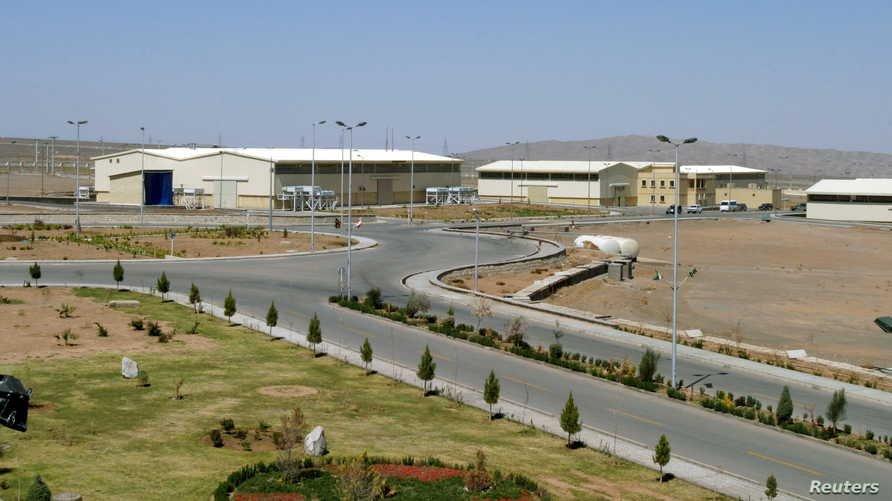
Trump threatened to strike Pickaxe Mountain, saying action would come very soon. Underground Pickaxe Mountain sits near Natanz, buried deep below the ground.
The Jerusalem Post was read line by line by the Watchdog: 3.6. See the score →
Trump targets Pickaxe Mountain
U.S. President Donald Trump said Tuesday that the United States would target Pickaxe Mountain, an Iranian nuclear site under construction and buried deep below the ground, as the war escalates amid 10 straight days of strikes.
Speaking in the Oval Office, Trump told reporters, "We'll be hitting that area pretty soon, and very heavily," and he did not deny a Wall Street Journal report that Israeli intelligence assessed Iran transferred centrifuges to Pickaxe Mountain last fall.

ABC News reported that the complex, known in Iran as Kūh-e Kolang or "Mount Kolang," was declared in 2021 by Iran to be a centrifuge assembly site after a similar plant in neighboring Natanz was destroyed.
The ABC News account said ISIS reviewed satellite imagery and concluded construction is still underway at the site, which is buried 100 meters under the ground and is unclear when it could be operational.
ABC News also quoted Arms Control Association director Kelsey Davenport saying, "the location of the site does pose concern," while noting that inspectors from the International Atomic Energy Agency have been barred from entering Iran since the U.S. attacked earlier this year.
Threats, uncertainty, and disputes
Trump’s remarks were framed by The Times of Israel around a tension between his public threats and the lack of a strike to date, noting that Pickaxe Mountain has not been hit by the US or Israel yet.
In a July 13 interview on the Hugh Hewitt Show, Trump told the program, "We're going to take out Pickaxe Mountain. Tell the Iranians to be ready," while the Jerusalem Post said a second part of his statements—"We see no activity there"—is a major reason no strike has been ordered.
The Times of Israel also reported that Iran’s top joint military command threatened after Trump’s remarks, with state media saying it would target the interests of the US and its allies if the US targets Iranian nuclear sites.
Meanwhile, the BBC reported that Trump threatened to destroy an Iranian bridge or power plant if attacks on shipping in the Strait of Hormuz persist, and it said Iranian state media reported air defences were activated in Tehran.
The BBC quoted Iran’s top negotiator, Mohammad Bagher Ghalibaf, writing on X that "the equation of this war is clear: either all or none!"
What’s at stake next
Multiple outlets tied the Pickaxe threat to the broader U.S.-Iran exchange over the Strait of Hormuz, with the BBC saying the price of oil jumped in response to the latest escalation, reaching $94 on Wednesday. The BBC also reported that the U.S. and Iran signed a Memorandum of Understanding in June to halt military operations and reopen the Strait of Hormuz, and it said the MoU set a 60-day window to reach an agreement to end the war. In the ABC News account, Kelsey Davenport said the U.S. and Israel did not even attempt to target the facility in June 2025 or again after attacking Iran this year, adding, "Given the intensity of the U.S. and Israeli intelligence penetration of Iran's nuclear program, I think that suggests that the U.S. does not view Pickaxe as an imminent threat."
ABC News further said the presence of centrifuges or other nuclear technologies could motivate a U.S. attack, and it quoted Davenport saying there would be "no guarantee that the site would be destroyed" even with the MOP. As the confrontation continues, the BBC reported that Secretary of State Marco Rubio said the U.S. would "defend" ships going through the straits getting "blown up," while also saying U.S. officials were "open to diplomacy" but Iran did not seem serious about talks.