Iran · updated 2h ago · 3 min read
Iran Morality Police Arrested Mahsa Amini, UN Says She Died From Beatings
Mahsa Amini, 22, died in custody after morality police arrested her for unsuitable attire. Amnesty says Iran committed crimes against humanity in the 2022 crackdown.
Whether to foreground official custody explanation or Amnesty’s legal verdict.
4 of 5 outlets skipped it: protest violence included rape and other sexual violence allegations.
France 24 was read line by line by the Watchdog: 4.7. See the score →
5outlets compared
Same story, two versions
tap a side to read it in full
The Jerusalem Post
“Iran’s Police Information Center claimed that Amini suffered a cardiac seizure while in custody.”Read the original ↗
France 24
“Iranian authorities committed “crimes against humanity” in the violent crackdown on the 2022 protests”Read the original ↗
The Jerusalem Post emphasises the regime’s custody-seizure claim, while France 24 and CBC emphasise Amnesty’s crimes-against-humanity legal finding.
Amini death sparks crackdown
Mahsa Amini, a 22-year-old Kurdish-Iranian woman from Sanandaj in western Iran, was arrested by Tehran’s morality police on September 13, 2022 for allegedly wearing her hijab improperly, collapsed at the Vozara Detention Center, and died three days later on September 16.
“Amini, a 22-year-old Kurdish-Iranian woman from Sanandaj in western Iran”
The Jerusalem Post reports that Iran’s Police Information Center claimed Amini suffered a cardiac seizure while in custody, while a UN human rights expert later said evidence indicated she died “as a result of beatings,” and the UN Fact-Finding Mission on Iran said it had “established the existence of evidence of trauma to Ms. TAmini’s body, inflicted while in the custody of the morality police.”

Protesters took to the streets in at least 134 cities and towns and 132 universities across 26 of Iran’s 31 provinces after Amini’s death, and the Islamic Republic brutally suppressed the “Woman, Life, Freedom” protests by firing live ammunition into crowds and forcibly disappearing thousands of people.
The Jerusalem Post also says at least 49 women and 68 children were killed in the streets, according to United Nations estimates, and that Iranian regime security forces confirmed they had killed 551 people during protests after Amini’s death.T
In the same account, Yasser Fattahi’s father, Jowhar Fattahi, was among the 551 Iranians confirmed to have been killed after security forces opened fire when he joined a march in their hometown of Javanrud in Kermanshah Province on November 21, 2022.
Amnesty calls crimes
Amnesty International said Iranian authorities committed “crimes against humanity” during the violent crackdown on the 2022 protests known as the movement “Woman, Life, Freedom” that was sparked by the death of Mahsa Amini.
France 24 reports that Amnesty’s report warned Tehran’s suppression of new demonstrations this year bore the “same hallmarks” but on an even wider scale, and it said the 2022 crackdown amounted to “crimes against humanity” including murder, torture, rape and enforced disappearance.F
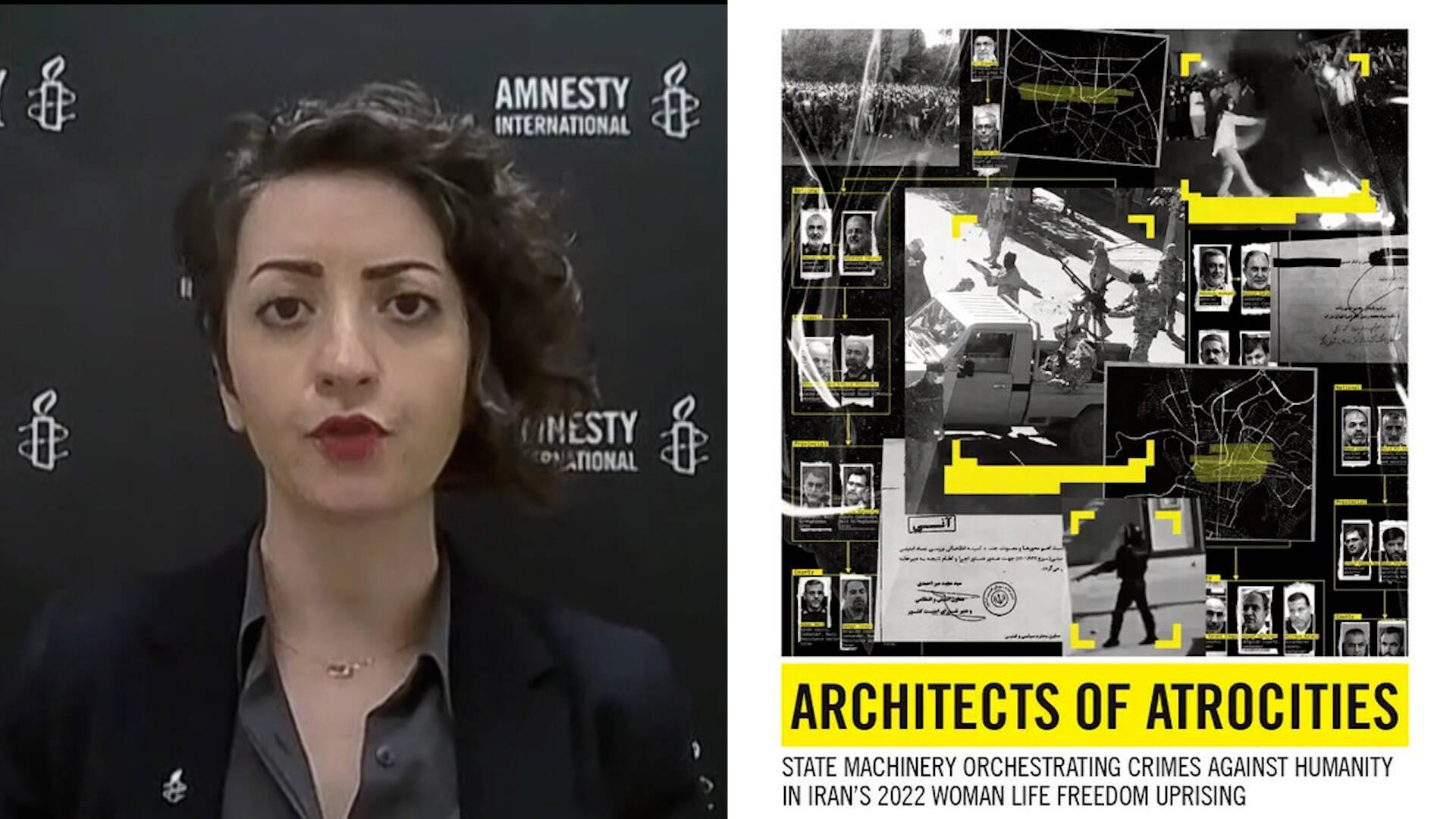
Amnesty’s findings, as described by CBC, say the resulting government crackdown was a systemic campaign whose perpetrators continue to evade accountability, and CBC quotes Raha Bahreini saying, “Continued global inaction on international justice sends a very dangerous message to the Iranian authorities.”
CBC adds that Amnesty’s report draws on 270 interviews, more than 2,000 videos and extensive documentary evidence, and it says Amnesty identifies dozens of officials allegedly responsible for committing what it describes as crimes against humanity.
In the same Amnesty framing, CBC says the organization identified 377 protesters and bystanders, including 56 children, who lost their lives during the 2022 protests, and it says at least 326 were killed by security forces, including with metal pellets fired at close range.
Executions and accountability
Beyond the 2022 protests, the National Council of Resistance of Iran says Iran’s human rights conditions deteriorated sharply in 2026, and it describes a surge in executions after nationwide protests of January 2026.
“Iran HRM reported that the authorities continued to restrict women and girls after the 2022 protests”
The NCRI account says that in Isfahan’s Shohada Square case, 10 uprising prisoners—including Taraneh Rahimi—were sentenced to death, while Romina Rahimi and five other co-defendants received heavy prison terms, and it adds that Leila Abolhasani was separately sentenced to death in Isfahan.
It also reports that Iran HRM documented 92 executions in August 2026, including six women, and that Iran HRM documented at least 38 political executions since late February 2026, including 29 protest-related or politically motivated executions and 9 PMOI-related executions.
Democracy Now! says Amnesty International’s new report concludes that the repressive measures used by Iranian authorities to crush the Woman, Life, Freedom protests in 2022 constitute crimes against humanity, and it says Amnesty investigated the killings of 377 protesters and bystanders and called for international criminal investigations into 87 Iranian officials.
Democracy Now! also quotes Raha Bahreini saying, “Crimes against humanity are system crimes. This means that they require resources, organization, structures, and state policy,” and it adds that Amnesty said the suffering of victims must not be “instrumentalized or weaponized” by actors such as [the] U.S. and Israel.