Iran · 06 August, 2026 · 2 min read
Iran President Masoud Pezeshkian Says Communication With Supreme Leader Mojtaba Khamenei Is Very Difficult
Pezeshkian says communication with Supreme Leader Mojtaba Khamenei is currently very difficult. Khamenei has not appeared publicly since succeeding his father.
Whether tensions over the US-Iran memorandum and internal unity are emphasised.
6 of 8 outlets skipped it: khamenei became supreme leader on March 8 after assassination in Tehran.
15outlets compared
Same story, two versions
tap a side to read it in full
TRT World
“create divisions" inside the country under the pretext of the supreme leader's message”Read the original ↗
The National
“rejecting reports that internal divisions had emerged over government decisions”Read the original ↗
TRT World stresses foreign-backed division claims; The National stresses internal-decision unity
Pezeshkian on Khamenei
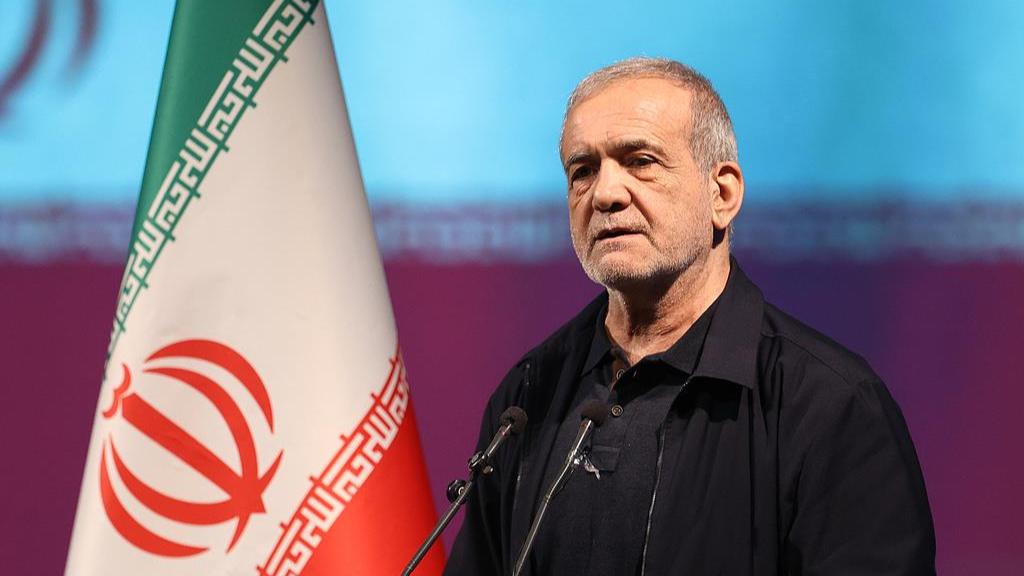
Iranian President Masoud Pezeshkian said communication with Supreme Leader Mojtaba Khamenei is “very difficult,” in remarks made during an interview broadcast on Iranian state television.
“communication with supreme leader Ayatollah Mojtaba Khamenei, the son of his predecessor Ali Khamenei, is “very difficult””
Pezeshkian tied the difficulty to the supreme leader’s continued absence from public view after succeeding his father Ayatollah Ali Khamenei, whose death was discussed alongside the transition of power.
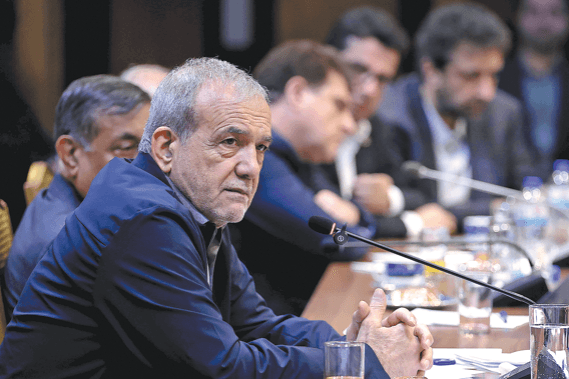
The National reported that Mojtaba Khamenei “has not appeared in public since being named Iran’s supreme leader,” while state media had not shown him carrying out official duties or addressing questions over his condition.T
Pezeshkian defended the new leader, saying “The person I saw was exceptional in terms of ethics, logic and humility,” as he described meetings with Khamenei and rejected reports of internal divisions over government decisions.
Conflict, sanctions, and talks
TRT World said Pezeshkian described Khamenei as “a major source of strength for the country to continue its path,” while also saying communication with him is “very difficult.”T
TRT World placed the remarks in a wider conflict timeline, saying Khamenei became Iran’s supreme leader on March 8 following the assassination of his father, Ali Khamenei, in a joint US-Israeli air strike in Tehran on February 28.
TRT World also described Iran’s retaliation with missile and drone strikes targeting Gulf countries hosting US military bases, and said the US and Iran agreed to a ceasefire in April before signing a Pakistan-mediated memorandum of understanding in June.T
In the same account, TRT World said the deal collapsed last month and that the two sides exchanged attacks for nearly two weeks before Trump abruptly halted the bombardment amid reports of talks to resolve the conflict.T
China Daily similarly quoted Pezeshkian saying the country was facing its “most difficult” circumstances, citing intensified banking sanctions, curbs on foreign transactions, a naval blockade, and an ongoing war.
Strait of Hormuz stakes
NewsNation said Pezeshkian’s comments came as President Donald Trump said the Strait of Hormuz could reopen “in a day or two,” and it reported that regional officials told the Associated Press that talks between Iran and Oman centered on a proposal for ships to enter the Persian Gulf through an Iranian-controlled route and exit through one controlled by Oman.
“theStrait of Hormuzcould come as soon as Wednesday or Thursday”
NewsNation added that the proposal would await final approval from Iran’s Supreme Leader, Ayatollah Mojtaba Khamenei, after Iran said it had entered the last stages of drafting an agreement with Oman over the Strait of Hormuz.
In the same NewsNation account, it stated that the strait carried roughly a fifth of the world’s oil and gas before the war and has been largely paralyzed by months of Iranian attacks on shipping.
The stakes of Khamenei’s role were also reflected in the way Pezeshkian framed his own access to him, with NewsNation quoting that it is “very difficult” to reach the country’s Supreme Leader.
Separately, TRT World said Khamenei publicly endorsed a US-Iran memorandum of understanding described as a 14-point framework signed on June 17, 2026, by US President Donald Trump and Pezeshkian to formalise a ceasefire, lift naval blockades and end active military operations.T