Iran22 August, 20263 min read
Iran’s Esmaeil Baqaei Slams U.S. Secondary Sanctions as Economic Warfare
This article is an automated aggregation of coverage from news outlets. Our editorials offer in-depth analysis curated by the NewsCord team.
Iran condemns new U.S. sanctions as unlawful economic warfare and extraterritorial sovereignty Iranian foreign ministry calls sanctions economic terrorism and a crime against humanity
Sanctions escalate
Iran’s Foreign Ministry spokesman Esmaeil Baqaei attacked Washington’s new sanctions as “economic warfare” and “an assertion of extraterritorial sovereignty,” saying the U.S. declaration is “far more than continued unlawful ‘economic warfare’ against a single country.” Baqaei said the U.S. move is an attempt to compel “foreign banks, enterprises or airports” to halt lawful commerce with a third country, and he argued that “Such secondary sanctions find no foundation in international law.” The U.S. side, as described by CNBC, is preparing a campaign to isolate Iran economically, with Treasury Secretary Scott Bessent vowing “the greatest coordinated economic isolation in the history of the world.”
CNBC also reported that Bessent told CNBC on Thursday the Trump administration’s plan to crush Iran’s economy will likely negate the need for major U.S. military operations, while Vice President JD Vance said economic pressure is the United States’ “most effective tool” against Iran. Separately, NPR reported Iran’s dismissal of Trump’s threats, quoting a top Iran official who said the U.S. focus on economic warfare shows it has failed militarily, and citing Iran’s claim that “years of U.S. sanctions have failed.”

Regional threats and talks
As the U.S. prepares to intensify economic pressure, Iran’s parliament speaker Mohammad Bagher Ghalibaf told an event in Baghdad that Muslim countries must make a plan to overcome “cruel” sanctions, according to a government summary of his comments. In a separate development, Ebrahim Rezaei, a spokesman for Iran's Foreign Policy and National Security Committee, threatened Gulf allies by saying, “They have turned their homes into enemy bunkers.” CBS News framed Iran’s position through President Masoud Pezeshkian’s claim that the world had “approved” Iran’s victory over the U.S. and that the war should therefore end, while CBS also quoted Trump saying Iran “would love to make a deal” but “they are not ready to make the right deal.”
BBC reported that Ghalibaf said Tehran had received “numerous messages” from neighboring countries about shaping “new security and economic arrangements in the region,” and it quoted him warning the U.S. endangered allies’ security through “bullying and complete disregard for their interests for the sake of Israel.” BBC also tied the diplomatic and economic standoff to the Strait of Hormuz, saying Iran returned to restricting navigation when hostilities resumed in early July and that Tehran insists navigation must pass through a northern route traced along its coast.
Economic pressure and stakes
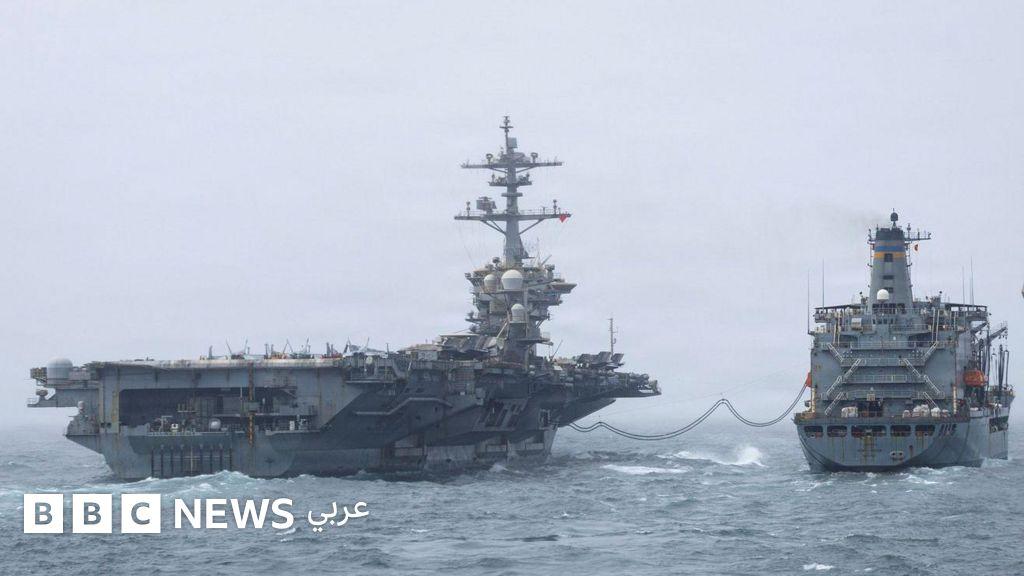
CNBC reported that shipping through the economically crucial Strait of Hormuz remained a fraction of its levels before the U.S. launched its war against Iran on Feb. 28, with 10 crossings on Monday and two transits on Sunday, according to data provided by Kpler.
The same CNBC report said oil prices were little changed Friday after Iran's president indicated that Tehran wants the war with the U.S. to end sooner rather than later, and it recorded Brent crude futures adding 61 cents to close at $94.39 per barrel.
Rudaw described Iran’s foreign ministry condemning U.S. sanctions as “economic terrorism” and “a 'crime against humanity,'” while it said Tehran remained “steadfast and determined in defending its security and national interests” against U.S. “military, economic, political, and psychological” pressure.
Rudaw also quoted a U.S. warning that any country that allows its financial institutions, businesses, airports, or government entities to provide any type of lifeline to Iran will face “tremendous economic consequences,” and it cited Trump’s vow to launch “the most crushing economic operation ever taken against any country.”
NPR added that diplomatic efforts to revive peace talks were completely stalled after a 60-day memorandum of understanding to negotiate an end to the war expired, and it said a U.S. blockade is still in place while Iran is still heavily restricting traffic through the Strait of Hormuz.