Lebanon · updated 2h ago · 3 min read
Lebanon’s Judiciary Prepares General Amnesty Law Implementation With Central Operations Room
Public Prosecutor General Ahmed Rami Al-Hajj overseeing preparations to implement General Amnesty Law without delay. Central Operations Room coordinates amnesty processes for all convicted/detainees regardless of legal representation.
9 outlets told this the same way.
Outlets did split on Lebanese Army Says Israeli Strike Triggered Explosion of Suspicious Object Injuring Four →
9outlets compared
Lebanon readies amnesty
Lebanon’s judiciary began preparing to apply General Amnesty Law No. 70 even before the Constitutional Council finished the path of appeal, while the Public Prosecution launched a central operations room in cooperation with security agencies and governors’ offices began preparing files of the convicted and detained.
Judge Ahmed Rami Al-Hajj, the Prosecutor General of Mount Lebanon, said the law "did not specify detailed implementation mechanisms," and he framed the ongoing work as establishing a clear mechanism for applying the law rather than interpreting the legislator’s intent.
Judge Al-Hajj also said the law does not directly specify the numbers of legal provisions covered by the amnesty or by sentence reductions, and he described coordination with the Supreme Judicial Council to unify the application mechanism and prevent divergent interpretations.
Lebanon’s Public Prosecutor for Criminal Justice, Ahmed Rami Al-Hajj, said the central operations room would monitor mechanisms for applying the law "in parallel with establishing sub-operations rooms in the various Lebanese governorates" while the Constitutional Council reviewed the challenge.
Lebanon’s preparations centered on building special files for each convicted or detained person, including verdicts and criminal records, and on collecting documents and information from security agencies to verify eligibility and avoid repeated cases or prior legal actions that might block benefits.
Operations rooms and timelines
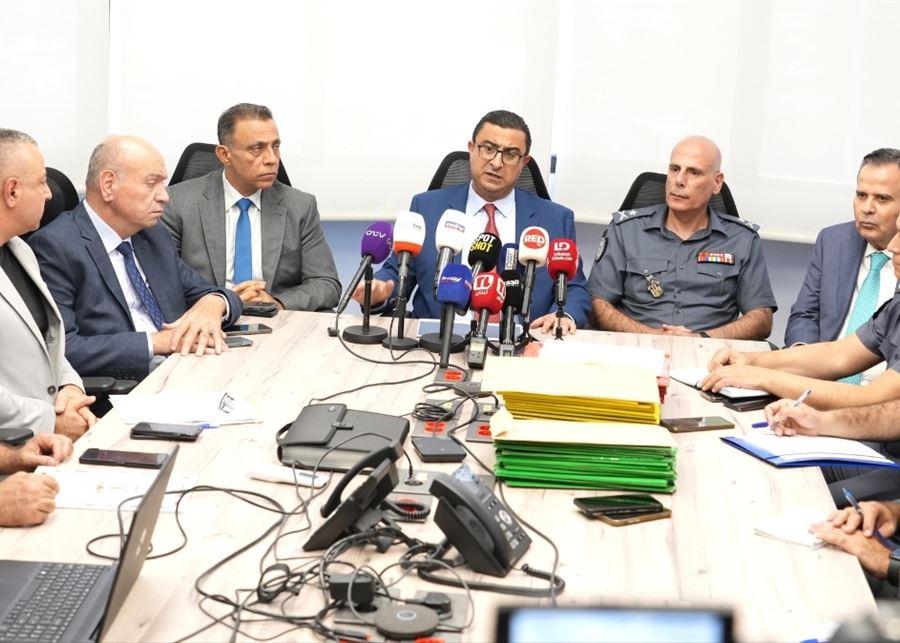
Judge Ahmed Rami Al-Hajj visited the Joint Central Operations Room and said judicial and security agencies had launched a central operations room to monitor mechanisms for applying the General Amnesty Law without delay. Judge Al-Hajj said the file preparation process began about three weeks ago "to avoid waiting for the Constitutional Council’s decision and to start from a zero point," and he described around-the-clock monitoring by the central operations room under the supervision of the Public Prosecution for Criminal Justice, the Military Public Prosecution, and the Mount Lebanon Appeals Public Prosecution. Judge Al-Hajj said security agencies began working on the first batch, which includes about 900 convicted individuals, and he described an alphabetical filing order that prioritizes those who could be released as soon as amnesty conditions are met.
Judge al-Hajj announced the launch of the first batch’s study, which includes 900 files to be adjudicated, and a dedicated operations room to monitor the files and accelerate administrative procedures was described. Information from MTV indicated that activating the law would immediately lead to the release of hundreds of prisoners and detainees benefiting from its provisions.

Scope disputes and case impact
Lebanon’s legal debate over the amnesty’s scope focused on how general phrases and exclusions would be applied, with Annahar warning that ambiguous texts could broaden or narrow the practical effect of the law within limits allowed by the text.
Annahar highlighted Article Two’s long list of excluded crimes and Article One established a general rule granting amnesty for crimes committed before March 1, 2026, making the precise legal description of each act decisive for whether it falls under the general rule or an exclusion.
The Constitutional Council’s final word on the appeal against Public General Amnesty Law No. 70 would determine the fate of lawsuits and judicial proceedings against former Banque du Liban governor Riyad Salameh.
A decision ordering a stay of the law’s implementation had been issued, and it framed the urgency by pointing to how Salameh’s defensive tactics in lawsuits had focused on disputing conditions for prosecution and had lengthened the investigation period.
The thirteenth paragraph of Article 2 excludes the crime of theft from the amnesty while linking the exemption to conditions tied to prosecutions or judgments, and the drafting could effectively exempt more theft-related crimes than it exempts from the amnesty.