Technology and Science15 September, 20263 min read
National Hurricane Center Raises Chances for Tropical Storm Fay in the Atlantic
This article is an automated aggregation of coverage from news outlets. Our editorials offer in-depth analysis curated by the NewsCord team.
A disturbance in the central Atlantic could become Fay this week. Environmental conditions expected to become more conducive for development in a few days.

Record Quiet, New Watch
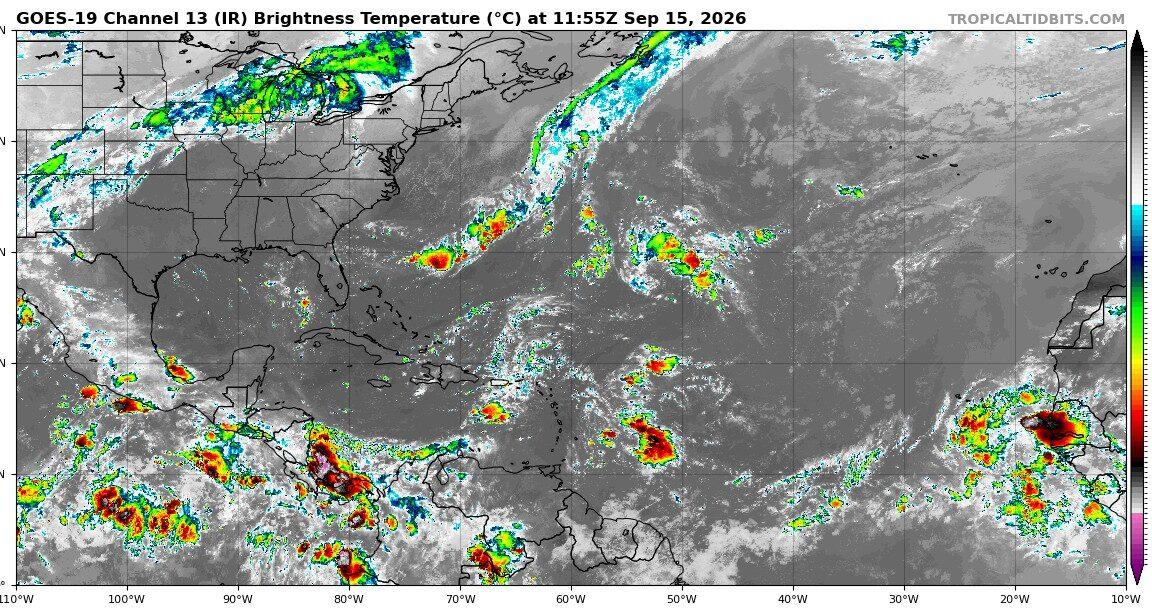
The Atlantic hurricane season entered a record stretch without a hurricane, with CBS News citing that no hurricanes have formed in the Atlantic basin since the 2026 season kicked off June 1 and that this is now the longest stretch without an Atlantic hurricane since at least 1966. CBS News also tied the lull to El Niño, explaining that El Niño reduces vertical wind shear and that in the Atlantic it has the opposite effect, bringing relatively cooler water temperatures and more vertical wind shear that are “not ideal for the development of tropical systems.” As the season passed its typical peak, The Weather Channel said the National Hurricane Center increased the chance of development for a central Atlantic system, with the broadcaster describing the area as “less than a 1,000 miles east-southeast of Bermuda” and as “just a broad area of disorganized showers and thunderstorms.”
“No hurricanes have formed yet in the Atlantic basin since the 2026 season kicked off June 1.”
The Weather Channel reported that conditions are not conducive right now because of strong wind shear, but that “that is expected to change within the next few days,” leaving forecasters watching for Tropical Storm Fay. In parallel, USA Today said the National Hurricane Center put the disturbance’s odds at “a 30% chance of forming into a tropical depression or tropical storm over the next week,” while noting it likely won’t develop over the next 48 hours.
Chances, Models, and Names
Multiple outlets framed the next system as a developing possibility rather than an immediate threat, with Orlando Sentinel reporting that the National Hurricane Center gave the disturbance a “40% chance to develop in the next seven days.”
Orlando Sentinel also listed the season’s existing tropical storms—Arthur, Bertha, Cristobal, Dolly and Edouard—and said “The next name on the list is Fay,” while USA Today described the system as facing strong winds that could hinder development over the next several days.
WPLG Local 10 emphasized forecast uncertainty, saying “computer models are split on this one,” and it described how the Euro AI ensemble system and Google’s DeepMind machine learning-based 1,000-member ensemble system both suggested a medium chance of development.
WPLG Local 10 added that the system is expected to remain no near-term concern for the U.S., while noting that “interests in Bermuda will want to monitor the forecasts” as the low pressure lingers over the central Atlantic.
AccuWeather similarly said its window for development is Sept. 17-21 and that the area southeast of Bermuda “could bring downpours, squalls and rough seas to Bermuda, especially if it becomes a tropical storm.”
Why It Matters Next
The record-quiet season is also being treated as a potential milestone, with CBS News noting NOAA’s Climate Prediction Center expected the 2026 season to bring between seven and 13 named storms, including two to six hurricanes and zero to two major hurricanes.
Ars Technica said the Atlantic hurricane season has not produced a hurricane through the traditional peak around September 10, and it pointed to the National Hurricane Center monitoring a disturbance with a “near zero” percent chance of becoming a tropical depression or storm during the next two days.
Naples Daily News warned Florida residents to remain prepared despite El Niño’s suppression of activity, and it stated that if there are no hurricanes this year before Sept. 22, the 2026 season will break a record for the latest date a first hurricane has ever formed.
Naples Daily News also reported that the next name would be Fay and that maximum sustained winds would have to reach 39 mph for the system to reach tropical storm status, while AccuWeather said the Atlantic remains well behind historical pace with five storms formed so far compared with an average of nine by mid-September.
Across the coverage, the immediate consequence is that forecasters are watching whether the disturbance can organize into a tropical depression or storm, because USA Today said the system has a 30% chance over the next week and Orlando Sentinel said a tropical depression could form later this week as conditions become more conducive for development.