Climateupdated 1h ago2 min read
Pacific Leaders Press Wealthy Countries for Climate Funding in Nadi, Fiji
Pacific island leaders urged wealthy nations to increase funding to help survive climate impacts. They spoke at pre-COP meetings in Nadi, Fiji ahead of COP31 in Turkey.

Pacific leaders demand help
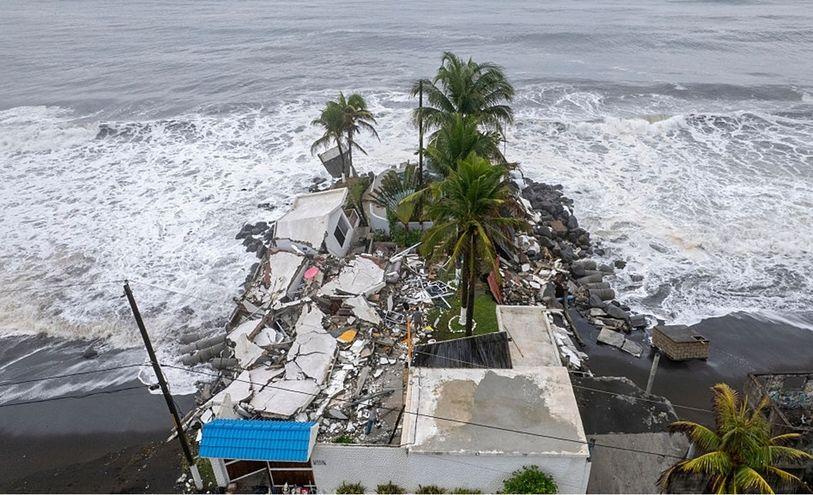
Pacific island leaders used the pre-COP meetings in Nadi, Fiji to press wealthy countries to provide more funding so their nations can “survive” the impacts of climate change. Papua New Guinea Prime Minister James Marape told reporters that the issue is “an ethical” matter, adding that “sovereign-bordering states face the risk of losing their statehood,” and that “we live under decisions made elsewhere.” EU Climate Commissioner Woebke Hoekstra told reporters on the sidelines of the summit, “Clearly we are not doing enough.”
The UN report released in August found that developing countries need between $310 billion and $365 billion for adaptation, yet they only had $26 billion of adaptation finance available for 2023. Fiji announced on Wednesday an additional $10 million for the Pacific Resilience Facility, which regional leaders established in the hope of raising $500 million but had only secured commitments well below half of that amount.

1.5C target and frontlines
Pacific leaders pushed for the world to commit to limiting warming to 1.5°C, with Reuters reporting that delegates said the planet is “hurtling past” a critical temperature target that would restrain sea level rises and extreme weather. Fijian climate minister Lynda Tabuya told representatives from more than 50 countries at the start of pre-COP ministerial negotiations, “We are hurtling past the 1.5-degree temperature limit.” The declaration adopted by representatives from around 30 nations called for “deep, rapid and sustained emissions reductions,” and it framed the Tuvaluan concept of the strength found in unity and collective action as Taku Pakasoa.
Tuvalu Prime Minister Feleti Teo told the UN General Assembly that “Tuvalu's message is clear: the world must act now decisively, collectively, and with urgency to protect the future for generations to come.” Reuters also quoted Dechen Tsering, director of the Regional Office of Asia Pacific at the UN Environment Programme, saying, “Pacific risks will outlast the temperature peak.”
COP31 presidency and finance access
Türkiye’s COP31 president-designate Murat Kurum urged the international community to accelerate climate action and curb the rise in global temperatures at a ministerial preparatory meeting ahead of COP31 in Nadi, Fiji. Kurum said COP31 should mark a turning point where climate discussions give way to concrete action, and he stressed that exceeding 1.5 degrees Celsius must not mean the end of climate action. Australia and Türkiye agreed to take forward a “presidency-led decision for COP31” after consulting with different countries and groups, with Australia’s climate change and energy minister Chris Bowen saying the presidency did not want to negotiate “a lengthy political statement”.
Bowen said the decision could recognize a UN report acknowledging that an overshoot of the 1.5C warming limit is now inevitable, but temperatures could be brought back down to that level. UNEP Finance Initiative framed the stakes for banks, insurers and investors around how COP31 outcomes translate into implementation, finance and investment, including efforts to accelerate the energy transition and strengthen resilience.