Technology and Science
Nepal Flash Floods Kill 579, China Says Seven Die in Tibet as Rescues Continue

At a glance
- Nepal-Tibet floods killed 579 in Nepal and 7 in China.
- Missing totals near 3,000 across Nepal and Tibet as searches continue.
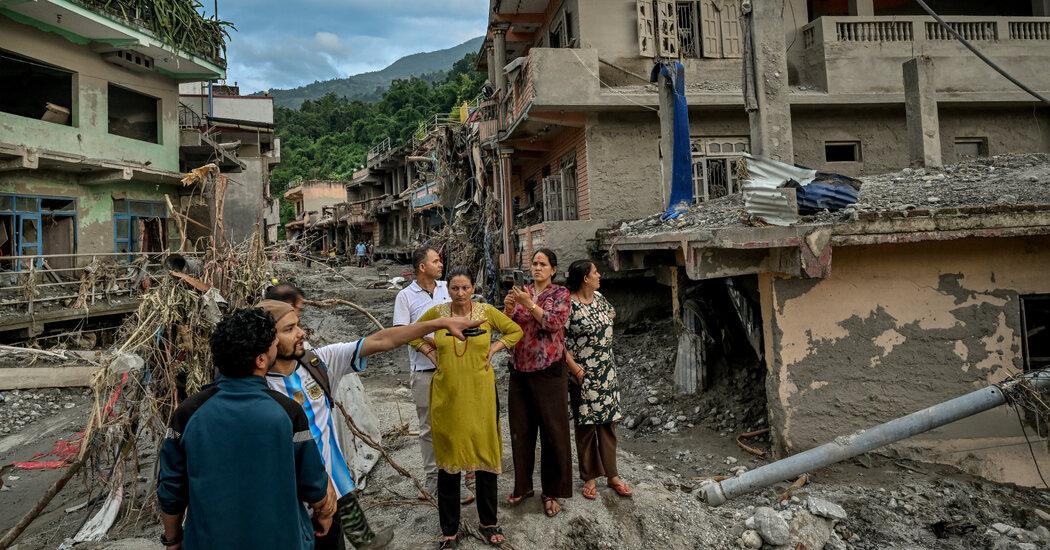
- Rescue efforts pressured by threat of fresh flooding across Himalayan regions.
Floods, bodies, and drones
Catastrophic flash floods along the Nepal–China border killed at least 579 people in Nepal, while China said seven people died in Tibet, as rescue efforts continued with fears of new flooding.
Nepali foreign minister Shisir Khanal asked for foreign support to help provide freezers to preserve the bodies of flooding victims, saying "hundreds of bodies have been found downstream" and warning of "a risk of fast decomposition".
Consistent coverage
Where the coverage agrees
BBC, AP and NYT align on missing deaths; none show strong omission or contradiction
A BBC report also described how Nepal’s disaster response agency warned people against flying drones in the flood-hit area, saying unauthorised drones were "posing serious safety risks" to rescue helicopters and hindering search operations.
In Nepal’s capital Kathmandu, families gathered outside the main government hospital and searched lists of missing people, while officials said DNA samples would be collected and identifying marks recorded for bodies that could not be easily identified.
China, India, and tunnel rescue
Top diplomats of China and Nepal pledged to strengthen emergency response and relief cooperation as devastating cross-border flash floods left at least 633 dead and thousands missing.
Nepalese Foreign Minister Shishir Khanal said he held a telephone conversation with his Chinese counterpart Wang Yi, during which the two expressed "profound grief" over the loss of lives and devastation.
At the request of the Nepalese government, China’s Ministry of Emergency Management urgently dispatched five Chinese tunnel experts to Nepal, and an additional four Chinese tunnel experts were also dispatched to provide full support for tunnel rescue efforts.
India’s External Affairs Ministry said six forensic expert teams from India are expected to reach Kathmandu to help analyze DNA samples, while a specialized tunnel rescue team from India and equipment were expected to reach Nepal to support tunnel rescue operations.
Missing lists and long-term help
As rescue operations resumed, the combined toll in Nepal and Tibet rose to 633 dead and nearly 3,000 people missing, while Chinese authorities reported seven deaths and more than 550 missing.
ABC 10News described families waiting at relief centers and outside the main government hospital in Kathmandu, including Dil Maya Lama searching for her missing 26-year-old brother and Gajendra Rawat saying families had so far registered around 1,600 missing persons.
The Guardian reported that Nepal’s foreign minister said the country needs specialised and technical help from other countries for a tunnel rescue and for identifying and storing bodies, and it quoted Shisir Khanal saying "We have already made requests for such specialised services".
NBC News reported that the U.S. State Department said 90 Americans were unaccounted for in Nepal and China, while Nepal and China’s authorities continued to update missing figures as communications and access remained disrupted.
Explore the original reporting
Compare all 20 sources
How each outlet frames it
Every outlet we compared, the headline it ran, and a link to the original article.
Other
Search for survivors intensifies after deadly Nepal-China flash floods
29 August, 2026
Inundaciones en Nepal: asciende a 469 la cifra de muertos y hay 977 desaparecidos
28 August, 2026
Nepal floods: 586 dead, nearly 3,000 missing, and UNICEF’s alert for children
29 August, 2026
Floods between Nepal and China: the missing count rockets to almost 3,000, with more than 630 dead
29 August, 2026
West Asian
Top diplomats of China, Nepal discuss emergency response amid deadly flash floods
29 August, 2026
Western Mainstream
People from more than 30 countries are missing after the flash floods in Nepal and China
28 August, 2026
Nepal floods latest: Foreign minister calls for 'global effort' to address climate change after devastating flash floods
29 August, 2026
Floods in Nepal and Tibet: nearly 2,500 missing, “intensive” searches continue
29 August, 2026
Around 3,000 missing in the Nepal floods... UNICEF: more than 17,000 children in need of assistance
29 August, 2026
Flood in the Himalayas: relief workers still at work on the ground in Nepal.
29 August, 2026
Devastating floods in Nepal and Tibet: Kathmandu says it has mastered search and rescue operations
28 August, 2026
Search continues as number missing in Nepal-Tibet floods rises to 2,478 – as it happened
29 August, 2026
Nepal Increases Flood Toll to 1,900 Missing and Over 500 Dead: Live Updates
28 August, 2026
Asian
Nepal flash floods death toll hits 579 as rescuers race amid fresh flood risk
28 August, 2026
Nepal flash floods: Death toll rises to 538 as rescue ops continue amid fresh threat
28 August, 2026
Nepal flood toll climbs to 579 amid fear of fresh deluge; India ready to send NDRF teams if required
28 August, 2026
Local Western
Bay Area tech worker among 90 Americans missing after Nepal floods
27 August, 2026
After the deadly flood, a new threat looms over the rescuers in Nepal.
28 August, 2026
Read stored source text: ABC 10News San Diego
Most arrive with nothing except the clothes they are wearing. As rescue efforts in communities buried by catastrophic flash floods along the border between Nepal and China entered their fourth day Saturday, authorities continued finding survivors and transporting them to safety. At relief centers, as some arrive, families wait anxiously for news of their loved ones as the death toll and the number of people unaccounted for continued to rise. After Nepali authorities updated their figures Saturday, the combined toll in Nepal and Tibet rose to 633 dead and nearly 3,000 people missing. Chinese authorities have reported seven deaths and more than 550 missing. RELATED STORY | Nepal flash flood leaves 1,300 missing, including 65 Americans In Nuwakot, one of the Nepali districts devastated by the floods, helicopters resumed operations before noon Saturday after poor weather temporarily hampered aerial rescue activities. Some helicopters were loaded with boxes and bags of aid, including clothes, instant noodles, crackers and rice. Others returned from the flood-hit areas carrying survivors. An older man was carefully helped off one helicopter, while a soldier carried an older woman on his back to a medical tent. There, medics checked her blood pressure, breathing and heartbeat, as well as her teeth and gums. About a dozen people emerged from another helicopter. Soldiers carried several babies who had been evacuated. The evacuees had been brought from the nearby community of Trishuli. Villagers return to devastated homes As people were still leaving Trishuli, some village residents were returning to see what could be salvaged from their decimated homes. One boy walked out of the village carrying muddy sandals from his house. Another woman, Shoba Shretha, returned to find her dog, Sweetie, who she was forced to leave behind when the floods came. Shretha sat on the ground petting her and feeding her water from a bottle. At some point, relief coordinators cleared villagers, reporters and volunteers from the entrance to Trishuli, as excavation equipment drove into the flooded village to dig. Families begin to lose hope In Kathmandu, Nepal’s capital, relatives and friends gathered outside the main government hospital from early morning, desperately searching for news of missing loved ones. RELATED STORY | Prediction market Kalshi partners with The Weather Company on climate trading Many shuffled between the help desk and the hospital notice board, clutching photographs and scanning injured patients’ lists in the hope of finding them. Dil Maya Lama stood weeping outside the help desk at the hospital, searching for information about her missing 26-year-old brother, a driver for a hydropower company in Rasuwa. She had traveled from Ramechhap, about 130 kilometers (80 miles) away. “I came here with the hope that I might find him,” she said. “There is no information about him.” Nelza Moktan anxiously sought information about her missing cousin, who also worked as a driver in Rasuwa. “I feel hopeless. It has already been four days,” she said. Families covered hospital walls with posters showing missing relatives, photographs and contact numbers in a desperate appeal for any clue that could bring them home. Nearby were photographs of unidentified bodies which officials put up in hopes they could be recognized by families or friends. Gajendra Rawat, a security official at the hospital help desk, said families had so far registered around 1,600 missing persons since the disaster struck. “People are coming from all parts of Nepal,” he said. Families search paper lists for any clue Back in Nuwakot, military personnel taped sheets of paper listing dozens of missing people to a wall at a relief center, prompting families to crowd around them. Some scanned lists of the missing and dead, took photos and wiped away tears as they looked through the names. Rajesh Kumar Ram, who is searching for his son, desperately searched a list for his son's name. “I’m hopeful, by chance that my son is somewhere," he said, crying as he spoke. "Maybe they find him stuck somewhere. I’m waiting for that moment only.” RELATED STORY | Earth’s climate is now 'out of balance,' new global report warns Outside, people walked along mud-covered streets past signs of the disaster. On one street, a truck was stuck in the mud with its bed raised in the air. As the day passed, more people gathered at the army barracks hoping to be reunited with missing loved ones or to find out information about them. Priti Kharel stood outside the entrance to the barracks, holding a poster with a picture of her brother, Milan Kharel, who works as an engineering geologist at Doosan Enerbility. His family hasn’t heard from him since the floods. “It’s already four days,” said Kharel, who believes his brother could be one of the people trapped inside the tunnel of a hydropower construction site, where authorities have rescued some people. She said friends who were there told the family that Milan might still be there. “We want the government to rescue him as soon as possible,” she added. Rescuers battle to find survivors at disaster-hit areas Search and rescue efforts continued at several locations in Nepal and China’s Tibet, including the Upper Trishuli-1 Hydropower Project in Nepal’s Rasuwa district and the severely damaged Gyirong border crossing on the Chinese side. Nepali Army spokesperson Brig. Gen. Raja Ram Basnet said rescue efforts would continue at the hydropower construction site, where authorities believe more than 100 people are trapped in a tunnel filled with thick mud. Basnet said rescuers had used baskets and ropes to reach some people, but the operation remained difficult because of 4 to 5 feet (1.2 to 1.5 meters) of mud and the limited number of places where helicopters could land. He said rescue teams had also been forced to relocate temporarily when authorities issued warnings about possible further flooding. Rescuers have been on high alert for more flooding from a new lake that formed high up in the Himalayan mountains after the initial floods Wednesday. Experts warned that the lake, created after a glacier collapse that triggered the floods, was starting to overflow. Monitoring data from the Chinese Ministry of Water Resources showed late Friday that the lake had dwindled in size. The water level dropped by 10 meters (32 feet) from the high point on Thursday morning, Chinese broadcaster CCTV said. Aid trucks could be seen traveling from Kathmandu, Nepal’s capital, toward the affected areas. Search continues at devastated China-Nepal border crossing The Chinese broadcaster showed images Saturday of rescuers arriving at Gyirong Port, the hard-hit border crossing with Nepal. Some reached the area by foot or via rafts, while others dropped down from drones flown to the area. “Anyone, anyone?” rescuers yelled. It was not immediately known how many people were at the border checkpoint building when the floods hit. On Saturday, Nepal’s disaster agency said the death toll had climbed to 626 with 2,426 people missing in the country. More than 3,700 people have been rescued in Nepal so far. The death toll in China rose to seven Friday as state media showed evacuations of villages and leaders’ efforts to direct the relief response. China's state media said 554 people were missing on the Chinese side. Hundreds of the missing are foreigners who were in the area to work, trek or make a pilgrimage to a sacred peak.
Read stored source text: Aire de Santa Fe
La cifra de muertos por las devastadoras inundaciones que golpearon Nepal ascendió a 469, mientras continúa un amplio operativo para localizar a cientos de personas desaparecidas en las regiones afectadas. Inundaciones en Nepal La Policía de Nepal informó que los equipos de búsqueda y rescate habían recuperado 469 cuerpos hasta la mañana de este viernes. Además, al menos 1.545 personas fueron rescatadas desde el inicio de la emergencia. La situación continúa siendo crítica. Según la Autoridad Nacional de Reducción y Gestión del Riesgo de Desastres, hasta las 22 del jueves, hora local, 977 personas permanecían sin ser localizadas. Ante este escenario, la Policía pidió a las familias afectadas que se acerquen a las dependencias más próximas para aportar información y documentación que permita avanzar con la identificación y búsqueda de los desaparecidos. El desastre también afectó a extranjeros: la Junta de Turismo informó que 31 ciudadanos de otros países fueron rescatados. LEER MÁS ► Inundaciones en Nepal: India, Europa y la Cruz Roja activan ayuda humanitaria En paralelo, UNICEF advirtió que más de 17.000 niños necesitan asistencia humanitaria urgente. Su representante Alice Akunga alertó que los sobrevivientes enfrentan mayores riesgos de enfermedades, desnutrición, violencia y explotación.
Read stored source text: Anadolu Ajansı
Top diplomats of China, Nepal discuss emergency response amid deadly flash floods Foreign ministers reaffirm commitment to strengthen relief operations, real-time hydrological data sharing Faisal Mahmud and Ahmad Adil 29 August 2026•Update: 29 August 2026 ISLAMABAD/ NEW DELHI The foreign ministers of China and Nepal on Saturday pledged to strengthen emergency response and relief cooperation as devastating cross-border flash floods left at least 633 dead and thousands missing. Nepalese Foreign Minister Shishir Khanal said on US social media company X that he held a telephone conversation with his Chinese counterpart Wang Yi, during which the two expressed "profound grief" over the loss of lives and devastation caused by the flash floods affecting both countries. The two top diplomats reaffirmed their joint commitment to enhance emergency response and relief operations as well as real-time hydrological data sharing, Khanal said in a statement. Khanal also conveyed Nepal’s gratitude for China’s support in ongoing rescue and relief operations. At the request of the Nepalese government, China’s Ministry of Emergency Management urgently dispatched five Chinese tunnel experts to Nepal, the People’s Daily reported. The experts have joined rescue efforts at a hydropower station tunnel. An additional four Chinese tunnel experts were also urgently dispatched to Nepal in response to the rescue operation’s needs, the report said, to provide full support for tunnel rescue efforts. India is also sending assistance to Nepal. Six forensic expert teams from India are expected to reach Kathmandu Saturday to help analyze DNA samples for the identifify the dead, the Indian government said. A specialized tunnel rescue team from India, along with equipment, is expected to reach Nepal Saturday, according to a statement from India’s Ministry of External Affairs. As of Saturday evening, 287 Indian nationals remained missing, while 88 had been rescued, the ministry said. The floods have devastated areas along the Nepal-China border, triggering large-scale search and rescue operations for nearly 3,000 missing people, including foreign tourists. Chinese President Xi Jinping earlier expressed condolences and said Beijing was willing to assist Nepal in rescue operations.
Read stored source text: AP News
People from more than 30 countries are missing after the flash floods in Nepal and China People from more than 30 countries are missing after the flash floods in Nepal and China Catastrophic flash floods in a border area of China and Nepal have killed at least 500 people and left more than 1,500 people missing as of Friday morning. Hundreds were foreigners in the area to work, take guided treks or make a pilgrimage to a sacred Hindu site. Thousands have been rescued, with some of the injured taken to hospitals in Nepal’s capital, Kathmandu. The number of missing from Wednesday’s disaster may vary because of progress in the ongoing rescue efforts and differences in how data was collected and verified among agencies. A look at how multiple countries have been affected: Nepal Nepal’s disaster management authority said Friday the death toll rose to 538, with 977 people missing. The authority said 3,253 people have been rescued by helicopter, and more than 150 of the injured were taken to hospitals in Kathmandu and the districts of Rasuwa, Nuwakot and Dhading. Nepali police later put the number of deaths higher at 553. China State media reported Friday at least five people died and 558 were missing in Gyirong County, Tibet. Chinese state broadcaster CCTV reported that 260 of the 558 missing people were foreigners. In addition, nearly 100 Chinese citizens were missing on the Nepal side, China’s foreign ministry said. India India’s External Affairs Ministry said 320 Indian nationals remain uncontactable. They included 73 people who were working on a power project. Nepal officials have said many Indian tourists were on pilgrimage to Mount Kailash in Tibet, a sacred site for Hindus. United States The U.S. State Department said 90 Americans were unaccounted for in China and Nepal. It said it was not aware of any U.S. deaths. Three Americans have been rescued. Malaysia The board said 51 Malaysians were missing. Ukraine Ukraine’s Foreign Ministry said that 55 Ukrainians are missing. The number includes two tourist groups of 47 and seven people, in addition to one Ukrainian woman traveling with a foreign tour group, the ministry said. Australia The Australian government said 39 Australians were missing. Britain The board said 33 of the missing were from Britain. Canada Nepal’s tourism board said 25 of the missing were from Canada. South Korea South Korean government officials said nine citizens working on building a hydropower plant in Nepal were missing. Singapore Eight Singaporeans were missing, according to Nepal tourism board. Germany Nepal’s tourism board said eight tourists from Germany were missing. Russia The Russian Embassy in Nepal said eight of its citizens were missing. South Africa The board said six South Africans were missing. Latvia The board said six tourists from Latvia were missing. Japan Japanese media said the five Japanese tourists missing are a couple and their children. New Zealand Five people from New Zealand were missing, said Nepal’s tourism board. France The board said four French citizens were missing. Belgium The board said three from Belgium were missing. Spain The board said three visitors from Spain were missing. Others The board said two people each from Italy, Kazakhstan, Portugal, Ireland and Netherlands were missing. It said 10 others — one each from Belarus, Finland, Hungary, Israel, Lithuania, Philippines, Bulgaria, Switzerland, Serbia and Sweden — were also missing.
Read stored source text: BBC
Hannah RoeBBC South East Pramod took this photograph showing a river where his village once stood Pramod Poudel has today been out with his father to see whatâs left of his village in the hope of gathering information about his family. He flew to Nepal two days ago from his home in Sussex after hearing that his wife, mother, uncle and brother were missing. Pramod was hoping to visit his village, but when he arrived he found it entirely under feet of water. "This is where I was born and raised. As you can see, there is nothing now that exists. Itâs... to be honest itâs very hard to see. Itâs devastating to look at," he says. This video can not be played Analysis from our China correspondent Laura Bicker on why China is censoring information about the floods Nepali foreign minister Shisir Khanal described how some areas were turned into swamps during his news conference The Nepali foreign minister has asked for foreign support to help provide freezers to preserve the bodies of flooding victims while they try to locate their loved ones. Earlier during a news conference Shisir Khanal says that "hundreds of bodies have been found downstream". "There is a risk of fast decomposition because these bodies have been in water for a long time," he says, adding that Nepal has "very limited" space to keep bodies in a frozen state for a long time. He says he is seeking active support from foreign governments to find ways to help preserve the bodies. Burials have begun in parts of Nepal as authorities face the challenge of how to deal with the number of bodies retrieved, BBC News Nepali reports. A spokesperson for the Nepalese health ministry says it is necessary to bury many bodies in the one area to ensure they are treated in a respectful, safe and legal manner given the risk of decomposition and infection. Bodies are not buried in the one plot - one body is buried per grave, with proper identification. The national disaster response agency said earlier thedeath toll had risen to 675. Many of the bodies cannot be easily identified, but DNA samples will be collected and identifying marks recorded, with records kept, including about the location of burial, officials say. "It has been decided to bury them systematically in government, community or forest areas, so that the bodies and remains can be given to those who come to search for them later," the spokesperson says. International protocols are being followed and recommendations of the World Health Organization have been followed, they say. Damodar Adhikari, an expert who has worked with the Nepalese government on behalf of the World Health Organization, including in the aftermath of the 2015 earthquake, says bodies need to be stored in a way so that relatives can identify the body and, if religious traditions require, carrying out a cremation. Nepal's disaster agency says unauthorised drones are posing serious risks to recue helicopters Nepal's disaster response agency has warned people against flying drones in the flood-hit area. It says unauthorised drones have been operating in the area and "posing serious safety risks" to rescue helicopters and hinder search operations. Anyone flying drones without permission will face legal action, the National Disaster Risk Reduction and Management Authority (NDRRMA) says. Indian pilgrims, who were stranded during a pilgrimage to Mount Kailash, a site revered by Hindus and Buddhists, are greeted by their family members in Kathmandu A bridge was destroyed in Devighat in the Nuwakot district of Nepal during the disaster An elderly lady is carried from a rescue helicopter, flanked by another survivor A member of the Nepal Army carries a young girl who has also been airlifted to safety An image shared by the Nepalese energy minister in a social media post giving an update on search efforts at the Trishuli 3 'A' hydropower facility A hole is being drilled to search for survivors in a tunnel where workers are trapped at a hydroelectric facility, the Nepalese energy minister Biraj Bhakta Shrestha says. Describing it is as a "partial success", he says oxygen will also be put through the hole made at the Trishuli-3 'A' hydropower site. "Even small progress is a sign of great hope for us," he says, adding rescue efforts will continue "until the last possible moment to save the lives of our brothers and sisters trapped inside the tunnel. Let's not give up hope." As we've been reporting, search and rescue efforts are ongoing at a number of hydroelectric plants in the area. Shrestha says rescue efforts have been ongoing for the past two days at the Trishuli 3 'A', where 82 people have been working continuously for around two days despite adverse weather conditions. The work is very challenging due to the adverse weather conditions, the minister says. Rescue efforts are also ongoing at another hydropower site, Trishuli-3 'B', where Nepalese authorities say a specialist team from China has now arrived. Navin Singh KhadkaEnvironment correspondent, BBC World Service How much of a role climate change played in the collapse of the glacier that caused this devastating flood might be known if there are focused studies in the days to come. But what we already know is that global warming has led to accelerated melting of Himalayas' glaciers, icefields, snowpacks and permafrost. Scientists say thinning and retreating of glaciers can not only cause their collapse but can also rapidly fill up glacial lakes that can then burst out causing floods. They say ice and snow buttress mountain slopes â just like cement keeps buildings intact. When they fast melt, then mountains destabilise and we see increased incidents of rockfalls, landslides, avalanches and debris floods â as we are seeing in the Hindu Kush Himalayan region. Because of warming, experts say, higher parts of mountains now also see rains instead of snow that can also make them unstable. A study by the International Centre for Integrated Mountain Development released in March showed that ice loss rates in the region have doubled since 2000. Nepali Foreign Minister Shisir Khanal says the sudden nature of Wednesday's floods suggests China did not have "full knowledge" ahead of the incident, and has been sharing information since. As we've just reported,China has denied what it says are allegations in the Nepalese mediathat it failed to warn Nepal ahead of the disaster. "Since this disaster we are in very, very close co-ordination, co-operation and communication with the Chinese authorities, and they have been very forthcoming with sharing information and data," Khanal told a news conference earlier. Asked whether that cooperation existed before Wednesday's flooding or if it began after, the minister says that given the sudden nature of the disaster he believes neither government had "full understanding or clarity". "In this particular context it looks like that even the Chinese side probably did not have that full information, and the way it happened it appears quite sudden, their communities have also been fully impacted, and the border areas on both sides have been totally damaged," he says. "But since the incident they have been fully providing us all the information and data we need." The number of people killed in Nepal has risen to 675, according to the latest release by Nepal's National Disaster Risk Reduction and Management Authority (NDRRMA). Officials say at least 2,498 people have been rescued and 219 people have been injured in the disaster. The NDRRMA says that over 18,700 rescuers have been deployed to help with the search operation. The Nepal Tourism Board says that 261 foreign nationals have been rescued while 320 are still unaccounted for. In its most recent update the tourism board provided a breakdown of how many people have been rescued from each country: Navin Singh KhadkaEnvironment correspondent, BBC World Service China is rebutting what it calls "recent comments in Nepali media and online platforms accusing it of failing to warn Nepal of the mudslide disaster". A statement from the spokesperson of the embassy posted on X says: "Nepal and China have maintained close communication on transboundary disaster management." It mentions a meeting between government agencies from both sides in May "made substantial progress in promoting establishment of a transboundary disaster information sharing mechanism". Some senior officials in Nepal told the BBC despite such occasional meetings, engaging with the Chinese side for potential disaster-related information "had not been so easy". They said such a mechanism for sharing crucial information should have been established long ago given the increasing disasters in the Himalayan region the two countries share. They, however, said Nepal was now receiving updates and information including drone and satellite images from China after the 26 August devastating floods. Anil Pokhrel, former head of the Nepal's National Disaster Reduction and Management Authority, said an MoU was signed in 2019 but such co-operation was yet to happen in a systemic and organised way - also because Nepal had been unable to pursue it seriously. The Nepali foreign minister says authorities in Nepal and China were in discussions about establishing an early warning system in disaster-prone areas when the flood hit. Shisir Khanal was asked in a news conference earlier whether there were plans to install early warning systems in at-risk areas, to which he answered: "We were in an active discussion process to establish this, but unfortunately this incident happened." Nepali Foreign Minister Shisir Khanal has called on the world to embark on a "global effort" to tackle climate change. In a press conference earlier, Khanal described his country as one of the lowest contributors to greenhouse emissions while being one of the biggest victims of global warming. Asked whether the government was planning to investigate avalanches in the area to better understand the cause of the disaster, Khanal said the government planned to undertake further research, with a "joint mechanism" with Chinese researchers already in existence to better understand the changes to Himalayas. "We'd ask the world... to take climate change as one of the major challenges that Nepal and its citizens face, and this has to be a global effort," he said. "We request the global community to come together and preserve the Himalayan ecosystem." Azadeh MoshiriReporting from Kathmandu People have also been looking at photos of victims and missing people outside the Tribhuvan University Teaching Hospital in Kathmandu One of the biggest challenges in the aftermath of the flood is identifying dead bodies due to the sheer scale of the disaster. I'm at a mortuary in Kathmandu and, on either side of the outdoor gates, authorities have posted pictures of the bodies that have been recovered so relatives can come and identify them. The photos are extremely graphic. They include pictures of people in the mortuary or the moment they were found, including some children and infants. It is very difficult to identify them - people are holding up mobile phones and trying to see if the photos match. Some say they just don't know. In the meantime, thousands have been rescued but the number of casualties keeps growing. BBC journalists on the ground in Nuwakot district, Nepal, have told us crowds of people have gathered at an army base to find out news about their missing loved ones. Our colleagues at BBC Nepali have shared images from the scene. They show relatives anxiously gathered, helicopters on the ground and flying overhead and uniformed police officers helping co-ordinate the huge operation. Relatives are hoping for news of their loved ones with thousands still unaccounted for Police officers sit at the army base holding lists Helicopters are the only way of reaching some of the hardest-hit areas as the terrain turns to "swampland", Nepal's foreign minister said earlier Ashok Dahal and Kamal PariyarBBC Nepali, reporting from Nuwakot district As helicopters land, crowds wait to catch a glimpse of their relatives In the Nuwakot district of Nepal, crowds of people have gathered at an army base. They are here waiting for news of their missing loved ones. Queues have gathered at the edge of a field where helicopters involved in the rescue mission are landing. The family of one of the thousands of missing people, Kulbahadur Tamang, arrived at Nuwakot from Kathmandu hoping to find out if he had been found. They asked police if there was any news of his whereabouts. It's been four days since a devastating glacier collapse caused flash floods. At least 2,426 people are missing, and here in one of the hardest-hit regions, people are desperately hoping to find their loved ones. Police are assisting people as they wait to hear updates about their missing relatives Jacob PhillipsLive reporter As we've just reported, a barrier lake which formed after the flash floods on Wednesday is draining naturally, according to Chinese state media. A climate expert tells me engineers face a "big undertaking" to make the lake safe - as fears rise that it may have burst its banks. Liz Stephens, a professor in Climate Risks and Resilience at the University of Reading, explains that usually in more accessible areas a disaster prevention agency would pump out the lake or possibly use explosives to make channels to help drain the area. But she tells me that the barrier lake is "an extreme case" in a very remote area. While there are suggestions that some water has escaped naturally from the area, Stephens says due to its fragility the area should be evacuated. The professor explains that the debris which created a damn and helped create the lake "is not particularly stable". Stephens also warns that once there is a landslide the land nearby also becomes less stable and there could be further slips. Monsoon rains, temperatures rising and intense ice melts are some of the factors which could lead to further issues, she adds. A barrier lake which formed following flash flooding has been largely cleared, according to Chinese state media. Chinese Central TV (CCTV) reports the barrier lake is draining naturally, citing the Ministry of Water Resources' hydrological monitoring team. Earlier Chinese state media reported that there was a risk of secondary mudslides or landslides afterdebris from the flash floods formed a lake. Liz Stephens, a professor in Climate Risk and Resilience at the University of Reading, also observed that water levels appeared to have started to fall on Friday, suggesting some water had escaped naturally - rather than by human intervention. She says: "Thatâs very promising, it reduces the imminent threat and may reduce the need to intervene with an engineering solution, to drain the lake artificially." But Stephens warns the debris which has formed a dam will remain unstable. She explains that the flood had "enormous erosional power" and could have created an unstable landscape, warning that it is critically important to monitor for further landslides. An aid worker has described the "absolutely devastating" scale of destruction near Nuwakot in Nepal. "The situation is growing worse by the hour," Lok Chaudhary, a local partner with the charity Tearfund, tells the BBC. The charity's
Read stored source text: Courrier international
Three days after efforts to locate survivors of a gigantic sudden flood that swept across Nepal and Tibet on Wednesday, killing 579 in Nepal and 7 in China, “the scale of the disaster in the Himalayas and its human toll continue to become clearer as bodies are found, severely injured survivors are identified, and lists of missing people grow,” the New York Times notes. Despite “intensive” searches, the American paper reports, Nepal nearly “doubled” its estimate of the number of missing people on Friday, August 28, bringing it to 1,924, “explaining that energy producers had only just communicated the number of workers missing from sites in the river-valley areas devastated by the floods.” China, for its part, reported at least 558 missing. In total, nearly 2,500 people remain missing. Among them, at least 517 are foreign nationals, BBC reports in its live coverage. “But the situation is evolving rapidly and the figures given by different authorities vary,” the British broadcaster notes. Four French citizens are missing after the destructive flood, the French Ministry for Europe and Foreign Affairs announced on Friday. “There are four French people for whom we have no news,” Eléonore Caroit, the Minister Delegate for La Francophonie, said on BFMTV, confirming a figure given the day before by Nepali authorities. “Critical stage” The first forty-eight to seventy-two hours following a natural disaster “typically constitute a critical period for finding survivors,” the New York Times notes. “But the devastation has rendered many road sections impassable and damaged communication networks, complicating the task for rescuers and humanitarian organizations to locate people and deliver food, medicines and temporary shelter.” Rescue operations “also faced complications, Friday, by fears of new flooding,” the daily reports, with Nepali authorities warning that the new lakes created by the landslide responsible for Wednesday’s flood could overflow and spill more water into the valleys. The relief operations “reach a critical stage” amid fears of a second flood, The Times summarizes. Rescuers were forced to suspend their search for survivors, while residents who had returned to Rasuwa, Nepal, were ordered to evacuate their homes, many seen fleeing toward the hillside slopes to escape a possible river flood, The Guardian reports. The Red Cross said at least 93,000 people could have been affected by the disaster in the region. Workers trapped in a tunnel, mud… In Nepal, difficult rescue operations. The deadly Nepal flood “cannot be described as a surprise.” After the deadly flood, Nepalese people search for loved ones: “Everything has been swept away.” At least 469 dead in Nepal and Tibet, clashes in Ceuta, Lake Ontario, South Sudan: overnight updates.
Read stored source text: euronews
Rescue teams stepped up their efforts on Saturday to search for about 3,000 missing people and to evacuate survivors stranded along the Nepal–China border, three days after floods that left at least 633 dead and caused massive destruction. The number of missing people in Nepal and China approached 3,000 on Friday, signaling the scale of the disaster in the region after days of walls of water and debris sweeping through several villages like a tsunami, killing hundreds. Rescue workers continued to hack through mud and rubble in search of survivors and the missing, as the area remained at risk of fresh floods. Emergency teams were deployed to affected areas, and to date 633 bodies had been recovered, while river floodwaters carried some victims into Indian territory. The rise in the missing tally followed Nepal’s Disaster Management Authority adding about 933 workers at hydropower plants to the list of missing, which originally included hikers and pilgrims heading to the sacred Kailash mountain in Tibet. In Kathmandu, hospitals were crowded with relatives of the missing seeking any information about their loved ones. Posters bearing photos and names of the missing were posted on the walls of several sites in an effort to help identify them and locate them. Samjana ThIng, 27, told Agence France-Presse about her missing brother: “Today is the third day and we don’t know anything. We hope he is safe somewhere. We have lost everything. He is everything to us.” According to the U.S. Geological Survey, the disaster, the deadliest in Nepal since the devastating 2015 earthquake, resulted from the collapse of a glacial block, leading to a massive surge of water and ice debris toward the areas below. The surge of waters and ice debris also caused the formation of large lakes in the affected areas, one of which now poses a direct threat to rescuers continuing to search for survivors and the missing. Police urged all rescue teams to “move immediately to a safe site” after information suggested another dam breach on the Tibetan side, raising fears of renewed floods and rising water in low-lying areas. On the Chinese side of Tibet, authorities had to suspend rescue operations in the most affected areas of Gehong City on Friday due to the risk of renewed floods, before later announcing a reduced threat level and resuming searches. State broadcaster CCTV reported that a lake formed by huge accumulations of debris began to overflow toward the area where rescuers were heading. However, water levels in the basin later fell, allowing teams to resume operations in an orderly fashion. In Beijing, Chinese President Xi Jinping chaired a meeting to discuss relief efforts and the handling of the disaster’s consequences, reaffirming China’s readiness to assist emergency operations in Nepal. Floodwaters swept them away Emergency teams raced against time to reach survivors and extract those stranded in devastated areas, amid widespread destruction causing severe shortages of food and drinking water, complicating rescue operations. The Nepalese army observed people stranded inside a tunnel at the Treeshuli 3A hydropower project, while soldiers worked to open a passage to reach and extract them. Army spokesperson Rajaram Basknet told AFP that two helicopters had been sent to the site, but the mission faced great difficulties, noting: “It is even hard to identify the tunnel entrances.” He added that rescue teams had so far transported about 350 workers and residents from the project site to safe areas, while efforts continued to reach more than 100 people still trapped in the area. Workers rescued from other dam projects along the Treeshuli Valley described how floods swept through the region rapidly with immense force. Labourer Budha Tamang told the agency that he survived by taking refuge inside the dam tunnel where he worked at the time of the flood, adding: “The senior officers who were working on the other side were all swept away by the floods.” Tamang remained isolated for more than 24 hours before being evacuated by air on Thursday, as rescue crews continued to search for workers and residents whose whereabouts were lost to the floods and the destruction that hit the region. Aid arrives in limited fashion Aid began to reach several survivors in Nepal on Friday, while authorities and relief teams continued to assess the extent of the damage, with more details of the devastation gradually emerging. Many residents sought shelter in temporary camps set up by the army, while facilities were designated to receive separated children and reunite them with their families, alongside ongoing efforts to locate relatives and arrange reunifications. UNICEF said at least 17,000 children are in urgent need of humanitarian assistance, warning of the disaster’s impact on children and affected families. The organization added that 18 schools were completely destroyed and 20 more were damaged, increasing the challenges for authorities in devastated areas, not only for immediate relief but also for ensuring basic services and resuming classes. The International Red Cross estimates that at least 93,000 people were affected by the disaster and face urgent humanitarian aid. Separately, the European Union announced on Friday the allocation of 2 million euros in emergency aid to Nepal to support relief and disaster response efforts. EU Commission President Ursula von der Leyen said via X that the “immediate humanitarian aid” would contribute to life-saving support for families and communities most affected, as rescue and relief operations continue in the affected areas.
Read stored source text: France 24
To display this YouTube content, you must allow audience measurement and advertising cookies. A browser extension appears to be blocking the video player from loading. To watch this content, you must disable or uninstall it. Published: 29/08/2026 - 16:29. Rescue teams redoubled their efforts on Saturday to locate about 3,000 missing people and evacuate survivors still stranded at the Nepal–China border, three days after the terrible flood that killed nearly 700 and swallowed entire villages. Sections To display this YouTube content, you must allow audience measurement and advertising cookies. A browser extension appears to be blocking the video player from loading. To watch this content, you must disable or uninstall it. Published: 29/08/2026 - 16:29. Rescue teams redoubled their efforts on Saturday to locate about 3,000 missing people and evacuate survivors still stranded at the Nepal–China border, three days after the terrible flood that killed nearly 700 and swallowed entire villages. © 2026 Copyright France 24 - All rights reserved. France 24 is not responsible for content from external websites. Traffic certified by ACPM. ACPM. The content you are trying to access does not exist or is no longer available.
Read stored source text: India Today
Nepal flash floods death toll hits 579 as rescuers race amid fresh flood risk Flash floods have devastated central Nepal, leaving hundreds dead and thousands missing. Rescue efforts have intensified even as a new barrier lake heightens fears of more flooding. The death toll from the flash floods in central Nepal rose to 579 on Friday as search and rescue operations resumed at full pace after a brief slowdown over fears of fresh flooding in the Bhotekoshi River area. Thousands remain missing, while helicopters and ground teams are continuing rescue efforts across several affected districts. The flooding, which struck Rasuwa and adjoining parts of central Nepal on Wednesday, has caused heavy damage to settlements, roads, bridges and hydropower infrastructure. The Nepal government has also halted all examinations from August 29, announced relief measures, and said it had not refused foreign assistance but was prioritising the deployment of its own security forces. The National Disaster Risk Reduction and Management Authority (NDRRMA) said rising water levels at the site of the earlier flood had increased the risk of another flood. "The water level mixed with mud has increased at the same place where the flash flood occurred on Wednesday, and there is a risk of more flooding in the area," the NDRRMA said. The authority urged people involved in search and rescue operations, as well as those staying in the Bhotekoshi and Trishuli areas for various reasons, to remain highly alert and move to safer places immediately if they faced any risk. Nepal Police said 579 bodies had been recovered from eight districts. According to the police, 233 bodies were recovered from Chitwan district, 154 from Nawalparasi East, 46 from Gorkha and 40 from Dhading. Another 37 bodies were recovered from Nuwakot, 30 from Tanahu, 27 from Nawalparasi West and 12 from Rasuwa. Chinese authorities separately said five people had been killed in Gyirong County in the Tibet Autonomous Region. At least 1,924 people, including 86 security personnel, 517 foreign tourists and 127 Nepali travellers, have been missing since Wednesday morning. Official figures also said 1,545 injured and stranded people had been rescued from various affected regions, and 84 of them were undergoing treatment in hospitals in Kathmandu, where families were searching for their loved ones. In a separate update, authorities said 4,451 people had been rescued from different affected areas, including 129 foreign nationals, 85 of them Indians, and 191 people trapped in tunnels of various hydropower projects. Altogether, 101 injured people are undergoing treatment in hospitals in Kathmandu. Search and rescue operations entered the third day with 7,451 security personnel on the ground, including 2,391 Nepal Army personnel, according to a police statement. The Kathmandu Post reported that helicopters were being used to reach isolated areas and evacuate survivors, while ground teams continued searching riverbanks and downstream settlements. Hospitals in several areas are running out of morgue space as more bodies swept downstream are being recovered. Bodies recovered from Rasuwa and Nuwakot have been found as far as Chitwan, Tanahun, Nawalparasi, Gorkha and other districts. Amid the disaster, the Nepal government decided to halt all examinations from August 29. Prime Minister Balendra Shah and members of his cabinet also decided at a cabinet meeting to donate one month's salary to the disaster relief fund. The cabinet directed the finance ministry to prepare a relief, concessional financing and rehabilitation package for individuals and businesses affected by the floods. Nepal also denied that it had refused help from friendly countries and the international community, saying it wanted to prioritise the maximum deployment of its own security forces because they were familiar with local environmental conditions and rugged terrain. Speaking to the National News Agency (RSS), Foreign Minister Shisir Khanal said, "International assistance was not rejected but that the rescue strategy was decided based on national capacity, immediate need and Nepal's unique geographical situation." Meanwhile, China issued a Level-IV alert late on Thursday, saying a large barrier lake had formed near the confluence of the Chhochen Khola and Purepu Tsangpo rivers in Nepal. Chinese authorities informed Nepal that around 2 million cubic metres of water had accumulated in the lake, with another 3 million cubic metres potentially flowing into it over three days, raising concerns about a possible breach. The lake formed near rivers originating in Tibet and flowing into Nepal as part of the Bhotekoshi river system. Overall, the floods have left hundreds dead, thousands missing, and rescue and relief efforts continuing across central Nepal amid fears of further flooding. With PTI Inputs The death toll from the flash floods in central Nepal rose to 579 on Friday as search and rescue operations resumed at full pace after a brief slowdown over fears of fresh flooding in the Bhotekoshi River area. Thousands remain missing, while helicopters and ground teams are continuing rescue efforts across several affected districts. The flooding, which struck Rasuwa and adjoining parts of central Nepal on Wednesday, has caused heavy damage to settlements, roads, bridges and hydropower infrastructure. The Nepal government has also halted all examinations from August 29, announced relief measures, and said it had not refused foreign assistance but was prioritising the deployment of its own security forces. The National Disaster Risk Reduction and Management Authority (NDRRMA) said rising water levels at the site of the earlier flood had increased the risk of another flood. "The water level mixed with mud has increased at the same place where the flash flood occurred on Wednesday, and there is a risk of more flooding in the area," the NDRRMA said. The authority urged people involved in search and rescue operations, as well as those staying in the Bhotekoshi and Trishuli areas for various reasons, to remain highly alert and move to safer places immediately if they faced any risk. Nepal Police said 579 bodies had been recovered from eight districts. According to the police, 233 bodies were recovered from Chitwan district, 154 from Nawalparasi East, 46 from Gorkha and 40 from Dhading. Another 37 bodies were recovered from Nuwakot, 30 from Tanahu, 27 from Nawalparasi West and 12 from Rasuwa. Chinese authorities separately said five people had been killed in Gyirong County in the Tibet Autonomous Region. At least 1,924 people, including 86 security personnel, 517 foreign tourists and 127 Nepali travellers, have been missing since Wednesday morning. Official figures also said 1,545 injured and stranded people had been rescued from various affected regions, and 84 of them were undergoing treatment in hospitals in Kathmandu, where families were searching for their loved ones. In a separate update, authorities said 4,451 people had been rescued from different affected areas, including 129 foreign nationals, 85 of them Indians, and 191 people trapped in tunnels of various hydropower projects. Altogether, 101 injured people are undergoing treatment in hospitals in Kathmandu. Search and rescue operations entered the third day with 7,451 security personnel on the ground, including 2,391 Nepal Army personnel, according to a police statement. The Kathmandu Post reported that helicopters were being used to reach isolated areas and evacuate survivors, while ground teams continued searching riverbanks and downstream settlements. Hospitals in several areas are running out of morgue space as more bodies swept downstream are being recovered. Bodies recovered from Rasuwa and Nuwakot have been found as far as Chitwan, Tanahun, Nawalparasi, Gorkha and other districts. Amid the disaster, the Nepal government decided to halt all examinations from August 29. Prime Minister Balendra Shah and members of his cabinet also decided at a cabinet meeting to donate one month's salary to the disaster relief fund. The cabinet directed the finance ministry to prepare a relief, concessional financing and rehabilitation package for individuals and businesses affected by the floods. Nepal also denied that it had refused help from friendly countries and the international community, saying it wanted to prioritise the maximum deployment of its own security forces because they were familiar with local environmental conditions and rugged terrain. Speaking to the National News Agency (RSS), Foreign Minister Shisir Khanal said, "International assistance was not rejected but that the rescue strategy was decided based on national capacity, immediate need and Nepal's unique geographical situation." Meanwhile, China issued a Level-IV alert late on Thursday, saying a large barrier lake had formed near the confluence of the Chhochen Khola and Purepu Tsangpo rivers in Nepal. Chinese authorities informed Nepal that around 2 million cubic metres of water had accumulated in the lake, with another 3 million cubic metres potentially flowing into it over three days, raising concerns about a possible breach. The lake formed near rivers originating in Tibet and flowing into Nepal as part of the Bhotekoshi river system. Overall, the floods have left hundreds dead, thousands missing, and rescue and relief efforts continuing across central Nepal amid fears of further flooding. With PTI Inputs The death toll from the flash floods in central Nepal rose to 579 on Friday as search and rescue operations resumed at full pace after a brief slowdown over fears of fresh flooding in the Bhotekoshi River area. Thousands remain missing, while helicopters and ground teams are continuing rescue efforts across several affected districts. The flooding, which struck Rasuwa and adjoining parts of central Nepal on Wednesday, has caused heavy damage to settlements, roads, bridges and hydropower infrastructure. The Nepal government has also halted all examinations from August 29, announced relief measures, and said it had not refused foreign assistance but was prioritising the deployment of its own security forces. The National Disaster Risk Reduction and Management Authority (NDRRMA) said rising water levels at the site of the earlier flood had increased the risk of another flood. "The water level mixed with mud has increased at the same place where the flash flood occurred on Wednesday, and there is a risk of more flooding in the area," the NDRRMA said. The authority urged people involved in search and rescue operations, as well as those staying in the Bhotekoshi and Trishuli areas for various reasons, to remain highly alert and move to safer places immediately if they faced any risk. Nepal Police said 579 bodies had been recovered from eight districts. According to the police, 233 bodies were recovered from Chitwan district, 154 from Nawalparasi East, 46 from Gorkha and 40 from Dhading. Another 37 bodies were recovered from Nuwakot, 30 from Tanahu, 27 from Nawalparasi West and 12 from Rasuwa. Chinese authorities separately said five people had been killed in Gyirong County in the Tibet Autonomous Region. At least 1,924 people, including 86 security personnel, 517 foreign tourists and 127 Nepali travellers, have been missing since Wednesday morning. Official figures also said 1,545 injured and stranded people had been rescued from various affected regions, and 84 of them were undergoing treatment in hospitals in Kathmandu, where families were searching for their loved ones. In a separate update, authorities said 4,451 people had been rescued from different affected areas, including 129 foreign nationals, 85 of them Indians, and 191 people trapped in tunnels of various hydropower projects. Altogether, 101 injured people are undergoing treatment in hospitals in Kathmandu. Search and rescue operations entered the third day with 7,451 security personnel on the ground, including 2,391 Nepal Army personnel, according to a police statement. The Kathmandu Post reported that helicopters were being used to reach isolated areas and evacuate survivors, while ground teams continued searching riverbanks and downstream settlements. Hospitals in several areas are running out of morgue space as more bodies swept downstream are being recovered. Bodies recovered from Rasuwa and Nuwakot have been found as far as Chitwan, Tanahun, Nawalparasi, Gorkha and other districts. Amid the disaster, the Nepal government decided to halt all examinations from August 29. Prime Minister Balendra Shah and members of his cabinet also decided at a cabinet meeting to donate one month's salary to the disaster relief fund. The cabinet directed the finance ministry to prepare a relief, concessional financing and rehabilitation package for individuals and businesses affected by the floods. Nepal also denied that it had refused help from friendly countries and the international community, saying it wanted to prioritise the maximum deployment of its own security forces because they were familiar with local environmental conditions and rugged terrain. Speaking to the National News Agency (RSS), Foreign Minister Shisir Khanal said, "International assistance was not rejected but that the rescue strategy was decided based on national capacity, immediate need and Nepal's unique geographical situation." Meanwhile, China issued a Level-IV alert late on Thursday, saying a large barrier lake had formed near the confluence of the Chhochen Khola and Purepu Tsangpo rivers in Nepal. Chinese authorities informed Nepal that around 2 million cubic metres of water had accumulated in the lake, with another 3 million cubic metres potentially flowing into it over three days, raising concerns about a possible breach. The lake formed near rivers originating in Tibet and flowing into Nepal as part of the Bhotekoshi river system. Overall, the floods have left hundreds dead, thousands missing, and rescue and relief efforts continuing across central Nepal amid fears of further flooding. With PTI Inputs
Read stored source text: MONCLOA.COM
The floods and landslides recorded on Wednesday, August 26, between Nepal and Tibet, have already left 586 dead and nearly 3,000 missing, according to the latest official tallies. The collapse of a glacier swept entire valleys, buried infrastructure, and triggered an international rescue operation with tens of thousands affected. Here is a summary of the emergency status based on data published by the International Federation of Red Cross and Red Crescent Societies (IFRC), the Nepali police, and China’s state news agency Xinhua. Figures continue to change as teams reach areas that yesterday were unreachable. The glacier collapse and the casualty toll Nepal’s police reported at least 547 dead on its side on Friday, and Chinese state media confirmed five fatalities on the Tibetan side. The joint tally managed by humanitarian organizations on the ground places the death toll at at least 586 and the missing at around 3,000. - At least 586 dead, according to provisional official tallies. - Nearly 3,000 missing in the border zone. - About 93,000 affected, according to the IFRC’s initial estimate. The disaster was caused by a glacier collapse that unleashed a landslide of ice, rock, and debris. The United States Geological Survey estimates that the flow destroyed buildings and infrastructure along nearly 100 kilometers beside the Trishuli and Bhote Koshi rivers, and cut the essential road linking Nepal and China. Rescue in the hydroelectric tunnel More than 100 people remain trapped near the Trishuli 3A hydroelectric project, according to Nepal’s Army spokesman, Raja Ram Basnet. Rescue teams have already evacuated about 350 workers and residents with two helicopters deployed in the area. The main obstacle is locating the tunnel entrances after the avalanche. Blocked roads and bridges, loss of mobile coverage, and power outages have delayed aid delivery to the hardest-hit areas. This is not a conventional rescue: the mountain altered the terrain, and even the tunnel entrances are not visible from the air. The risk of renewed flooding and UNICEF alert Nepal’s authorities urged the population to move to higher ground following the breakage of a dam in Tibet. China temporarily suspended rescue operations due to the outflow from a lake formed by debris, though Xinhua later said the danger was diminishing. UNICEF has activated its emergency protocol and warned that 17,000 children need urgent help. The organization is working on distributing drinking water, hygiene kits, and safe spaces for children in improvised camps. The catastrophe’s effects have reached downstream to India, where authorities recovered seven bodies of potential victims swept away by rivers originating in Nepal. Nepal’s Ministry of Foreign Affairs confirmed that its emergency services can currently handle rescues and will seek specialized international assistance if needed. Essentials - 📌 What happened? Floods and landslides at the Nepal-Tibet border leave 586 dead and nearly 3,000 missing. - 👤 Who is involved? The governments of Nepal and China, IFRC, and UNICEF are assisting those affected. - ⏭️ What’s next? Rescue of more than 100 workers trapped continues, and Nepal is evaluating specialized international aid.
Read stored source text: NBC News
Nepal-Tibet flood: Nearly 2,000 people missing as rescue efforts resume At least 579 people have been killed, Nepal authorities said. The State Department said 90 Americans are unaccounted for in Nepal and China. What to know - At least 579 people are dead after the catastrophic flash floods Wednesday along the border between Nepal and China's Tibet region, authorities in Nepal said. - Nearly 2,000 people are missing, Nepali authorities said, almost double previous estimates. The missing include hundreds of foreign tourists. Rescue operations have resumed in both China and Nepal after they were briefly suspended amid fears of renewed flooding. - In China, where a mudslide hit a land crossing between Nepal and Tibet’s Gyirong county, authorities said five people were dead and 558 others were missing, including 260 foreigners. It was unclear if some missing people had been counted by both countries. - The State Department said 90 Americans are unaccounted for in Nepal and China, while three have been rescued in Nepal. It said it was not aware of any U.S. deaths. - The deadly torrent followed a glacial collapse in the Himalayan region, which is home to many of the world's highest peaks and a high concentration of glaciers. American woman on phone with family when call cut at time of devastating flood Bina Parikh, 65, was headed to Tibet through Nepal on a spiritual journey ahead of her birthday next month when the devastating floods struck. She called her family in the United States on Tuesday, noting that she was at the border of Nepal and Tibet, when the call cut. The family has not heard from her since. Parikh was a world traveler, and “this was a pilgrimage,” her daughter Kavita Parikh told NBC New York. “She really wanted to do it,” she said. The flood struck Nepal near the border with Tibet and now Bina’s family are left waiting. The scope of the mass casualty disaster is not lost on the family, but there’s also a sense of helplessness, Kavita said. “It is a natural disaster. It is also very difficult to sit here. It feels like we're twiddling our thumbs because we’re not really doing anything,” she said. “But we’re doing everything we can do, but it just doesn’t feel enough.” Debris-dammed lakes unlikely to cause major flooding, say experts Lakes formed by an ice-rock avalanche that led to flooding in the Lande River are unlikely to pose a risk of major flooding, experts say. Analysis suggests a lake formed at the confluence of the Chhochen Khola and Purepu Tsangpo rivers, holding an "estimated few million cubic metres of water," has begun to gradually outflow, said Neera Pradhan of the International Centre for Integrated Mountain Development, a regional mountain body working with Nepalese officials to guide emergency planning, told NBC News. "It is assumed that the gradual outflow is unlikely to cause major flooding downstream, and even a sudden outburst would not generate a flood comparable in scale to the 26 August event," Pradhan said. "Our team is working on it to validate the information. Nevertheless, we shall advise downstream communities and rescue teams to remain cautious and avoid riverbanks," she said. Husband and son of missing American woman hope for her safe return after Nepal floods Among the thousands of people waiting to hear from loved ones are the family of Amita Amin, who traveled with her daughter-in-law’s mother and friends on a tour to a holy site in China's Tibet region when devastating floods struck the area. “Our biggest concern is that we don’t have a full grasp of what time they may have gone through” the border crossing between Nepal and Tibet, Dhruv Amin, Amita’s son, told NBC New York. The tour operator told NBC New York that the tour bus had passed the border into Tibet. But lack of communication with Amita has family members in the U.S. deeply concerned. Amita, her daughter-in-law’s mother Tejal Patel, and friends were on a trip to visit Mount Kailash in Tibet, which is sacred to several religions, including Hinduism and Buddhism. Amita has been to the site before. Amita's husband of 47 years, Mahendra Amin, told NBC New York that he is hoping for his wife’s safe return, and that the lack of communication is due to technical issues. “I hope, I hope — wherever you are, listen to me, come back,” Mahendra told the station. “I’m missing you.” NBC News meteorologist Bill Karins explains how a glacier collapse triggered catastrophic flooding along the Nepal-China border and why experts are linking it to climate change. Nepal will need long-term help to recover from catastrophic floods, director of CARE Nepal says The director of CARE Nepal, a prominent NGO that has been working in the country since 1978, said she welcomed the $500,000 in emergency assistance that the U.S. government has pledged to Nepal. But, said Mona Sherpa, this is a short-term fix. “Infrastructure has been severely damaged, livelihoods have been disrupted,” Sherpa told NBC News. “Thus, recovery will require a long-term engagement focused on rebuilding homes, restoring livelihood, improving resilience, and ensuring that the communities can recover safely and sustainably.” While there have been drastic cuts to foreign aid under the Trump Administration, Sherpa said the U.S. government has “always supported Nepal.” “I think understanding the impact of this disaster, mainly on the rehabilitation and recovery, there will be some support to rebuild the community,” Sherpa said. Floodwaters moved faster than highway speed before striking border post between Nepal and China After rock and ice collapsed from Langtang Lirung mountain and touched off a debris flow Wednesday, floodwaters traveled at more than 93 mph until they reached a border crossing at Gyirong Port. "We measured about 7 1/2 minutes between the start of this big slope collapse and the arrival of the flow at the Chinese border post," said Kristen Cook, a geomorphologist at the Université Grenoble Alpes in France. The border post suffered catastrophic destruction, according to videos authenticated by NBC News. Cook said the floodwaters took about six more minutes to reach the village of Syapru Besi, slowing to roughly 87 mph over that length of the river. After that, the flood wave progressively slowed, giving people in hard-hit Betrawati about 45 minutes of time before it was struck. The fast-moving waters destroyed flood gauges along the river, hampering officials' ability to warn residents. "All of the gauges upstream on the Trishuli were destroyed," Cook said. "They were destroyed before they could even transmit any data that the water was rising. And so people can know that something’s wrong because our gauges are gone, but they had absolutely no idea how big the flood was." Chinese tour guide accidentally captures deadly glacier collapse A drone video filmed by a Chinese mountaineer on Wednesday captured the moment rocks and snow began falling from a glacier in Nepal, unleashing deadly flooding below. The video was filmed by Hei Mu, who has been leading tour groups in Tibet for 12 years, next to a meteorological station, around 13 miles away from where the ice collapse took place, and 6 miles away from China’s Gyirong border crossing, which was totally destroyed by rushing water and mud. “At the time of filming, I didn’t notice the mudslide because the sun was very strong and I couldn’t see the screen clearly,” Hei, 34, told NBC News in a phone interview. Hei said it was only the next day, when he shared the footage on Chinese photo-sharing platform RedNote and someone flagged it in the comments, that he discovered he had accidentally captured the glacier collapse and mudslide. In the video, Hei stands on a mountain ridge, with music swelling as it captures the sunny day. In one six-second wide shot of Nepal’s Langtang Valley, gray dust can be seen rising in the distance, before a brief shot of snow on the glacier starting to run downhill. Hei said he heard loud booms even before he started filming the video but assumed it may have been a military exercise. “If someone with experience had recognized it as a glacier collapse, maybe reporting it immediately could have bought a little time,” he added. “But that’s just hindsight. It already happened; nobody could change it.” Satellite imagery shows new unstable lake formed by blocked riverways Debris from Wednesday’s disaster has blocked riverways, forming an unstable lake at risk of overflowing. The lake is approximately 7 miles northeast of the Nepal-Tibet border and at the foot of the glacial collapse. It holds 2 million cubic meters of water, equivalent to 800 Olympic-size swimming pools, Chinese state media reported. Nepal declines foreign rescue help Nepal does not need foreign assistance for search-and-rescue operations, its foreign ministry said, despite offers from several countries with nationals missing. Hundreds of foreign nationals are still missing, including from South Korea, which said it has already sent a response team to Nepal and will also dispatch a disaster relief team. But Nepal’s foreign ministry said on Friday that it was managing the rescue efforts itself. “The offer for help is natural. Our security agencies are doing the search-and-rescue operation. For now we don’t require such help,” Lok Bahadur Chhetri, spokesperson for the foreign ministry, said on Friday. The Kathmandu Post reported that India, China, the United States, Britain, Japan, South Korea, Sri Lanka and Bangladesh had asked the government to allow their search-and-rescue teams to assist in the operation. South Korea’s foreign ministry said Nepal had indicated it was not yet planning to accept foreign rescue teams. “South Korea will keep negotiating with Nepal over the matter,” the ministry added. Number of missing people climbs to nearly 2,000 There are 1,924 people missing across Nepal following the devastating floods, the country's National Disaster Risk Reduction and Management Authority said in an update. About a quarter of those missing, 517 people, are believed to be foreign nationals, according to the Nepali government agency. The death toll has now reached 579. Nepal Red Cross steps up relief efforts Rishi Raman Khanal, secretary-general of the Nepal Red Cross Society, told NBC News the organization is focusing on providing shelter items, personal hygiene kits, food, emergency assessments and body bags for affected communities. Red Cross relief workers have not yet been able to reach the hard-hit Rasuwa region directly due to damaged and blocked roads, he said. A preliminary assessment concluded that more than 90,000 people may have been affected across the disaster-hit areas, according to Khanal. He stressed that the impact extends beyond Rasuwa, with communities in different parts of Nepal also requiring urgent humanitarian assistance. Photos: Residents react to a flash flood warning in Devighat, Nepal Residents of the Nepali village of Devighat took refuge on a hilltop after police alerted them of another possible flash flood today. Pictures show people running to safety amid the destruction from Wednesday's flooding. State Department urges Americans in flood-hit areas to get in touch The State Department has urged U.S. citizens "currently in, or recently traveling through Rasuwa or another affected area" to get in touch. Citizens in the flood-hit areas should "email [email protected] with your full name, current location, status, and name of tour or trekking company," a spokesperson said in a statement. The spokesperson said relatives seeking information about family members in Nepal "should call 1-888-407-4747 toll-free from the United States and Canada, or 1-202-501-4444 from other locations." Those seeking information about family members in China "should call 010-8531 4000 from China or 011-86-10-8531 4000 from the United States," the spokesperson added. The U.S. embassies in Nepal and China are working closely with local tour agencies and local authorities to assist Americans in the affected areas as Nepali-led search-and-rescue operations continue, the spokesperson said. Around 90 Americans are thought to have been affected by the floods, and so far three Americans have been rescued. U.S. delivers first aid shipment to Nepal The U.S. Embassy in Nepal said a range of supplies requested by the Nepali government is being delivered. The emergency supplies include food, blankets, mosquito nets and insulating foam sheets for temporary shelter flooring. Death toll in Nepal rises again, authorities say Nepal Police reported yet another rise in the death toll today, which now stands at 553 people. The area with the highest number of bodies recovered remains Chitwan, far downstream from the hardest-hit areas. The number of people injured and rescued stands at nearly 1,500, police said. Here's what we know about the dangerous formation of upstream lakes Nepali authorities say they’re monitoring two lakes upstream from the main flood zone, one of which began overflowing today, according to Reuters, which quoted a disaster management authority official. The official said that flood risks will remain until the two lakes are fully drained. The exact location and number of these lakes are unclear due to cloudy satellite imagery and the presence of several river bodies and valleys. But we know of at least one large body of water that has formed at the foot of where the ice avalanche occurred, about 7 miles northeast and upstream from the main Nepal-Tibet border crossing that was wiped out Wednesday, according to an NBC News review of satellite imagery of the area and coverage by Chinese state media. That area in China’s Tibet region already had a body of water before the mudslide, but imagery from today showed a huge water buildup. Aerial footage released earlier by CCTV also showed enormous quantities of mud and water in the valley, which sits upstream from the border crossing and the populated areas of Nepal. Chicago woman on Hindu pilgrimage says she’s ‘extremely lucky’ to be alive A Chicago woman on a Hindu pilgrimage to Tibet told NBC News she felt “extremely lucky” to be alive after visiting the area on the border with Nepal just two days before floodwaters swept everything in their path. Maya Patel, 61, was on a trip with 36 other people from the U.S. to Mount Kailash, a peak in Tibet considered sacred by Hindus. “We thought it would be a once-in-a-lifetime trip,” Patel, an information technology consultant, said in a telephone interview from the mountain’s Darchen base camp. “Everyone is safe,” she said, adding that they had prayed for the dead as soon as the disaster struck. The group will finish up its tour in China before catching a flight back to Kathmandu later this week, she added — a route alteration, given the disaster. “We feel extremely lucky, we feel Shiva has given us one more chance,” Patel said, invoking the Hindu god. Death toll rises to 547, Nepal police say The death toll in Nepal has increased again, reaching 547 people, Nepal Police said this afternoon. The greatest number of bodies, 221, has been recovered in the Chitwan district, the police said, dozens of miles downstream from the hardest-hit areas. 'Just staring at the phone': Son of missing American speaks of anguish Sunny Patel last heard from his father, Jitendra Patel, on Tuesday night
Read stored source text: NDTV
The death count from devastatingfloods along the Nepal-Tibet borderhas risen to at least 552, after authorities in Nepal and China reported hundreds of deaths following the disaster earlier this week. Nepal Police said on Fridaythat at least 547 people had died in the floods and debris flows. Chinese state media separately reported five deaths following Wednesday's disaster, bringing the combined toll to at least 552. More than 1,400 people remain missing, according to news agency AFP, citing authorities. So far, 644 have been identified, which includes 178 Indians. The missing also includes hundreds of foreign nationals who were in the affected region when the floods struck. The Centre has said at least 320 Indians are missing since Wednesday. The disaster has emerged as Nepal's deadliest natural catastrophe since the devastating earthquake of 2015. Here is the list of people missing due to the floods:
Read stored source text: Reporte Asia
The number of people reported missing after the devastating sudden floods and mudslides recorded along the Nepal–China border rose considerably this Saturday, approaching 3,000, while the death toll has already surpassed 630, according to local authorities. Search and rescue operations have been ongoing since the catastrophe struck the region on Wednesday. So far, more than 2,420 people are missing on the Nepali side and more than 550 on Chinese territory. In addition to the scale of the disaster, a new risk factor has emerged: the potential rupture of a natural dam formed during the floods near the border, which could trigger a second tragedy. Among the missing is a Japanese family with the surname Yamamoto, from Osaka Prefecture, made up of a couple around 40 years old and their three minor children. The group had entered Nepal from the Chinese side, confirmed by sources from the Japanese government and Nepali tourism authorities. The International Federation of Red Cross and Red Crescent Societies estimated that about 93,000 people were affected by the disaster and need assistance. In addition, numerous minors were separated from their families and are currently staying in evacuation centers, while UNICEF estimated about 17,000 children require urgent humanitarian aid. Indonesia and Argentina are two complementary economies that are seeking… South Korea fell into a state of extreme tension… PETRONAS gave a fond farewell to Lewis Hamilton… Ukraine’s deputy prime minister, Yulia Svyrydenko, issued a call…
Read stored source text: RFI
Devastating floods in Nepal and Tibet: Kathmandu says it is in control of search and rescue operations Several countries, including India, China, the United States and South Korea, want to send search teams as hundreds of foreign tourists are reported missing. The Nepalese Ministry of Foreign Affairs, however, said on August 28 that it did not need help for its search operations. Published on: It is clear that the country has substantial experience in this field, especially since the 2015 earthquake, reports our special correspondent in Kathmandu, Emmanuel Dervil. 13,000 soldiers and police are on the ground. However, the minister’s statement is surprising because earlier in the morning our special correspondent noted a shortage of airlift capacity in the disaster zone. The army mainly has light helicopters that can carry only five or six passengers. Thousands of people are cut off from the outside world. There are injured and more than 2,000 missing. That’s a lot of people to rescue, and the army has deployed fifteen aircraft. Airlift reinforcements would help speed up evacuations. The Nepalese government, however, thanked the international community, indicating that it was not a refusal of aid, a sign that its stance could change. Needs are substantial. On Friday, Ursula von der Leyen, president of the Commission, pledged emergency aid of two million euros. These funds will provide “vital assistance to the families and communities hardest hit,” she pledged on X. Canada, for its part, will unlock 5 million Canadian dollars (3.1 million euros) to finance relief operations in Nepal, announced today by its Minister of International Development. The toll is rising rapidly every day. According to a latest tally from authorities, as of now it stands at 579 dead. Victims were swept away by the floodwaters two days ago. They are beginning to be found downstream from the rivers. As a result, morgues in western Nepal are filling at an alarming rate and new facilities had to be set up. Also read: Flood in Nepal and Tibet: the instrumentalization of the disaster on social networks A disaster far from over This kind of extreme event is likely to recur and it challenges humanitarian workers who cannot intervene as quickly as they would like, notes our correspondent in Geneva, Jérémie Lanche. The disaster is far from over, warns the UN. The United Nations’ representative in Nepal, Lila Pieters Yahia, had been in the disaster zone for only an hour when her phone buzzed. Nepalese authorities feared a breach of the containment lake formed after the glacier collapse. “We were all on the ground, everyone was conducting searches and we all received an alert on our phones. We also saw the people who live along the river. There are trucks that came to pick them up and transported them, and everyone went to safety,” recounts Lila Pieters Yahia. The hypothesis of another flash flood is not completely ruled out. Rescue workers particularly fear the heavy rains forecast in the coming days in the region that could cause the dam to fail. “This is further evidence of the fragility of mountain ecosystems and the difficulty of having alert systems in this environment. In the mountains, you must not only plan for a disaster, but for all that results from it,” warns Kamal Kishore, head of the United Nations Office for Disaster Risk Reduction. Worries shared by UNICEF, which explains that dozens of schools are located near the riverbed. About forty have already been destroyed or damaged by the flood. A test for the young Nepalese government This disaster is a political test for the government: the government did not take office until March 2026, following elections that brought a new generation to power. Balendra Shah took the oath as Prime Minister just five months ago. Before that, his political career consisted of four years leading the capital’s mayor’s office. At 36 years old, he has longer experience as a rapper. But his actions since Wednesday are praised by Jasmine Kansakar, a Kathmandu resident. “He reacted so quickly. We never saw that during the 2015 earthquake. It was horrible. We all needed it and we didn’t feel we had a government. But now we really feel we have a government that wants to take care of us, that responds, that does everything it can within its power,” she says. Also read: How a “mountain tsunami” caused the deadly flood in Nepal and Tibet As a sign of a new wind blowing in the country, the government launched a fundraising appeal to the population. And the population, which had denounced the corruption of previous political elites, now wants to believe that its money will reach the bereaved. In the travel agency where Jasmine Kansakar works, the initiative has convinced people. “We trust this new government. The young prime minister is honest, he is not corrupt. He has an image of honesty. He is very enthusiastic,” notes Jasmine Kansakar. But according to the Red Cross, nearly 93,000 people may have been affected. The challenge for the Nepalese government is colossal and ongoing.
Read stored source text: San Francisco Chronicle
Nepali authorities have released the initial names of 65 U.S. citizens reported missing after catastrophic floods and mudslides swept through communities near the Nepal-Tibet border. The list includes Prabhath Sajeepa, 48, a San Jose-area resident whose LinkedIn profile lists him as a Pure Storage employee. Sajeepa has been involved with the Isha Foundation for several years, according to his niece, who spoke with the BBC. The names were released as search-and-rescue teams continued working through areas devastated by torrents of water, mud and debris. Nepal Police said the list remains preliminary and could change as rescuers reach isolated communities, restore communications and verify reports. Advertisement Article continues below this ad At least 389 people have died in Nepal, according to Nepal Police. Nepal’s disaster agency said 823 people remained out of contact Thursday, including at least 517 foreigners, according to AFP. Separately, the Nepal Tourism Board said 644 Nepali and foreign tourists were missing, including 65 Americans and 127 Nepali visitors. Across the border, Chinese authorities reported 558 people missing in Tibet, including 260 foreigners. It was not immediately clear how much the figures overlapped. “We have 90 Americans that are currently unaccounted for, that we’re in coordination with local authorities to try to locate,” State Department spokesperson Tommy Pigott told Fox News. “We are unaware of any American casualties at this time. And of course, we can confirm that three Americans have been rescued.” Advertisement Article continues below this ad The differing numbers reflect the difficulty of accounting for travelers in a disaster zone where roads, bridges and communications networks have been destroyed or disrupted. Sajeepa was traveling with a group connected to the Isha Foundation, according to the BBC. His niece, Kavya Koulagi Jayatheertha, told the broadcaster that Sajeepa has been involved with the foundation for several years. The foundation’s founder, Jaggi Vasudev — known as Sadhguru — said in a video posted Thursday that the group was inside the immigration building at Gyirong shortly before it was swept away. He said the foundation’s last message from the group leader arrived at 9:05 a.m., about nine minutes before the flood hit. “This is a terrible and an extraordinary event,” Vasudev said in the clip. Vasudev told followers that 80 members of the group were missing. He said the group included 22 people from the United States. Advertisement Article continues below this ad “It has been terrible,” Sajeepa’s niece told the BBC. “I hope he is somewhere safe.” The list also includes Ramesh Sharma, 65, and Neelam Kumari Sharma, 64, who live in New York and were traveling to Mount Kailash, a sacred Himalayan peak in Tibet. Their daughter, Radhika Sharma, told the BBC that she last knew her parents were near the border before the floods struck. “The last we know is they were at the border at 8am, so about an hour before the floods,” she said. “And we are hoping that they made it to the Tibet side.” Advertisement Article continues below this ad Sharma said she had contacted U.S. embassies in Kathmandu and Beijing but had not received definitive information about her parents. The Nepal Tourism Board separately identified two U.S. citizens — Anjana Raja, 52, and Pattabiraman Venkatesan, 55 — among 27 foreign nationals rescued in the Rasuwa area. The board said the two were reported to be in good health, although officials did not know their precise whereabouts after they arrived in Kathmandu. The flooding began Wednesday after what Nepali officials described as a landslide associated with a glacial event. The U.S. Geological Survey later said the seismic signal initially interpreted as an earthquake was generated by a landslide rather than an earthquake. The floods destroyed homes, roads and bridges in Nepal’s mountainous Rasuwa, Nuwakot and Dhading districts. Rescue teams have used helicopters to evacuate residents and foreign nationals from areas cut off by the destruction. Advertisement Article continues below this ad The U.S. Embassy in Nepal said it was working with local authorities and tour operators to account for Americans who may have been affected. The State Department also announced $500,000 in humanitarian assistance for emergency shelter, relief supplies and water, sanitation and hygiene services. The Nepali government has not released addresses or additional identifying information for the Americans on the list. California’s Nepali community has been closely following the disaster. About 100,000 people of Nepali origin live in California, with roughly 40% in the Bay Area, according to the Nepali Association of Northern California. As rescue operations continued, officials warned that the number of missing people and the confirmed death toll could change.
Read stored source text: Sciences et Avenir
The race against the clock undertaken by rescuers to try to find survivors two days after the deadly flood that killed more than 550 people in Nepal and China continued on Friday, under the persistent threat of further flooding. Thousands of rescuers working on both sides of the border have already pulled 552 bodies from the mud—the 547 in Nepal and 5 in China—from the mudslide that buried this Himalayan region near the border between the two countries, according to the latest official tallies. Nearly 1,400 people, including hundreds of foreign tourists and pilgrims, remain missing. Officials immediately advised everyone, rescuers and residents in the area, to “stay alert and move to a safe place immediately.” Subsequently, the Nepalese emergency management authority reported that the flow of the river that had overflowed on Wednesday had “slightly increased,” but the alert was lifted in the early afternoon without any new major flooding reported. For China, state broadcaster CCTV reported at the same time that the risk of rupture of this lake, located on the Chinese side of Tibet, was “gradually reducing.” Rescue operations, paused earlier in the Gyirong area, “continue in orderly fashion,” CCTV added. President Xi Jinping, who convened a meeting on the situation on Friday, reached out to his Nepalese neighbor. “China stands ready to actively assist Nepal in its rescue efforts and to provide any support and aid at its disposal,” Xi Jinping said in a condolence message to his Nepalese counterpart Ram Chandra Paudel, reported by CCTV. The Nepalese Prime Minister’s Office clarified that 350 workers and residents of the area had already been evacuated from this site “under very risky conditions made difficult by the weather and the flood.” “Our priority remains the search and rescue of people,” said Army spokesperson Raja Ram Basnet to AFP, before adding that “shelter centers for the disaster victims have been set up.” “I was at the power plant on Wednesday when I heard a massive noise,” testified an Indian engineer at the site to AFP, Ananay Sharma, 29, evacuated from the site on Thursday. “When I came out, everything had disappeared except for the river,” he added. “One shelter camp had been completely swept away; we sought refuge in the other one.” At the heart of the Himalayan massifs, this region of Nepal draws hikers and climbers from around the world, notably to climb Mount Everest. It is also a pilgrimage site for Hindus and Tibetan Buddhists. An Indian woman who was taking part in a religious tour around the sacred Kailash Mountain in Tibet told AFP that two of the three buses carrying her group of 57 followers were swept away on Wednesday by the mudflow. “Suddenly we were enveloped in a kind of fog, smoke, that covered everything,” said Sivaranjani Muthunathan, 46, while watching a video on her phone of the torrent that swept away the convoy. “We were able to get out of the bus, one by one, through the driver’s door, which had fled,” she continued. She and the passengers of her bus were able to shelter above the road; those in the other vehicles disappeared. According to the United States Geological Survey (USGS), the wave was caused by the collapse of part of a glacier, so powerful that it registered as a magnitude 5.2 earthquake and triggered numerous landslides. The flood’s intensity was such that seven bodies believed to be victims were found several tens of kilometers downstream in the Indian state of Uttar Pradesh, where authorities are trying to confirm their identities. This disaster is the deadliest in Nepal since the 2015 earthquake that killed around 9,000 people. In 1993, historic floods had caused the deaths of more than 1,300 people. Several countries and international organizations have offered modest financial assistance to Nepal, which has so far refused any rescue aid. Flooding and landslides are common during the summer monsoon (June–September) in Nepal, Tibet, and across South Asia. Scientists say climate change increases the intensity and frequency of such events. Nepal, China, Tibet, Natural Disaster.
Read stored source text: The Assam Tribune
Devastating flash floods swept through Nepal’s Rasuwa district on Wednesday. (Photo:PTI) Kathmandu, Aug 28:The death toll from flash floods in Nepal rose to 538 on Friday with more bodies recovered as search and rescue operations continue with caution following the threat of fresh flooding. In a statement, Nepal Police said the bodies were recovered from eight districts of the Himalayan nation. According to the police, 134 dead bodies were recovered from Nawalparasi East, 221 from Chitwan, 46 from Gorkha and 37 from Nuwakot. Similarly, 33 bodies were recovered from Dhading, 28 from Tanu, 27 from Nawalparasi West and 12 from Rasuwa. Search and rescue operations continued for the third day of the tragic incident with the mobilisation of 7,451 security personnel, including 2,391 Nepal Army personnel, the statement said. The National Disaster Risk Reduction and Management Authority (NDRRMA) on Friday said therise in the water levelat the site where a devastating flash flood occurred earlier this week raised the risk of another flood in the area. The warning comes after a massive flash flood swept through Rasuwa and other parts of central Nepal on Wednesday, killing hundreds and leaving thousands missing. The NDRRMA urged people involved in search and rescue operations, as well as those staying in the Bhotekoshi and Trishuli areas for various reasons, to remain highly alert and immediately move to safer places if they face any risk. PTI
Read stored source text: The Guardian
Death toll now stands at 579 in Nepal, seven in Tibet Nepal’s official death toll from Wednesday’s flash flood now stands at 579 people, while China says seven people have died in Tibet, the state Xinhua news agency reported early Saturday. Chinese authorities said also they had evacuated 555 stranded tourists and 499 Chinese residents from Tibet. In India, authorities said they had recovered seven bodies from rivers flowing from Nepal, believed to be flood victims. Scores of Hindu devotees from across the world are among those missing on the border, as many were on a pilgrimage to Tibet’s Mount Kailash. Sivaranjani Muthunathan was travelling by bus with 56 others to the Chinese border when they became stuck in what they thought was a traffic jam. “Then there was fog, smoke, something that seemed to suddenly engulf us,” Muthunathan, 46, told Agence France-Presse on Friday, showing a phone video she recorded of a torrent surging towards her. Around them, vehicles were swept away or buried under mud. We’re wrapping up the Nepal-Tibet flash flood for the time being. Here are the latest developments: Reuters reports the death toll from thecatastrophic flash flood that hit the China-Nepal border on Wednesdayhas today risen to 626, according to Nepal police, while China’s Xinhua news agency earlier today reported seven people confirmed dead in Tibet. At least 2,478 people are missing. Nepal’s disaster agency on Friday said 1,924 people were missing on its side of the border, while China’s Xinhua news agency reports the total number of missing in Tibet is now 554. More than 3,700 people have been rescued in Nepal so far but at least 93,000 people are estimated to have been affected by the disaster, according to the Red Cross. At least 777 foreigners are missing, with Nepal’s disaster agency on Friday reporting 517 foreigners unaccounted for – which could include tourists and foreign workers – and Chinese officials putting the number of foreigners missing at 260. A Chinese rescue team reached the all-but-obliterated Gyirong border crossing complex for the first time yesterday, finding “nothing but ruins.” More than 550 remain unaccounted for in Tibet’s Gyirong County after the massive flash flood. Reversing an earlier decision, Nepal’s foreign minister has said the country needs specialised and technical help from other countries for a tunnel rescue and for identifying and storing bodies. It has also asked China and India for bailey bridges that can quickly be erected. The number of Australians who were reported missing in the catastrophic Nepal flooding disasterhas risen to 41, with one family celebrating after an unaccounted-for woman made contact with them yesterday. A Chinese rescue team reached the all-but-obliterated Gyirong border crossing complex for the first time yesterday, finding “nothing but ruins.” More than 550 remain unaccounted for in Tibet’s Gyirong County after Wednesday’s massive flash flood, including 260 foreigners, according to Chinese state broadcaster CCTV. A rappelling rescue team descended into the once-bustling border-crossing area from wooded mountain slopes, the state broadcaster China Central Television said. “As far as I can see, it’s nothing but debris,” rescue official Zou Mingqi told state media. The area where travellers went through border control to enter or leave China has been flattened to a muddy area, according to satellite images. Nepal asks for foreign help with tunnel rescue, identifying and storing bodies We’re just learning that Nepal’s foreign minister has said the country needs foreign help for a tunnel rescue and for identifying and storing bodies. The country needs foreign help in specialised and technical areas in which it does not have expertise but not in search and rescue, foreign minister Shisir Khanal told Reuters late on Friday. “We have already made requests for such specialised services and technical assistance in areas where we don’t have enough expertise and technical knowhow,” Khanal said. The Nepalese army has undertaken a dangerous and difficult rescue operation of people trapped in a tunnel of a hydropower project in the flood-hit district of Rasuwa. Rescuers are seen crawling on thick mud towards the trapped people and carrying them out to safety. Khanal said Nepal has also asked India and China for bailey bridges – portable, prefabricated truss bridges made of standardised panels that can be assembled quickly – to reopen early transport and communication in the disaster-hit area where about two dozen bridges have been destroyed. Death toll now stands at 579 in Nepal, seven in Tibet Nepal’s official death toll from Wednesday’s flash flood now stands at 579 people, while China says seven people have died in Tibet, the state Xinhua news agency reported early Saturday. Chinese authorities said also they had evacuated 555 stranded tourists and 499 Chinese residents from Tibet. In India, authorities said they had recovered seven bodies from rivers flowing from Nepal, believed to be flood victims. Scores of Hindu devotees from across the world are among those missing on the border, as many were on a pilgrimage to Tibet’s Mount Kailash. Sivaranjani Muthunathan was travelling by bus with 56 others to the Chinese border when they became stuck in what they thought was a traffic jam. “Then there was fog, smoke, something that seemed to suddenly engulf us,” Muthunathan, 46, told Agence France-Presse on Friday, showing a phone video she recorded of a torrent surging towards her. Around them, vehicles were swept away or buried under mud. The number of Australians who were reported missing in the catastrophic Nepal flooding disaster has risen to 41, with one family celebrating after an unaccounted-for woman made contact with them yesterday. It means three additional Australians were confirmed missing overnight – up from 38 who remained unaccounted for on Friday evening. Other countries are regularly updating tallies for citizens missing or accounted for. Ninety US citizens are missing, according to the state department while three have been rescued. Tourism board figures released by Nepal on Friday showed 98 people from India were missing, but 85 others were rescued. The Australian government’s Department of Foreign Affairs has been urgently working with local authorities to contact Cara Severino, 25, who became the first Australian reported missing who has been confirmed safe. If you are just joining us, here’s the latest information coming out Nepal and elsewhere about the Nepal-Tibet calamity. It is 6.18am in Nepal on Saturday. At least 2,478 people are missing after the catastrophic flash flood hit the China-Nepal border on Wednesday. Nepal’s disaster agency on Friday said 1,924 people were missing on its side of the border, while China’s Xinhua news agency early today reported the total number of missing in Tibet is now 554, with seven people confirmed dead. More than 3,700 people have been rescued in Nepal so far but at least 93,000 people are estimated to have been affected by the disaster, according to the Red Cross. At least 777 foreigners are missing, with Nepal’s disaster agency on Friday reporting 517 foreigners unaccounted for – which could include tourists and foreign workers – and Chinese officials putting the number of foreigners missing at 260. Nepal on Friday reversed an earlier decision and said it would allow foreign teams and experts to help with rescue efforts, apparently under pressure from other countries, especially those whose citizens are unaccounted for, a leading English-language newspaper, the Kathmandu Post, reported. The number of Australians who were reported missing has risen to 41, according to the Australian government, while one family celebrated after an unaccounted-for woman made contact with them yesterday. Three American citizens have been rescued but at least 90 Americans are unaccounted for, the US state department told USA Today. It said it was not aware of any US citizen deaths so far. Nepal is continuing to monitor two lakes upstream of the flood zone where hundreds died on Wednesday, an official with Nepal’s disaster management authority said. Flood risks will remain until the two lakes have fully drained, the official added, as one of the two lakes began overflowing on Friday. Nepal’s disaster authority raised sharply the number of missing to 1,924 on Friday, two days after devastating floods that killed at least 579 in the country. The number of missing includes 517 foreigners, as well as 933 workers on hydropower projects on the rivers where a wall of water powered down on Wednesday morning, according to the National Disaster Risk Reduction and Management Authority. The AP is reporting a higher figure, with almost 2,500 are missing and nearly 600 people killed. Authorities in Nepal and China issued warnings about the risk of a second wave of flooding. Chinese authorities said an artificial lake had formed after a mudslide hit the Tibet-Nepal border, which risked “sending flood waters downstream”, according to state media. Nepal’s disaster authority said a lake that had formed by debris blocking a river at the site was also rising and at risk of bursting. Amid the mounting fears over a second wave of flooding, families are rushing to Nepal to search for the 33 British nationals who are still missing. Rescuers were forced to suspend their search for survivors, while residents who had returned to Rasuwa were told to evacuate their homes, with many seen fleeing up the hillsides to escape a possible surge in the river. The Red Cross has said at least 93,000 people may have been affected by the disaster, triggering a huge rescue operation that is being hampered by fears of new flooding. The International Federation of Red Cross and Red Crescent Societies (IFRC), the world’s largest humanitarian network, said it feared the death toll would continue to rise as some of the hardest-hit areas remained inaccessible after roads and bridges were destroyed by the torrents. The European Union has promised €2m ($2.3m) in aid for Nepal. European Commission chief Ursula von der Leyen wrote on X that the “immediate humanitarian aid” would help “deliver life-saving assistance to families and communities hit hardest.” Nepal has said it does not yet need foreign assistance as the search and rescue operation – complicated by the destruction of bridges and roads across the mountainous region – continues. “The offer for help is natural,” Lok Bahadur Chhetri, a spokesperson for Nepal’s foreign ministry, said on Friday. “Our security agencies are doing the search and rescue operation. For now we don’t require such help.” Rescue teams have reported finding bodies hundreds of miles downstream from the disaster zone in the Chitwan district of Nepal, near the Tibetan border. Dozens of injured people were transported to Kathmandu for advanced medical care and more than 100 people were rescued by Nepali army personnel in helicopters. The number of missing individuals in the deadly flash flood has risen past 2,400, according to a count by AFP. Nepal’s disaster authority added 933 hydropower workers to a missing persons list already including trekkers and pilgrims to Tibet’s sacred Mount Kailash, AFP reported. The news agency also reported that emergency teams have recovered 586 bodies so far – with some of the dead swept downstream as far away as India. Our most recent reporting indicates that 1,924 individuals are missing and at least 579 were killed, as of Friday, two days after the devastating floods. Chinese control of information hampers assessment of Tibet flood damage Amy Hawkins As the scale of the devastation caused by the flash floods in Nepal and Tibet unfolds, the picture is emerging far more quickly in Nepal than in China, where strict controls on the flow of information from one of its most sensitive regions are hampering the public’s understanding of events. The floods devastated villages along the Himalayan border region that straddles Nepal and the Chinese region of Tibet. On Friday, the official death toll in Nepal rose to 538 people, while in China it was just five, despite the fact that the villages around the Gyirong border crossing are home to several thousand people. “Everything about Tibet is seen through the national security prism. And therefore nobody is going to say anything or report anything that has not been cleared from the very top,” said Steve Tsang, the director of the China Institute at Soas University of London. For anyone on the ground, “you can’t report a higher figure of deaths, even if you have seen more bodies yourself, until the official statement says that the figure has gone up”. Tibet, brought under Chinese control in the 1950s, is the most sensitive and tightly controlled region in the country. Sporadic protests, including self-immolations, by Tibetans calling for more autonomy and religious freedom have been cracked down on by the authorities. International journalists cannot visit Tibet apart from on tightly choreographed government tours. Many Tibetans are not allowed passports and have very limited contact with the outside world. Tibetans can be punished for speaking to journalists. Human rights groups have for years criticised Beijing’s policies on Tibetan language and culture, which activists say are under attack. As the Chinese government’s tight controls on information limit international coverage of its relief efforts, it continues to stress that the disaster is a national priority. China’s leader, Xi Jinping, chaired a meeting on Friday to direct rescue work, according to state media, in which he called on the authorities to “make every effort to search for missing people from China and abroad”. He also dispatched his number two, premier Li Qiang, to visit the affected area. According to the state-run Xinhua news agency, Li “emphasised that General Secretary Xi Jinping is deeply concerned about the people in the disaster-stricken areas”. Sangke Dolma Tamang, 61, had been cheerily cooking snacks in her village of Mailung in the Rasuwa district when the floods came without warning. The whole family ran uphill for safety, but as she grabbed for her husband, he slipped from her grip and was washed into the dark, fast-moving waters. “Others tried to pull him to safety, but the flood swept him away,” she said, tears rolling down her weathered cheeks. There was, she said, nothing left of her village now. She had spent a night sheltering on higher ground, until an army helicopter arrived and brought to her safety at the barracks. Her son too was missing since the disaster, and she waited anxiously for any news. “Now I have nothing left to live for,” said Tamang. “The whole house is gone. We couldn’t salvage anything.” As a melting glacier high up in the Himalayas between Tibet and Nepal splintered and crashed into the valley below, it set off a deadly cascade of water, mud and debris down the Bhote Koshi River. The Nepali village homes that lined the riverbank and clung to the mountainside stood little chance. Two days after the disaster, at least 579 people have been confirmed dead and more than 1,900 are still missing, the numbers rising by the day. Many in Nepal fear that the true scale of the disaster has yet to emerge, as the worst-hit areas in districts such as Rusawa are only accessible by helicopter. The situation remains even more opaque in Tibet, which is under tight Chinese
Read stored source text: The New Indian Express
The death toll from flash floods in central Nepal climbed to 579 on Friday as more bodies were recovered after search and rescue operations resumed at full pace, following a brief slowdown amid fears of fresh flooding due to rising water levels in the Bhotekoshi River area. The National Disaster Risk Reduction and Management Authority (NDRRMA) said rising water levels at the site of a devastating flash flood earlier this week increased the risk of another flood in the area. "The water level mixed with mud has increased at the same place where the flash flood occurred on Wednesday, and there is a risk of more flooding in the area," the NDRRMA said. The warning came after a massive flash flood swept through Rasuwa and other parts of central Nepal on Wednesday, killing hundreds and causing widespread damage to settlements, roads, bridges and hydropower infrastructure. The NDRRMA urged people involved in search and rescue operations, as well as those staying in the Bhotekoshi and Trishuli areas for various reasons, to remain highly alert and immediately move to safer places if they face any risk. Nepal Police on Friday said 579 bodies were recovered from eight districts of the Himalayan nation, with thousands still missing. According to the police, 233 dead bodies have been recovered from Chitwan district, 154 from Nawalparasi East, 46 from Gorkha and 40 from Dhading. Similarly, 37 dead bodies were recovered from Nuwakot, 30 from Tanahu, 27 from Nawalparasi West, and 12 from Rasuwa. Five people have been killed in Gyirong County in the Tibet Autonomous Region, according to Chinese authorities. At least 1924 people, including 86 security personnel, 517 foreign tourists and 127 Nepali travellers, have been missing since Wednesday morning when the flash floods hit Rasuwa and adjoining districts of Nepal. So far, 1,545 injured and stranded people have been rescued from various affected regions. Among them, 84 are currently undergoing treatment in various hospitals in Kathmandu, where families are desperately searching for their loved ones. So far, 4451 people have been rescued from different affected areas. These include 129 foreign nationals, including 85 Indians, and 191 people trapped in tunnels of various hydropower projects. Altogether, 101 injured people are undergoing treatment in various hospitals in Kathmandu. "Two helicopters have been dispatched but it is challenging because it is tough to even locate the entry points of the tunnel," army spokesman Raja Ram Basnet told AFP. Search and rescue operations continued for the third day of the tragic incident with the mobilisation of 7,451 security personnel, including 2,391 Nepal Army personnel, the police statement said. Helicopters have been used to reach isolated areas and evacuate survivors, while ground teams continue searching riverbanks and downstream settlements, The Kathmandu Post newspaper reported. Morgues in hospitals in Nepal in several areas are running out of space as more bodies swept away by the floods downstream are being recovered. Bodies recovered from Rasuwa and Nuwakot have been found as far downstream as Chitwan, Tanahun, Nawalparasi, Gorkha and other districts, with morgues in several areas running out of space. Meanwhile, the Nepal government has decided to halt all examinations from August 29, given the situation that developed following the devastating natural disaster. Nepal Prime Minister Balendra Shah and members of his cabinet have decided in a cabinet meeting to donate a month's salary to the disaster relief fund. The cabinet also directed the finance ministry to prepare a relief, concessional financing and rehabilitation package for individuals and businesses affected by flash floods. In another development, Nepal has denied refusing assistance from friendly countries and the international community, saying it wants to "prioritise" maximum deployment of its own security forces, which are familiar with local environmental conditions and rugged terrain. Speaking to the National News Agency (RSS), Nepal foreign minister Shisir Khanal said that "International assistance was not rejected but that the rescue strategy was decided based on national capacity, immediate need and Nepal's unique geographical situation." Meanwhile, India on Friday sent a third tranche of 10 tonnes of relief supplies to Nepal, along with an 11-member team of doctors and paramedics and a reconnaissance crew to assess tunnel rescue operations. India's External Affairs Minister S Jaishankar on Friday said that a team for tunnel rescue operations has been sent to Nepal as nearly a hundred people are stranded in a hydropower tunnel. "Right now, our effort is on supporting Nepal in the relief and rescue of people. Even today I spoke in the morning to the Nepal foreign minister. We have given them a range of support offers and they are evaluating it," he said. "Right now, the main thing is that in one place where there is a hydroelectric project, there could be possibility of people who may be in a tunnel. So, we are sending a team to help with the experts," he said. "If they require NDRF people to go, we will send them. We have given them that option," the minister told reporters. Meanwhile, China sounded a Level-IV alert late on Thursday, saying a large barrier lake had formed near the confluence of the Chhochen Khola and Purepu Tsangpo rivers in Nepal. China’s emergency response system for natural disasters has four levels, with Level-I being the highest and Level IV the lowest. In Tibet, China was forced to suspend its rescue operation at the hardest-hit area of Gyirong over the risk of renewed flooding on Friday, before saying the threat had eased. Rescue operations were therefore "proceeding in an orderly manner", it added. Chinese President Xi Jinping, who chaired a meeting on rescue efforts, offered Beijing's help to Nepal's emergency operations. Chinese authorities had informed Nepal that around 2 million cubic metres of water had accumulated in the lake, with another 3 million cubic metres potentially entering it over three days, raising concerns about a possible breach. The lake had formed near the confluence of the Chhochen Khola and Purepu Tsangpo rivers, which originate in Tibet and flow into Nepal as part of the Bhotekoshi river system. (With inputs from PTI, AFP)
Read stored source text: The New York Times
Scale of Flood Disaster Grows as Authorities Say 2,400 Are Missing More than 550 were still missing in China, and rescue efforts in both countries were complicated by fears of new flooding in the steep Himalayan valleys. - Atul Loke for The New York Times - Ritesh Shukla/Getty Images - Atul Loke for The New York Times - Atul Loke for The New York Times - Atul Loke for The New York Times - Atul Loke for The New York Times - Arun Sankar/Agence France-Presse — Getty Images - Atul Loke for The New York Times - Navesh Chitrakar/Reuters - Atul Loke for The New York Times - Reuters - Rajesh Kumar Singh/Associated Press - Athit Perawongmetha/Reuters Latest After three days of searching for survivors of a massive flash flood that swept through Nepal and Tibet on Wednesday, killing more than 600 people, the disaster’s full extent and human toll were still being revealed in recovered bodies, battered survivors and growing lists of the missing. The tally of missing people in Nepal rose above 2,400 on Saturday. The number has climbed dramatically since Friday, with Nepali officials saying hydropower producers had only recently shared a count of unaccounted-for workers at projects in the devastated river valleys. China said more than 500 people were missing in Tibet on its side of the border and at least five had died. Exclusive videos verified by The New York Times show the clearest view yet of the avalanche that sent the wall of water and mud coursing downriver. The first 48 to 72 hours after natural disasters are typically a critical window for finding survivors. But the devastation left many miles of roads unusable and damaged communications, making it harder for rescuers and aid organizations to locate people and deliver food, medicine and temporary shelters. Search efforts along the 50-mile stretch of destruction were also complicated on Friday by fears of more flooding, as the authorities in Nepal warned that more water from new lakes created by the landslide that set off Wednesday’s flood could overflow and send more water rushing into the valleys. About 30,000 Nepali security forces have been deployed for the relief mission, according to the United Nations. On Friday, Nepal Army personnel took many rescued people to a barracks on the banks of the Trishuli River, where many could be seen jostling to see if they recognized names on printed lists of survivors. The Nepali authorities said that more than 3,700 people had been rescued so far, and released footage showing uniformed personnel pulling people by hand through a river of mud. Officials said they had been trapped in a tunnel that was part of a hydroelectric project that had been under construction. Some 93,000 people in Nepal are in need of support, the International Federation of the Red Cross said in a preliminary assessment. Here’s what else we are covering: Death toll: The Chinese authorities on Saturday said that seven people had died in Tibet and that more than 550 remained missing. More than 620 people were killed in Nepal, where one city received more bodies than its morgues can accommodate. Read more › Pilgrimage site: Many of the missing were pilgrims heading to or from Mount Kailash, a Himalayan peak of snow and granite, and a spiritual site revered by followers of four religions. Read more › Fast waters: Survivors in Nepal described high floodwaters laden with debris that shattered houses and swallowed people as they fled. Nepal’s flood warning system was ill-equipped to sufficiently alert people. Read more › Global warming: Climate change is heating up the Himalayas and supercharging the risk of disasters like the flash flooding in Nepal and Tibet. Scientists are still determining the exact cause of the catastrophe, which was difficult to predict, experts say. Read more› Reporting from Kathmandu, Nepal The authorities in Nepal’s Chitwan district, which has been struggling to handle the many bodies washing up on its riverbanks, said on Saturday that they would bury 229 unidentified remains because the decomposing bodies posed a health risk. Before the burial, the district administration said, it would preserve DNA samples so that families could claim any remains identified later. Himalayas N Langtang Lirung Syapru Besi Tsangbu Ri A chunk of the glacier fell. Bhotekoshi River GLACIER A lake formed here after the avalanche, creating a risk of secondary flooding. Gyirong border crossing Labi Village NEPAL Area of flooding Another lake formed here. Seqiong Village TIBET CHINA 0.4 miles N Himalayas Langtang Lirung Syapru Besi A chunk of the glacier fell. Bhotekoshi River GLACIER A lake formed here after the avalanche, creating a risk of secondary flooding. Gyirong border crossing NEPAL Labi Village Area of flooding Another lake formed here. Seqiong Village TIBET CHINA 0.4 miles N Himalayas Syapru Besi A chunk of the glacier fell. Bhotekoshi River GLACIER A lake formed here after the avalanche, creating a risk of secondary flooding. Gyirong border crossing NEPAL Labi Village Another lake formed here. Area of flooding TIBET CHINA 0.4 miles N A chunk of the glacier fell. Area of flooding A lake formed here after the avalanche. NEPAL Another lake formed here. TIBET CHINA 0.4 miles Reporting from Kathmandu, Nepal The Nepal Army was racing on Saturday to try to gain access to some of the tunnels at the hydropower projects hit by the flood. Rescue teams were using drilling machinery and explosives in an attempt to unblock some of the entrances. “As big boulders have blocked the tunnel entrances, our teams are finding it difficult to locate the entry points. Even where they have located them, it is difficult to enter,” said Brig. Gen. Raja Ram Basnet, an army spokesman. Reporting from Kathmandu, Nepal The death toll in Nepal now stands at 626, according to the country’s disaster relief agency. In an update on Saturday, the agency also said the number of missing had risen significantly, to more than 2,400 people. As the extent of the destruction from the Nepal flood comes into focus, the top United Nations official for disaster risk reduction, Kamal Kishore, said on Friday that the impact on lives, livelihoods and infrastructure was “immense.” “In living memory, we haven’t seen a mountain hazard event like this,” Mr. Kishore said. The death toll in Tibet rose to seven people, China’s state news agency, Xinhua, reported on Saturday morning, citing the region’s emergency management department. The updated number of missing people was 554, according to the report. Chinese rescue workers were searching the Gyirong border crossing that was devastated by a deadly landslide, China’s state broadcaster, CCTV, reported on Saturday. The footage showed firefighters combing the leveled site, tapping on the ground with shovels and shouting, “Is anyone there?” Zuo Nanxing, a communications officer with the People’s Liberation Army in Tibet, told CCTV that better weather on Saturday morning had allowed rescue operations to resume after they had stopped overnight because of rainfall and the risk of another flood. He added that teams were searching for survivors using life detectors, while clearing rubble and building new roads to bring in larger equipment. Rescue workers had reached the site on Friday afternoon, more than 50 hours after the landslide hit, according to the report. Access to the site was made difficult by destroyed infrastructure and continued rainfall. Reporting from Kathmandu, Nepal The death toll in Nepal rose to 616 as of early Saturday morning local time, the Nepal Police said in a statement. The work was always dangerous, demanding long hours digging tunnels in a region prone to natural disasters. But Nepal’s hydroelectric industry attracted poor laborers and highly trained engineers alike, as investments poured in from across Asia. Now, hundreds of workers are missing after a deadly flood tore through 14 hydropower projects concentrated along the Bhotekoshi and Trishuli Rivers, near Nepal’s border with Tibet. As counts of the dead and missing continue to grow, over 900 people from the hydropower projects are unaccounted for, according to Nepal’s disaster relief agency, bringing the total number of missing people to over 1,900. Videos have shown rescuers pulling survivors from thick mud that filled hydropower tunnels, and many fear that others are dead or trapped inside. “Many engineers are probably dead,” said Dinesh Paudel, a geographer at Appalachian State University who has studied development in Nepal. He said on Friday that he had yet to hear from a friend who worked on one of the hydropower projects. The flood on Wednesday swallowed buildings, washed away bridges and severely damaged hydropower facilities, which generate electricity as water moves rapidly downstream. Despite the region’s susceptibility to natural disasters, including earthquakes, floods and landslides, its hydropower industry has boomed over the last decade. Because of the region’s access to plenty of water running down steep rivers and its proximity to China, the river corridor in northern Nepal’s Rasuwa district is one of the country’s largest and most active sites of hydropower projects, drawing new workers to the rural Himalayas, experts said. “The river has all the ingredients,” said Dr. Paudel. “And once you have hydropower in one location, it’s easier to put another. The infrastructure and roads are built.” A handful of hydropower projects in the Rasuwa district are listed as having “under construction licenses” by Nepal’s Independent Power Producers’ Association. Dr. Paudel said construction and final testing would draw more workers to the sites. Such sites are often built by Chinese companies and staffed by poor Nepali laborers, including many who traveled from other parts of the country without the means to seek better work abroad, Dr. Paudel said. The job can involve maintaining and digging tunnels, often with pickaxes, said Galen Murton, a geographer at James Madison University who has studied Nepal’s infrastructure. “There’s highly educated, sophisticated engineers,” Dr. Murton said. “It’s a diverse population.” “But the guys doing the hardest work come from the most hardscrabble backgrounds,” he added. The hydropower projects had brought people to northern Nepal and spun off a local economy around it, Dr. Murton said. But it’s unclear what remains of it now. “Disasters have damaged hydropower facilities before,” Dr. Murton said. “But I can’t think of a singular event where things were there and then it was gone.” Rebecca L. Davis contributed reporting. Since 1900, glacial failures — the scientific term for a category of events that includes ice avalanches, glacier detachments and rock-ice avalanches — have happened dozens of times in the region where Wednesday’s disaster took place. Jason Gulley, a professor of geology at the University of South Florida who focuses on glacier hydrology, said rapid global warming will make deadly glacial floods far more common. Read more from him here, in Friday’s Climate Forward newsletter. They heard the avalanche before they saw it. Ziha Yitie, a tour guide, and his group of hikers had spent Wednesday morning climbing to an observation deck in Tibet with a view of snow-capped mountains across the border in Nepal. Mr. Ziha, 26, said a break in the morning mist uncovered Tsangbu Ri’s dramatic peak and glacier. They pulled out their cameras. As they filmed, the hikers heard a series of deep rumbles. They dismissed the sounds as thunder. Then, just after 10:50 a.m. in Tibet, a loud crack shot through the valley. “It sounded like explosives detonating inside the mountains,” Mr. Ziha said. For several minutes after the initial sound, he said, they were hit with a wall of noise from an avalanche. A comparison of the hikers’ footage before and after the avalanche offers the clearest view yet of the scale of the glacial ice and rock that dropped into a valley below. BEFORE AFTER Tsangbu Ri Tsangbu Ri Glacier before collapse Approx. 1/2 mile Rock formation disappeared Large rock formation Cloud of ice and debris from the collapse BEFORE Tsangbu Ri Glacier before collapse Approx. 1/2 mile Large rock formation AFTER Tsangbu Ri Rock formation disappeared Cloud of ice and debris from the collapse BEFORE Tsangbu Ri Glacier before collapse Approx. 1/2 mile Large rock formation AFTER Tsangbu Ri Rock formation disappeared Cloud of ice and debris from the collapse Dust from the landslide soon filled their vision, “almost like a massive mushroom cloud,” Mr. Ziha said. In the minutes that followed, his group filmed smaller pieces of ice from the glacier continuing to drop down the mountain’s sheer face. But it wasn’t until the group descended that they saw blocked roads and heard news reports of the devastation caused by the avalanche and subsequent flood. Another hiker captured the moments immediately after the glacier collapsed. His video shows dust and debris racing into the valley below. Additional work by Jorge Mitssunaga. About 90 Americans who were near the Nepal-Tibet border during the flood are missing, according to the U.S. State Department, which added it was currently “not aware” of any deaths of American citizens. Tommy Pigott, a spokesman for the department, told CNN it has been contacting trekking companies. Many had been offering tourists adventure trips in the Himalayas or a pilgrimage to Mount Kailash, a sacred site for Hindus and Buddhists. The U.S. is also sending $500,000 for emergency efforts in Nepal, according to the State Department. The U.S. Embassy in Nepal posted photos on Friday morning of a first shipment of aid arriving. It included food, blankets, mosquito nets and foam sheets for flooring of makeshift shelters at two schools. The head of the United Nations in Nepal, Lila Pieters Yahia, said in an interview, emergency response teams had to be “very, very, cautious” on Friday because of warnings about further flooding. As she was visiting Nuwakot, one of the badly affected districts, sirens had gone off repeatedly and people were asked to move to higher ground, she said. “People are traumatized,” she added. Lila Pieters Yahia, the top U.N. official in Nepal, said at least 10,000 households were in need of aid. Many of those families, she said, have lost their homes and are living in fear of more flooding. She said food and other supplies were being trucked and airlifted to the stricken region. Nepal’s government has put the physical damage at over $1.3 billion in initial estimates, including destroyed roads, bridges, power lines and communications equipment, she said. “This is enormous,” Pieters Yahia said. “This is a poor country.” The head of the United Nations in Nepal, Lila Pieters Yahia, said the early warning systems had worked as intended when a massive flood gushed down the Bhotekoshi River on Wednesday, but the violent deluge moved so quickly people in its path had little time to move. China’s leader, Xi Jinping, extended his condolences to Nepal’s president on Friday over the hundreds of deaths caused by the landslide on the countries’ border and pledged China’s support in Nepal’s aid efforts. “I am confident that the people of both countries will be able to join hands to overcome the disaster and rebuild their homes,” Mr. Xi said in a message to Nepal’s president, Ram Chandra Paudel, reported by Chinese state media. The message,