Technology and Science27 August, 20263 min read
Glacier Collapse Triggers Deadly Floods Along Nepal–Tibet Border, USGS Confirms
This article is an automated aggregation of coverage from news outlets. Our editorials offer in-depth analysis curated by the NewsCord team.
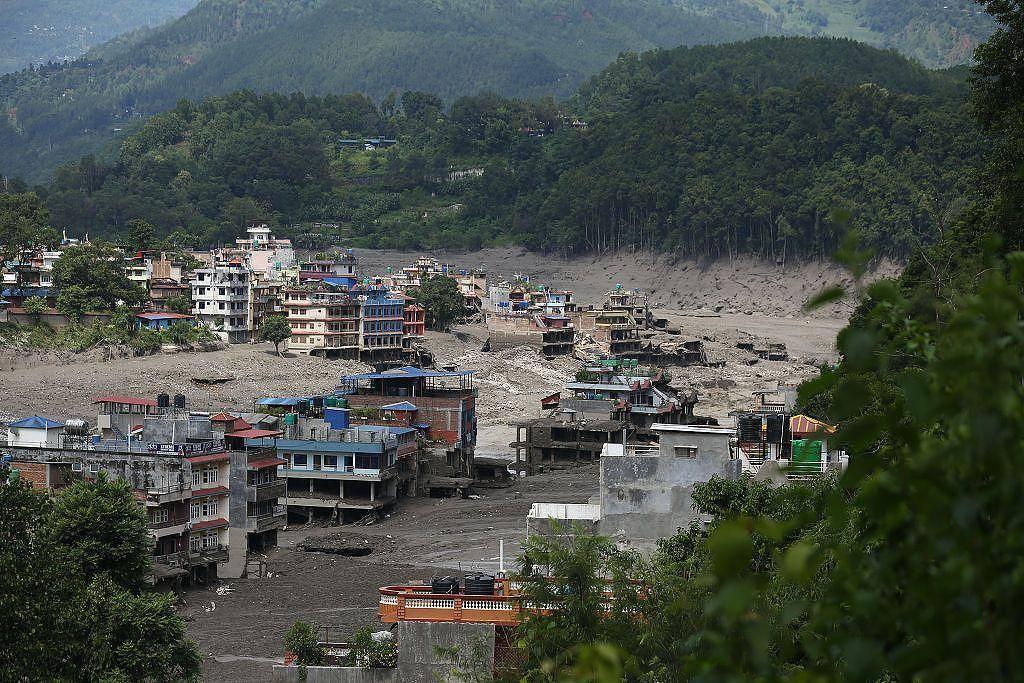
Glacial collapse triggered floods along the Nepal–Tibet border after a quake At least hundreds killed and missing; death toll surpasses 300
4 outlets told this the same way.
Glacier collapse triggers floods
Satellite images and geological analyses have pointed to a glacier collapse near the Nepal–Chinese border as a likely driver of the deadly floods, with experts saying a lower part of a glacier detached and fell into the valley floor at a depth of hundreds of meters. Al Jazeera Net reported that it is likely the collapse resulted from a sudden melt of snow occurring in conjunction with an earthquake that struck the region minutes before the events, and it said Nepalese officials indicated the earthquake could be a possible cause. The BBC said the US Geological Survey confirmed the disaster resulted from a glacier collapse and debris flow, and it reported that the floods struck early Wednesday in the Rasuwagadhi area, north of Nepal’s capital Kathmandu.
The BBC also said the US Geological Survey had initially reported a 4.4 magnitude earthquake but later clarified there was “no earthquake,” describing the disaster instead as “a ‘glacial collapse and debris flow,’ causing ‘catastrophic downstream effects below the watercourse.’” In the same BBC account, the US Geological Survey’s confirmation of a glacier collapse and debris flow set the terms for search operations on both sides of the border as authorities expected the death toll to rise.

Missing totals and rescue
Rescue teams intensified their efforts to locate about 1,500 missing people in Nepal and China after flash floods in the Himalayas left at least 273 people dead along the border between the two countries, according to Al-Jazirah Net. The BBC reported that Nepal’s police said on Thursday that 359 bodies had been recovered from flood-affected areas, while Nepal said 826 people were missing and communication had been cut with 644 tourists, according to Sonil Sharma, spokesperson for the Nepal Tourism Board. Al-Jazirah Net said rescue teams in Nepal used helicopters to search for survivors and drop emergency supplies to thousands of stranded people, and it reported that the Nepalese army conducted air operations.
In Beijing, CCTV reported that the number of people missing due to the landslide disaster in Gyirong Prefecture, Tibet, rose to 558, with 260 foreigners, while the death toll on the Tibetan side remained at three, according to Al-Jazirah Net. The BBC also described how the US Geological Survey clarified there was “no earthquake,” and it said the International Centre for Integrated Mountain Development warned of a possible second wave of floods from debris flowing into river networks.

Second-wave risk and monitoring
As scientists worked to reconstruct the sequence of events, Basanta Raj Adhikari, director of the Disaster Studies Center at Tribhuvan University in Nepal, told BBC News there is a risk of a “second and third waves” of floods on Thursday (27) or Friday (28). Folha de S.Paulo reported that the main hypothesis was that an ice avalanche initiated a sequence of events, and it said specialists were trying to analyze satellite images to determine the exact location of the landslide and whether any glacier lake suddenly dried up. The BBC said the disaster was instead the result of a “glacial collapse and debris flow,” and it described downstream impacts including roads, communications, and power supplies being disrupted and the main road to Kathmandu being closed.
Folha de S.Paulo reported that Nepal’s Prime Minister Balendra Shah said the “whole nation is shocked and deeply saddened” and that authorities would coordinate the response with China. In the same Folha de S.Paulo account, Chinese President Xi Jinping urged a “large-scale” search and promised more robust monitoring and early warning systems to prevent further impacts.