Iran02 June, 20263 min read
Trump Warns US Will Bomb One Bridge Or Power Plant If Iran Fires In Strait Of Hormuz
This article is an automated aggregation of coverage from news outlets. Our editorials offer in-depth analysis curated by the NewsCord team.
Trump threatened to bomb Iranian bridges and power plants whenever Iran targets ships in Hormuz. U.S. conducted multiple consecutive nights of strikes against Iranian targets, including ports.
The Guardian was read line by line by the Watchdog: 5.9. See the score →
Hormuz threat and strikes
The United States entered its 11th consecutive night of strikes on Iran, with CENTCOM saying it targeted Iranian military operations centers, maritime capabilities, aircraft hangars, drone storage facilities, and military logistics infrastructure to further degrade Iran's ability to threaten commercial shipping in the Strait of Hormuz.
U.S. President Donald Trump also warned that if Tehran fires on ships in the Strait of Hormuz, the United States will bomb and destroy ONE BRIDGE OR POWER PLANT, specifying that potential targets include those located next to, or in, the Capital City of Tehran.

Iran’s response to the threat was framed by a Tasnim News Agency military source, who said that if the Americans target a bridge or a power plant in Iran, Iran will, in turn, strike infrastructure and bridges in the region, including energy facilities where the United States has interests.
In parallel, CENTCOM said that over the past three months, Iran attacked more than 30 commercial vessels transiting the waterway, and the BBC reported that the U.S. military announced the eleventh consecutive day of strikes against Iran.
The BBC also reported that Axios said Mossad chief Israel’s intelligence head traveled to Washington two weeks ago to discuss the war with Iran and met with CIA Director John Ratcliffe and White House officials.
Rubio presses diplomacy
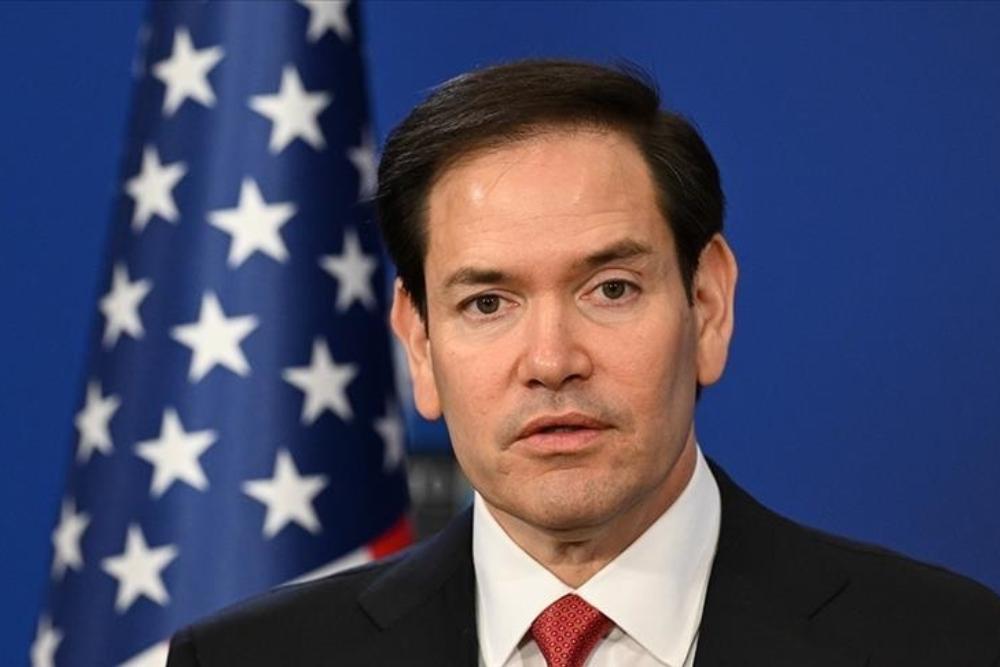
U.S. Secretary of State Marco Rubio told an ASEAN meeting in Manila that the United States remains open and willing to engage in positive and constructive negotiations and discussions, provided that the commitments made are honoured.
Rubio said the problem was that Iran was not serious about talks, adding, "The problem we’re having right now is that they’re not serious about talks."

Rubio also warned that Iran’s demand to control the Strait of Hormuz would create a dangerous precedent, saying, "If we create a precedent in the Middle East where a nation state can decide that they are going to control an international waterway".
The BBC reported that Rubio reiterated the same warning about fees and control of navigation at the ASEAN meeting in Manila, stressing that freedom of navigation in international waterways is under threat.
In the same period, the BBC said the United States estimated the cost of the war with Iran at about $37.5 billion so far, while Defense Secretary Pete Hegseth told a Senate appropriations hearing that the current estimate is $37.5 billion and that a request for about $67 billion in additional Pentagon funding is urgent and necessary through the end of September.
Costs, airspace, and fires
As the conflict widened beyond the Strait of Hormuz, the BBC reported that the European Union Aviation Safety Agency urged airlines not to operate flights through Jordanian airspace, saying the security situation deteriorated rapidly since mid-July 2026 with ongoing military operations affecting Jordan’s airspace. The BBC also reported that the Jordanian army detected and intercepted six missiles coming from Iranian territory that targeted the kingdom’s lands and intercepted and shot down four drones from Iran, with the interception and shoot-down not resulting in any human injuries or material damage. In Kuwait and Bahrain, the BBC said Kuwait’s army announced its air defenses were repelling drone attacks originating in Iran and Bahrain said on Tuesday it had intercepted Iranian attacks amid repeated sirens.
The BBC further reported that Iran denied the existence of any secret underground nuclear facility in Kolang Mountain in central Iran after Trump threatened to strike the site, with Iran’s Foreign Ministry spokesman Ismail Bagheri Kani saying on X that Kolang Mountain shows no nuclear activity. Separately, the BBC reported that a fire broke out Tuesday in southern Iran on a hill overlooking the city of Shiraz, with IRNA describing dense smoke and flames on the Drak Hills and the mountains near Bab-ul-Quran and saying about a hundred firefighters were deployed on the ground.