
China · updated 1h ago · 2 min read
Trump And Xi Set Washington AI Safeguards And Incident Notification System Agenda
US proposes AI safety incident notification system to share AI incidents with China. New York talks advance AI, tariffs, and trade-truce extension ahead of Trump-Xi summit.
5 of 8 outlets skipped it: bessent and He held talks in New York ahead of the Trump-Xi summit.
19outlets compared
Same story, two versions
tap a side to read it in full
CNBC
“The most likely outcome, analysts say, would be for Washington and Beijing to agree on small steps”Read the original ↗
Reuters
“proposing a new AI safety notification mechanism for US President Donald Trump and Chinese President Xi Jinping”Read the original ↗
One outlet forecasts incremental progress, while another highlights a concrete safety mechanism.
AI “red phone” talks
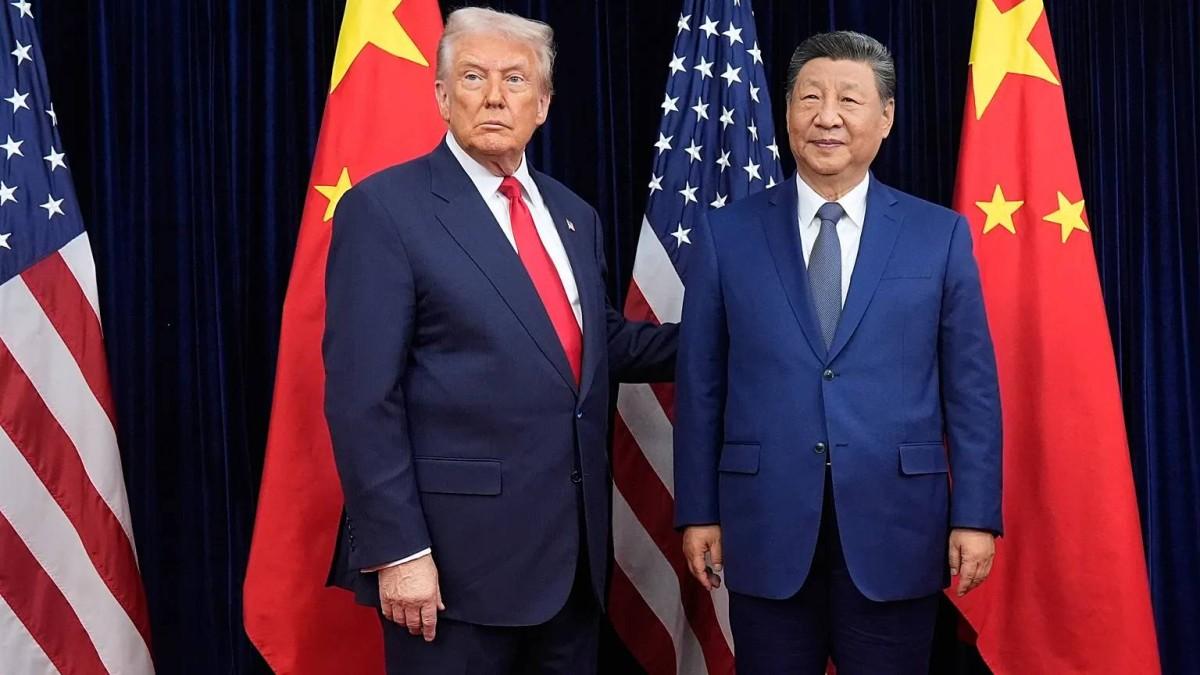
President Donald Trump and Chinese President Xi Jinping are set to meet in Washington on Thursday, with AI safeguards and incident management among the agenda items discussed ahead of the summit.
U.S. Treasury Secretary Scott Bessent told that the two sides discussed “creating a new US-China AI dialogue” with “a notification system for shared objectives and threats,” after talks with Chinese Vice Premier He Lifeng.
China’s Foreign Ministry spokesperson Guo Jiakun rejected the framing of AI as a threat to the Chinese Communist Party, saying, “Fear-mongering, confrontation and vicious competition will only hamper efforts toward sound global AI governance.”
Alison Szalwinski said both sides appear to agree on “some of the risks posed by AI,” but she warned that “there’s some really significant disagreements on how to manage those risks.”
Rare earth leverage
Rare earths and critical minerals are shaping the tone of the Trump-Xi summit, with Reuters reporting that Trump took a “less combative approach than usual” ahead of the meeting. REmily Kilcrease said the United States and the Trump administration are in “a different position with China where they can't use that overly coercive, over-reaching approach,” pointing to rare-earth export controls and the need to “walk some stuff back.”
Reuters said China controls up to 70% of global rare-earth mining, 85% of refining capacity, and about 90% of rare-earth metal alloy and magnet production, making rare earths a chokepoint for tech and auto manufacturing. RShabakat Tawasil al-ikhbariyah said export controls imposed by Beijing since April 2025 have shown that dominance gives it leverage in facing U.S. restrictions on semiconductors and their manufacturing equipment.
Trade truce, next steps
The summit is also aimed at cementing a trade truce and preventing a return to tariffs and retaliation, with Shabakat Tawasil al-ikhbariyah describing a plan to set up a “Trade Council” to explore reductions in tariffs on non-sensitive goods. The same source said rare earths are among the top issues, while it described AI as the toughest test because both sides fear unilateral regulation could grant the other military and economic advantage.
Reuters said the United States has not threatened to slap steep tariffs on Chinese imports or ban exports of U.S. technology ahead of the meeting, and it cited the rare-earth export controls as the reason Washington cannot use the same coercive approach. RMawqiʿ 24 reported that Chinese customs data showed U.S. imports of Chinese rare earth magnets fell 21% in August compared with July, reaching 512 tons, as the sector awaits the outcome of the Trump-Xi meeting.