Technology and Science10 August, 20262 min read
Drought Slows Europe’s Rhine, Rhone, and Danube to Record Lows in July
This article is an automated aggregation of coverage from news outlets. Our editorials offer in-depth analysis curated by the NewsCord team.
Rhine, Danube, and Rhone hit historic July low levels, impairing shipping and power. Record-low water reduces cargo capacity and challenges nuclear power plants reliant on cooling.

9 outlets told this the same way.
France 24 was read line by line by the Watchdog: 0.0. See the score →
Rivers at Record Lows
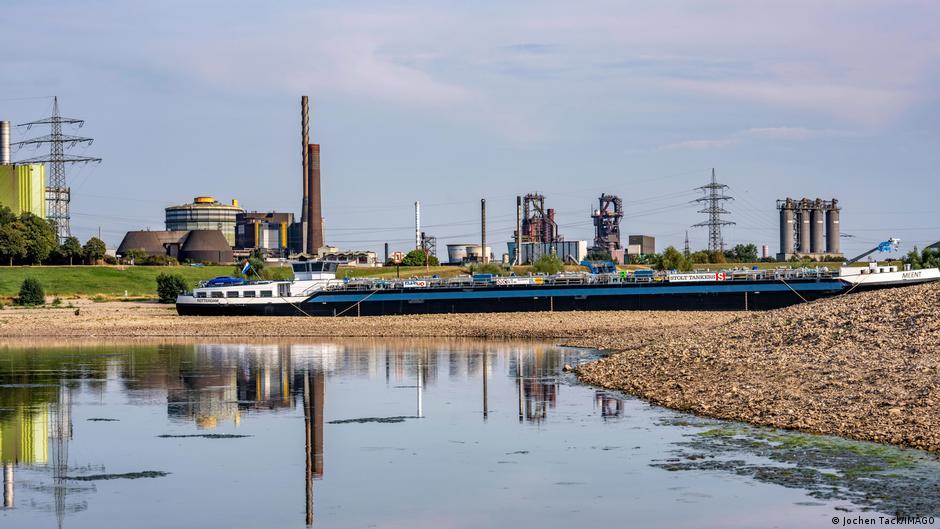
European rivers including the Rhine, Rhone and Danube have slowed to a trickle never-before recorded in July, with record-low average flow rates observed along 95 percent of monitored portions of the Thames, 85 percent of the Rhine and some two-thirds of the Danube, according to an AFP analysis relayed by Copernicus. The Atlantic’s photo report showed the Rhine at very low levels in Kaub, Germany on August 10, 2026, and also showed a marina surrounded by exposed riverbed along the Waal River in Nijmegen, Netherlands on August 8, 2026.
In the Danube basin, the situation reached into energy infrastructure, with a report noting that the Paks Nuclear Power Plant was operating with only one of its four reactors at minimum output because historically low Danube water levels constrained cooling capacity. RTL Today said the Rhine has been in the most severe level of drought almost continuously since early June along much of its course from the Swiss mountains to western Germany, while the Danube was hit especially across the Hungarian portion.
Heat, Drought, and Power
Europe is bracing for another summer heatwave as dangerously low river levels threaten water supplies, with France 24 reporting forecasts of temperatures in the mid-30s Celsius in parts of Britain and France and spread across much of the continent. France 24 also tied the latest heatwave to drought and major wildfires, saying dangerously low river levels threaten water supplies and that low levels along the Danube have already forced Hungary and Romania to shutter nuclear plants that rely on the water for cooling since late July.
Tempo.co, via DW, described the Danube’s impact on Hungary’s Paks power station, saying that normally producing about 40% of the country’s electricity needs, only one of four turbine units was still operating due to record-low water levels in the Danube. Tempo.co further said that the maximum available capacity was temporarily limited by eight to nine gigawatts during the most recent heat waves at the end of June and in mid-July 2026, corresponding to up to one-fifth of the nuclear power capacity normally available to France in the summer.

Restrictions and Consequences
In France, drought has triggered broad water-use limits, with Il Sole 24 ORE reporting that almost 70 per cent of France is subject to water use restrictions and that the Ministry for Ecological Transition called a crisis meeting for Wednesday 12 August. Il Sole 24 ORE added that as of 9 August, all 99 departments in mainland France were at least at the ‘vigilance’ level, with 67 classified as being in a crisis situation and 21 on heightened alert.
DW described how drought affects daily life and ecosystems, saying that in many areas along the Rhine such as the cities of Cologne and Düsseldorf, people can now walk where strong currents used to run. DW also warned that when river water warms up and oxygen content drops, fish die-offs can follow, quoting scientist Yanith Volker saying, “We especially notice on the Rhine a drying of pebble banks.”