Technology and Science28 September, 20262 min read
Iran Blockade Of Strait Of Hormuz Drives Energy Security Focus At New York Climate Week
This article is an automated aggregation of coverage from news outlets. Our editorials offer in-depth analysis curated by the NewsCord team.
Iran's seven-month blockade of the Strait of Hormuz pushed oil and gas prices higher. Disruptions to energy markets and AI growth intensified the clean energy push at Climate Week.

Energy security drives shift
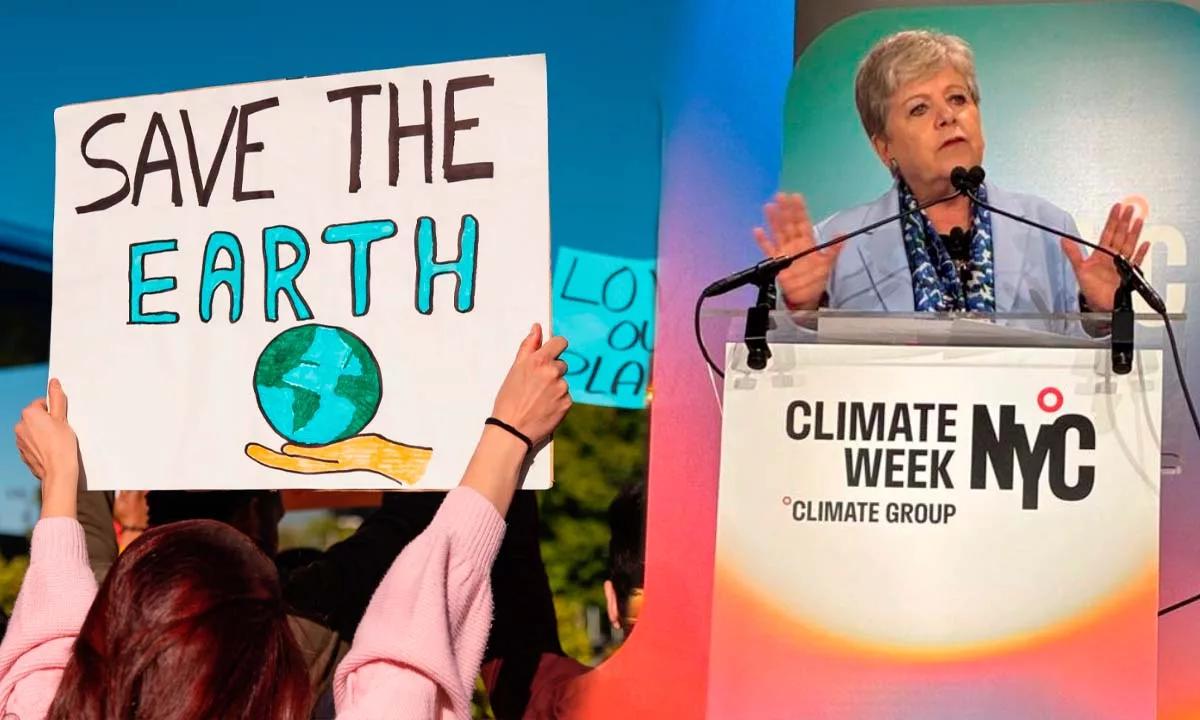
New York Climate Week centered on disruptions to global energy markets after Iran’s seven-month blockade of the Strait of Hormuz pushed oil and gas prices higher, reshaping debates that had previously focused more on reducing emissions.
UK Foreign Secretary Ed Miliband said, “I think people now see the imperative of energy security, the imperative of energy independence that clean energy offers,” and he compared the risks of fossil fuel dependence to riding the “Russian mountain.”

Icelandic Prime Minister Katrín Jakobsdóttir urged attendees to “Start before it’s necessary. Build resilience before the crisis tests it,” citing her country’s experience after the oil crises of the 1970s.
Turkey, host of the next UN Climate Conference, proposed a global target for 35 percent of final energy consumption to be covered by electricity by 2035, and the proposal contrasted with U.S. President Donald Trump’s UN speech comparing climate warnings to “apocalyptic warnings about artificial intelligence.”
AI, data centers, and backlash
The debate at New York Climate Week also shifted toward the rise of artificial intelligence and its energy use, as the war with Iran and AI growth were described as reinforcing economic and security arguments to accelerate the transition to clean energy. Simon Stiell, head of the UN climate body, warned that tech companies face social pushback due to heavy energy and water use, while Varun Sivaram, CEO of Emerald AI, argued that flexible data centers can facilitate the integration of renewables into the grid.
David Crane stressed that carbon capture systems will be needed to maintain public support, and Pedro Pizarro, CEO of Edison International, linked rising gasoline prices in California to “greatly boosted interest in electric vehicles.” TechCrunch framed the AI boom as taking over Climate Week and described how some climate tech founders worried that the data center boom was distracting from other promising segments of climate tech, including those meeting targets without relying on AI mania.
What comes next for policy
Yale School of the Environment faculty at Climate Week tied the stakes of climate communication to the age of AI, with Anthony Leiserowitz saying, “The question is how we use it wisely.” Leiserowitz and colleagues used AI to analyze 6.4 million articles published by five major U.S. news outlets between 1984 and 2025, and they found that climate change made up just over half of 1% of all coverage.
Jennifer Carman, director of Survey Strategy at the Yale Program on Climate Change Communication, reported that framing adaptation policies around “climate change” instead of “extreme weather” produced “a difference of 90% support versus 80% support,” and she said, “It’s not, for example, a drop of 80% support to 20% support.” Eli Fenichel argued that decision-makers need to connect the data behind wealth-based indicators, calling it “a boring plumbing problem,” and he said AI can help by sorting and harmonizing that information.