Iran17 July, 20263 min read
Iran Targets Kuwait Power Generation And Water Desalination Plants For Fourth Day
This article is an automated aggregation of coverage from news outlets. Our editorials offer in-depth analysis curated by the NewsCord team.
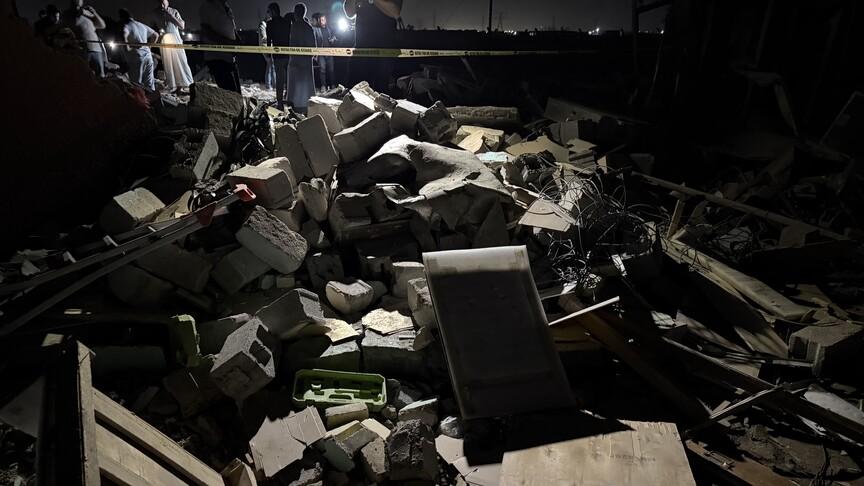
Iran targeted Kuwait's power-generation and desalination plants overnight, fourth consecutive day of attacks. The strikes damaged critical infrastructure, including desalination facilities, threatening Kuwait's water supply.

Al-Monitor was read line by line by the Watchdog: 4.9. See the score →
Desalination under fire
Iranian attacks on Gulf infrastructure have raised fears for water and electricity supplies, with Kuwait reporting that Iran targeted power generation and water desalination plants for the fourth day in a row.
CNN reported that Kuwait’s Ministry of Electricity and Water and Renewable Energy said fires were brought under control and extinguished, but “a number of generating units went out of service.”

The stakes extend beyond Kuwait, because desalination accounts for about 90% of Kuwait’s freshwater needs, while the same CNN report said Jordanian air defense systems intercepted and shot down three Iranian missiles aimed at the kingdom.
The Media Line described how Iranian attacks on Kuwaiti power-generation and desalination facilities have exposed a vulnerability reaching into homes, hospitals and businesses, and it said Kuwait obtains roughly 90% of its drinking water through desalination.
In the same account, Dr. Kaveh Madani of the United Nations University Institute for Water, Environment and Health warned that repeated attacks could force rationing within days, depending on storage, spare capacity and repair times.
Shipping, retaliation, threats
The conflict has also escalated around the Strait of Hormuz, where Iran’s Revolutionary Guards said they struck U.S. military assets across the Middle East after another night of U.S. bombardment of Iranian cities.
Insurance Journal reported that U.S. Central Command said its ninth consecutive night of strikes against Iran aimed at “degrading” the country’s ability to attack commercial vessels in the strait’s vital shipping lanes.
In a separate account, Iran’s Revolutionary Guards said two oil tankers had “exploded” and were immobilized after attempting to transit the strait via an “unsafe” route, while Reuters could not immediately verify the incident.
Trump threatened that the United States would respond to any attack by Tehran on ships in the Strait of Hormuz by destroying a bridge or a power plant inside Iran, writing on Truth Social on Wednesday, July 22: “the United States will bomb and destroy a bridge or a power plant.”
The Media Line framed the vulnerability as one where a strike on a power station can disrupt water supplies even if the desalination plant itself remains standing, because desalination systems require continuous electricity to process seawater and pump it through distribution networks.
Diplomacy strained, risks widen
Despite the escalation, Insurance Journal said Iran’s Foreign Ministry signaled that mediators had recently presented proposals to Tehran, indicating diplomatic contacts remained active.
The same report quoted U.S. Secretary of State Marco Rubio vowing that the United States would continue to target Iran as long as it attacked global commercial shipping, while Iran’s Foreign Ministry spokesperson Esmaeil Baghaei said he could not provide details.
CNN Arabic reported that Kuwait’s attacks came on the fourth consecutive day, while the Jordanian Armed Forces said air defense systems intercepted and shot down three Iranian missiles aimed at the kingdom on Tuesday.
The Media Line warned that a sustained campaign striking production, power and distribution networks at the same time would be another matter, and it said the wider pattern is grim as water, electricity, transportation and energy infrastructure are increasingly being damaged across the conflict.
Folha de S.Paulo said Iran resumed attacks on Monday night (20) against a water desalination plant in Kuwait, heightening fears of a supply crisis for about 60 million people in the six countries that make up the Gulf Cooperation Council.