Protests03 January, 20264 min read
Iranian Security Forces Kill At Least 12 Protesters as Economic Protests Spread to Tehran
This article is an automated aggregation of coverage from news outlets. Our editorials offer in-depth analysis curated by the NewsCord team.
Security forces killed at least 12 protesters during clashes Protests spread to Tehran and at least 40 other cities nationwide

6 outlets told this the same way.
Economic protests in Iran
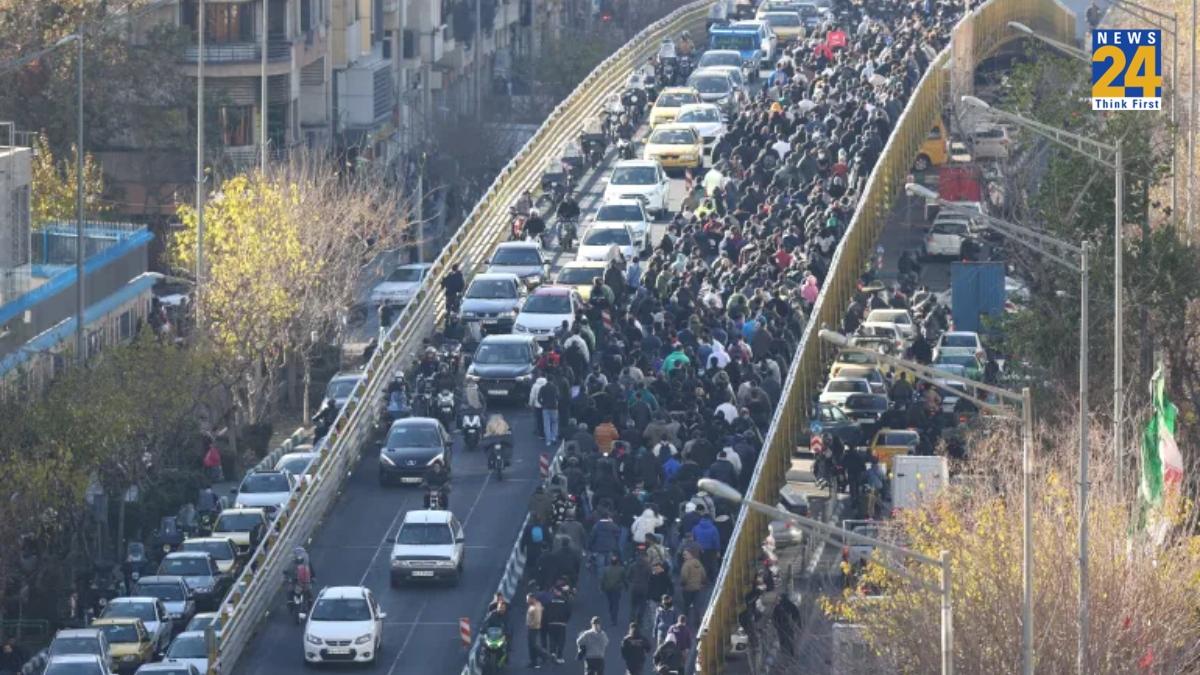
Widespread economic protests that began after the rial plunged and food prices spiked have spread into Tehran and across many provinces, producing deadly clashes with security forces and sharply differing casualty counts between sources. News24online reports the unrest began after the rial plunged to a record low and started as demonstrations over soaring living costs and a roughly 72% jump in food prices, spreading beyond Tehran's Grand Bazaar to 17 of the country's 31 provinces. News24online says clashes with security forces have left at least seven people dead and 44 arrested so far.
“What started as demonstrations over soaring living costs and a roughly 72% jump in food prices has spread beyond Tehran’s Grand Bazaar to 17 of the country’s 31 provinces.”
PBS, citing activist networks, reports a far larger toll, saying the Human Rights Activists News Agency recorded unrest in over 170 locations across 25 of 31 provinces, with at least 15 people killed and more than 580 arrested. Gulf News calls the unrest Iran's biggest protests since the 2022-23 Mahsa Amini movement and highlights that casualty accounts are conflicting and hard to verify. Together, the accounts agree that economic collapse and high prices catalyzed large demonstrations that spread geographically, while they diverge on death and arrest tolls and the reported scale of mobilization.
Tehran government response
News24online reports President Masoud Pezeshkian's government has pledged reforms, blamed "enemies" for the crisis, appointed a new central bank governor, and removed some university security managers while avoiding a full-scale crackdown.
That portrayal suggests attempted management and limited concessions.

Tehran Times (West Asian) says police have largely avoided lethal force and focused on arrests but notes Police Chief Brig. Gen. Ahmad-Reza Radan has ordered an end to what he called a policy of appeasement.
Gulf News reports authorities have used security forces, arrests, and information controls and quotes Supreme Leader Khamenei warning that "rioters must be subdued."
PBS notes state media silence and reporting restrictions that limit independent coverage.
Together, these sources depict both efforts at limited reform and warnings of possible escalation, differing in tone with some emphasizing restraint and others emphasizing force and information control.
Conflicting reports of unrest
Reports differ on the character and victims of the violence. Tehran Times provides granular local incident reporting, saying at least two security personnel were killed and 13 others injured and that one rioter died when an explosive he was holding detonated prematurely. It also describes attacks on civilians in Marvdasht and Hamedan, reporting a fruit seller was killed and an elderly man was severely beaten.
“At least two security personnel have been killed and 13 others injured. One rioter died when an explosive he was holding detonated prematurely.”
Gulf News similarly records that Iranian media say a Revolutionary Guards member was killed during clashes, underscoring conflicting accounts. News24online notes clashes with security forces and a growing geographic spread. PBS warns that verifying individual violent incidents is difficult given state media silence and the reliance on activist videos and short online clips.
Tehran Times also highlights an online disinformation campaign, saying old footage is being repurposed and overdubbed by Persian-language Western outlets and exiled Iranian actors. It adds that some posts on X have openly urged followers to attack and kill police. These differences show some sources reporting specific local attacks and casualties while others emphasize verification challenges and online manipulation.
Iran protests' regional impact
Observers warn the protests could have broader regional and political consequences, even as the immediate trajectory remains uncertain. Gulf News places the unrest in a fraught international context, noting Iran is recovering from a 12-day war with Israel in June during which the US struck Iranian nuclear sites. Gulf News also notes that UN nuclear-related sanctions have returned and Western governments are alarmed by Tehran’s nuclear advances.
PBS similarly suggests Tehran’s regional 'Axis of Resistance' has been weakened and links the protests to recent regional setbacks. News24online reports that international attention is high and that authorities warn they will respond strongly to any external aggression, calling the situation volatile and its trajectory uncertain. Together, these accounts suggest the protests are not only a domestic economic and political crisis but could affect Iran’s regional posture and prompt international concern, though they differ on which regional developments they foreground and how imminent a harsher crackdown appears.
Unrest escalation risks
Analysts and multiple reports emphasize uncertainty and warn the unrest could escalate beyond economic grievances into wider political conflict. News24online says the unrest is widening from economic grievances into broader political discontent, echoing the large and deadly 2022 protests and noting an uncertain trajectory. Gulf News cautions that the state's response and worsening economic conditions will determine whether protests escalate into a harsher crackdown.
“Observers note the unrest is widening from economic grievances into broader political discontent, echoing the large and deadly 2022 protests.”
PBS highlights economic collapse drivers, including roughly 40% inflation and new fuel pricing, that increase pressure on households and link immediate hardship to sustained political anger. Tehran Times points to policing choices and online incitement as factors that could change the dynamics of the unrest. Collectively, the sources depict volatile, economically driven protests with political undertones and contested narratives about casualties, responsibility, and likely outcomes.