@globaltimesnews
Iran's IRGC says hit 3 oilers in Hormuz Strait, 3 U.S. vessels elsewhere in retaliatory strikes - Global Times
 ABC News
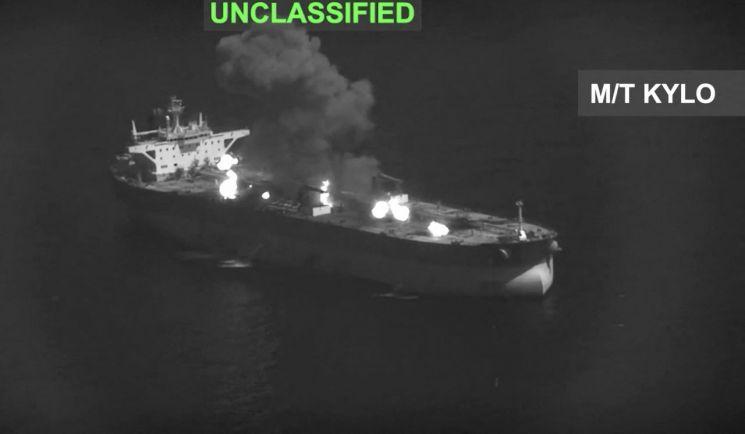
Iran live updates: US forces destroyed 5 Iranian oil tankers, CENTCOM says
 Afghanistan International
The IRGC reported an attack on an unmanned American vessel in the Strait of Hormuz.
 Air & Space Forces Magazine
US Fighters, Drones Strike 3 Iranian Oil Tankers After Iran Fires on Navy Ships
 Al Jazeera
Can Iran enforce a restricted zone in the Strait of Hormuz?
 Al-Khaleej
Burning tanker war: what are the details of the latest maritime confrontation between the United States and Iran?
 Al-Sharq lil-Akhbar
Washington views the targeting of its ships as a “major escalation” and expands strikes on Iranian tankers.
 Alyawm al-Sabi‘
Tehran prepares to announce a restricted area outside Hormuz and confirms: a deal will be reached within days with Oman on a temporary navigation corridor in the Hormuz
Iranian Foreign Ministry: A Qatari delegation held “good” meetings with Araghchi in Tehran, and the ball is now in Washington’s court
 Anadolu Ajansı
US forces destroyed 5 Iranian tankers after IRGC attacks on US Navy warship: CENTCOM
 AP News
US strikes 3 Iranian oil tankers after saying warships were targeted with ballistic missiles
 Associated Press
Iran claims strike on US ship in Strait of Hormuz as fighting escalates
 Associated Press
US military says it has destroyed 5 Iranian oil tankers after missile attacks on Navy warship
 BBC
The United States and Iran exchange attacks against oil tankers as the conflict intensifies
 BBC
The attack by American forces on Iranian oil tankers; the IRGC announced its retaliatory strikes.
 BBC
US and Iran trade retaliatory attacks on ships as conflict flares
 Bloomberg Línea
The U.S. Army attacks targets near Kharg Island in Iran, according to Fox News
 CBC
Iran claims strike on U.S. ship in Strait of Hormuz as fighting escalates
 CBS News
Live Updates: Iran threatens "more painful" retaliation to U.S. strikes on Iranian oil tankers
 chinadailyhk
Iran's IRGC says hit 3 oilers in Hormuz Strait, 3 US vessels elsewhere
 Clarin
A U.S. missile struck an Iranian oil tanker off Kharg Island
 CNBC
U.S. attacks 3 Iranian oil tankers after missiles target Navy warships
 CNN
US military strikes three Iranian tankers in retaliation for missile attacks
 CNN
Iran launches missile barrage at Jordan after US strikes 5 Iranian tankers
 Daily Finland
US attacks 3 oil tankers off Iranian coasts, Iran hits 3 oilers in Hormuz
 Diario Huarpe
Iranian missiles strike a US aircraft carrier.
 DW
Iran: US hits 3 IRGC-linked oil tankers
 DW
Targeting of three Iranian oil tankers following the attack on U.S. warships.
 EA WorldView
UPDATES: US War on Iran, Day 194 — Americans Strike 3 Iranian Oil Tankers
 EFE
Iran responds to the U.S. with attacks on aircraft carriers, vessels, and a naval drone in the Strait of Hormuz
 El Comercio Perú
Missile from the United States struck an Iranian tanker off Kharg Island
 El HuffPost
The United States attacks three Iranian oil tankers after launching missiles at two warships: "If you fire at two of ours, we will destroy three of yours"
 El Mundo
The United States attacks three Iranian vessels after the launch of missiles at an American aircraft carrier.
 El Mundo
Iran responds after US attacks on three of its oil tankers
 El Periódico
Iran claims to have attacked a United States naval drone in the Strait of Hormuz
 Elnashra
Iran Expands Its Strikes to American Maritime Vessels... Has a New Phase of Confrontation Begun?
 Euronews
Three by three… the IRGC targets 3 ships tied to Washington in response to strikes on Iranian tankers
 Euronews
Iranian forces target US naval drone trying to enter Strait of Hormuz
 FOX 8 News
US military says it has destroyed 5 Iranian oil tankers after missile attacks on Navy warship
 Fox News
US strikes destroy multiple Iranian oil tankers near Iran's Kharg island
 France 24
Middle East live: US destroys five Iranian oil tankers as Iran threatens Kuwait and Bahrain
 Goshen News
US military says it has destroyed 5 Iranian oil tankers after missile attacks on Navy warship
 Haaretz
U.S. strikes Iranian tankers after more attempted missile attacks on Navy ship
 Hürriyet Daily News
Iran retaliates after US strikes oil tankers
 Informat.ro
Iran claims responsibility for the attack on a US naval drone in the Strait of Hormuz, following the United States’ attacks on three Iranian oil tankers
 Iran International
Mutual attacks by the United States and the Islamic Republic have intensified the battle over the Hormuz Strait.
 Juridat al-Riyadh
TEXT_2 (translated): US Secretary of Defense: The Iranian oil tankers are 'unprotected' and we will destroy them if Iran targets our ships.
 KCH FM
Iran Attacks U.S. Navy Drone in the Strait of Hormuz After CENTCOM Offensive
 Khabaronline
What was the news in the southern waters of Iran last night? / From missile attacks on American ships to targeting Iranian oil tankers / Hormuz and Kharg in the crosshairs; the war has reached the energy hub
 Khoozar-e-Mahr
Sailing Americans in Iran’s range.. a shift in the regional deterrence equation
 Kurdistan24
The Iranian Revolutionary Guard Corps announces the targeting of an American aircraft carrier and a destroyer with ballistic missiles
 La Noción
Iran raises the tension in Hormuz by stating that it attacked a U.S. naval drone.
 La Razón
Iran claims to have attacked a US naval drone in the Strait of Hormuz.
 La República
Iran Responds to the U.S. with Missiles Against a Carrier and Attacks on Oil Tankers in the Strait of Hormuz
 Libertad Digital
Iran Responds to the U.S. and claims to have attacked six vessels after the blow to its oil tankers
 Marietta Daily Journal
AP News Summary at 6:47 p.m. EDT
 Markaz ar-Rawābiṭ ad-Dirāsāt al-Istrātījiyya wa-s-Siyāsiyya
Tanker War: An American–Iranian Clash Over Hormuz Rules
 Mehr News Agency
US aircraft carriers within Iran's reach
 Middle East Eye
US military says it destroyed five Iranian oil tankers
 NBC News
U.S. strikes 3 Iranian oil tankers after Iran targets Navy warships, military says
 NBC News
U.S. strikes five Iranian tankers after attempted attacks on Navy warship, CENTCOM says
 NDTV
US Says It Destroyed 5 Iranian Tankers After Attacks On American Warship
 Negocios
Iran says it has attacked a US naval drone in Hormuz
 New York Post
US destroys 5 Iranian oil tankers near Kharg Island to turn the screws on Tehran
 news8000
US military says it destroyed 5 Iranian oil tankers after Tehran fired missiles at a US warship twice over 2 days
 Newser
US Says It Destroyed 5 Iranian Oil Tankers
 Newsquawk
US Central Command says their forces destroyed five Iranian crude oil carriers on Tuesday after the IRGC targeted a US Navy warship with ballistic missiles twice over the past two days
 NPR
U.S. and Iran trade attacks on ships as fighting flares up again
 Palestine Chronicle
Iran Says US Warships Forced to Flee after Ballistic Missile Attack
 Periodistas en Español
Iran attacks a U.S. aircraft carrier for the first time in the midst of the war
 Rediff
Iran fires 'several ballistic missiles' at US aircraft carrier
 Reuters
US, Iranian forces fire at vessels in waters near Iran
 Saratogian
US military says it has destroyed 5 Iranian oil tankers after missile attacks on Navy warship
 Sky News Arabia
Hagerty to Iran: We will sink your oil tankers if you fire
 South China Morning Post
Iran attacks naval drone near Hormuz after US strikes 3 oil tankers
 STL.News
US Strikes Three Iranian Oil Tankers
 Tabnak
Fresh images of the U.S. attack on three Iranian oil tankers
 Task & Purpose
US forces hit three Iranian tankers after carrier attacked
 The Guardian
US military says it struck three Iranian tankers after American warships came under missile attack
 The Hill
Iran attacks US ship in Strait of Hormuz
 The Hill
US military destroys 5 Iranian oil tankers
 The Jerusalem Post
Iran targets three US ships, three oil tankers in Hormuz in retaliation for US strikes, IRGC claims
 The Jerusalem Post
US strikes Iranian oil tankers as explosions reported near Kharg Island
 The New York Times
Iran’s Attacks Keep the Strait of Hormuz in a Lethal Stalemate
 The New York Times
U.S. Strikes Three Iranian ‘Shadow Network’ Oil Tankers, Military Says
 The New York Times
U.S. Hits 5 Iranian Oil Tankers, Citing Attempted Strikes on Warship
 The Statesman
Pentagon’s ‘unprecedented’ leak hunt: 50 Joint Staff members face polygraphs over Iran war secrets
 The Times of India
Watch: US strikes 5 Iranian oil tankers near Kharg Island after IRGC targeted American navy ship
 The Washington Post
U.S. military says it hit 3 Iranian tankers after Navy ships targeted
 Today
Iran weighs escalation as it seeks a way out of ‘no war, no peace’ - L'Orient Today
 TRT فارسی
A maritime confrontation between Iran and the United States; attacks on oil tankers and threats to escalate attacks
 Türkiye Today
Iran warns of ‘faster, more intense’ response to US attacks
 Vietnam.vn
The IRGC announced the new attack after launching missiles toward an American aircraft carrier.
 WGY
U.S. Strikes Iranian Oil Tanker Off Kharg Island
 Xinhua
Daily World Briefing, Sept. 6
 Ynetnews
US hits 3 Iranian tankers after IRGC fires missiles at Navy warships | Watch
 Ynetnews
US strikes Iranian tanker off Kharg Island; Tehran threatens retaliation
 Zakros Arabiyya
U.S. military strikes three Iranian oil tankers in response to the targeting of two American warships
 Українські Національні Новини
The US has begun striking Iranian oil tankers – Washington has unveiled a new pressure strategy
 خبرگزاری مهر
IRGC missile response in the Persian Gulf; the U.S. aircraft carrier and destroyer targeted in attacks.
 رادیو فردا
CENTCOM: We targeted three Iranian tankers; Iran threatened to escalate attacks on U.S. vessels
 راهبرد معاصر
U.S. attack on three Iranian oil tankers in the Persian Gulf and the Gulf of Oman + video
 روزنامه دنیای اقتصاد
Urgent/ missile attack on the Iranian tanker at Khark Island
 روزنامه دنیای اقتصاد
URGENT NOTICE from the IRGC about a missile attack on the aircraft carrier and a U.S. destroyer
 عصر ایران
U.S. attack on 3 Iranian tankers (+ video)
 فرارو
The U.S. military claims to have attacked three Iranian oil tankers.
 فرارو
Details of the attack on the American destroyer and the Iranian oil tankers
 یورونیوز
Iran: Attacks on ships affiliated with the United States and tankers coincide with the escalation of Hormuz clashes.
 یورونیوز
Iranian forces targeted a US naval drone as it entered the Strait of Hormuz.
 아시아경제
Iran Strikes Back with Attacks on Six Vessels after U.S. Tanker Strike...Retaliation Intensifies in Strait of Hormuz