Iran
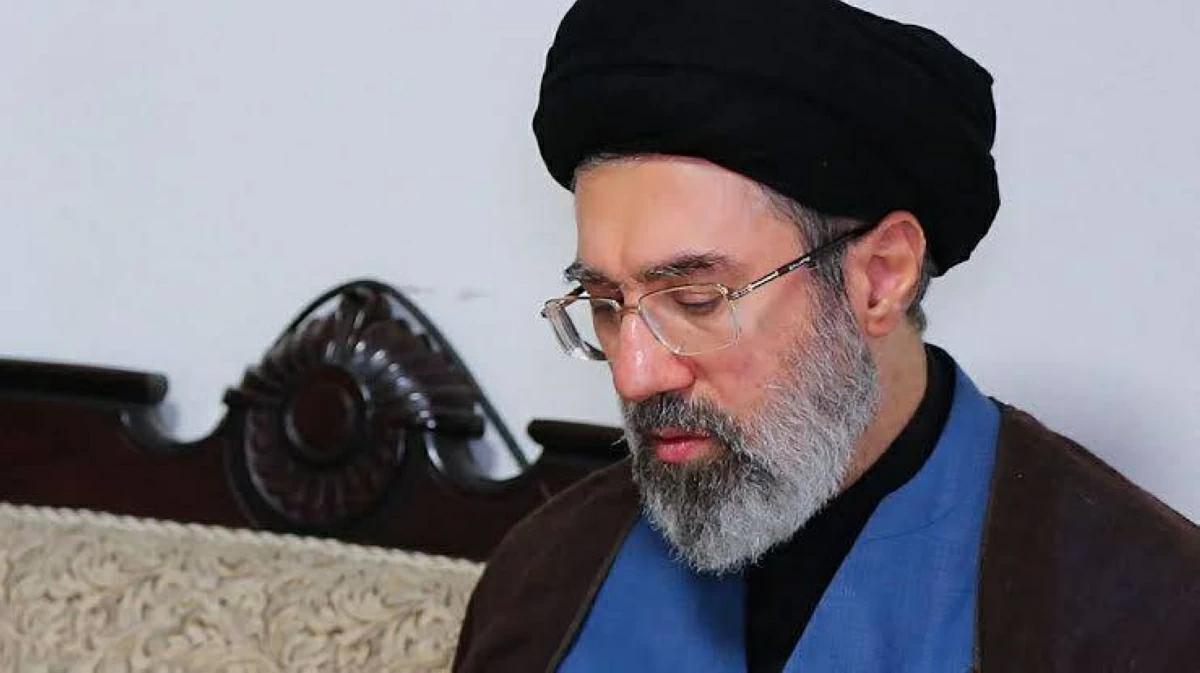
Mojtaba Khamenei Appoints Ahmad Vahidi IRGC Commander-In-Chief, Orders Offensive Operations

At a glance
- Ahmad Vahidi appointed IRGC commander-in-chief by Khamenei.
- Khamenei orders IRGC to strengthen deterrence and prepare for powerful offensive operations.
- Six top posts filled, including Ali Abdollahi as Armed Forces Chief of Staff.
Khamenei reshuffles top posts
Iran’s Supreme Leader Mojtaba Khamenei issued an appointment decree on Monday naming Ahmad Vahidi as commander-in-chief of the Islamic Revolutionary Guard Corps and promoting him to the rank of major general, while also urging him to prepare the IRGC for “powerful offensive operations against the enemy.”
The decree also appointed Ali Abdollahi as chief of staff of Iran’s Armed Forces, with former Army Ground Forces commander Kioumars Heydari named his deputy, and it named Mostafa Izadi as deputy commander-in-chief of the IRGC.
Consistent coverage
Where the coverage agrees
Howl.link and Iran International both flag gaps, but Iran International stresses “several” sensitive posts
In the same reshuffle, Khamenei formally appointed Rear Admiral Ali Azmaei as commander of the IRGC Navy and named Hossein Taeb as commander of the Basij paramilitary force, with the decrees confirming positions that had already been publicly presented without published orders.
The appointments were described as filling vacancies created by US-Israeli strikes since the war began on February 28, including the killing of Abdolrahim Mousavi alongside Pakpour and Defense Minister Aziz Nasirzadeh on the opening day of the war.
Kashmir Observer also said the reshuffle came “following the deaths of several senior officers during the recent conflict with the United States and Israel,” and it described Vahidi, 67, as a former interior minister and defence minister.
Competing accounts of gaps
Iran International said the decrees “formalizing parts of a wartime leadership structure” while leaving “several of most sensitive intelligence posts without publicly named permanent chiefs,” including the IRGC Intelligence Organization and its Intelligence Protection Organization.
It reported that Majid Khademi, who headed the IRGC Intelligence Organization and its Intelligence Protection Organization, was killed in an April 6 strike in Tehran, and it added that no permanent replacement had been publicly announced for Gholamreza Rezaeian, head of the police Intelligence Organization, who was killed in the opening US-Israeli strikes.
The same report said the decrees “settle some of the most consequential vacancies created by US-Israeli strikes since the war began on February 28,” while still leaving two other sensitive posts within the Armed Forces General Staff without publicly announced permanent successors for more than a year.
In a separate framing, Kashmir Observer said Khamenei instructed Vahidi to maintain “maximum deterrence” and ensure readiness for “powerful offensive operations” against adversaries, and it quoted the promotion as coming in view of Pakpour’s “honourable and proud martyrdom.”
The New York Times reported that Iran is replacing its top national security adviser with Mohsen Rezaei, saying a spokesman for President Masoud Pezeshkian wrote on social media that Rezaei would be the new secretary of the Supreme National Security Council.
What the reshuffle changes
The reshuffle was presented as part of Iran’s effort to rebuild its military command structure after heavy wartime losses, with Kashmir Observer saying the appointments “signalling Tehran’s effort to rebuild its military command structure after heavy wartime losses.”
Howl.link said the decrees “settle some of the most consequential vacancies created by US-Israeli strikes since the war began on February 28,” and it added that Abdollahi replaces Abdolrahim Mousavi, who was killed alongside Pakpour and Defense Minister Aziz Nasirzadeh in strikes on the opening day of the war.
It also described Abdollahi as having been serving as commander of the Khatam al-Anbiya Central Headquarters, “the joint operational command responsible for coordinating Iran’s armed forces in wartime,” and it said he oversaw a command central to Iran’s missile operations and its use of the Strait of Hormuz as military leverage.
Kashmir Observer further said Khamenei directed Abdollahi to enhance Iran’s defence capabilities and prepare the armed forces to respond to conventional, cognitive and hybrid threats, while it described the integration between the General Staff and the Khatam al-Anbiya Central Headquarters as part of the decree.
Al Jazeera Net reported that the Supreme Leader said, “Continuous and comprehensive development of military capabilities aims to strengthen deterrence and readiness for offensive operations against the enemy,” tying the leadership changes to deterrence and readiness for offensive operations.
Explore the original reporting
Compare all 10 sources
How each outlet frames it
Every outlet we compared, the headline it ran, and a link to the original article.
West Asian
Ahmadinejad reorganizes the leadership of the army and the Revolutionary Guards with six new appointments
10 August, 2026
Khamenei fills six top military posts as key intelligence gaps persist
10 August, 2026
Iranian Leader issues orders to appoint new leaders in the Army, the Revolutionary Guards, and the Basij
10 August, 2026
Mojtaba Khamenei replaces military, IRGC, and Basij leaders
10 August, 2026
Other
Khamenei urges Vahidi to prepare IRGC for ‘powerful offensive operations’
10 August, 2026
Asian
Mojtaba Khamenei orders biggest military reshuffle since Iran war: Ali Abdollahi named armed forces chief,...
10 August, 2026
Iran Supreme Leader Names Ali Abdollahi New Armed Forces Chief
10 August, 2026
Western Mainstream
Iran Taps Longtime I.R.G.C. Commander Mohsen Rezaei to Top Security Post
09 August, 2026
Read stored source text: Al-Jazeera Net
Iran’s Supreme Leader Ali Khamenei announced on Monday a series of new appointments, including six leadership positions in the armed forces, the Islamic Revolutionary Guard Corps (IRGC), and the Basij People's Resistance Units. Head of the General Staff The Iranian leader’s website stated that a ruling was issued appointing Lieutenant General Ali Abdullahiy as head of the General Staff of the Armed Forces, while Brigadier General Keyumarth Heydari was appointed deputy head of the staff. Al Jazeera’s correspondent in Tehran, Omar Hawash, said Abdullahiy had been leading the Khatam al-Anbiya headquarters until his appointment and led the HQ during the war. IRGC leaders In the IRGC, Major General Ahmad Vahidi was appointed IRGC commander, and Major General Mostafa Izadi its deputy. A decision was also issued to appoint Brigadier General Ali Azamayi as commander of the IRGC Navy. Hawash explained that Iranian media had spoken in recent times of Vahidi as the de facto IRGC commander, before the official decision was issued appointing him. He added that Vahidi is a prominent IRGC leader and previously commanded the Quds Force in the late 1980s, and served as defense minister during former President Mahmoud Ahmadinejad’s era, and interior minister during the late President Ebrahim Raisi’s era. Regarding Azamayi, Hawash said he had commanded the IRGC’s Fifth Naval Zone, a region that includes the Strait of Hormuz and Gulf waters, giving him experience in this area. He noted that the appointment comes at a time when the Strait of Hormuz is one of the most prominent points of contention between Tehran and Washington. Basij Commander The appointments also included Hussein Taib, who was appointed head of the Basij (People’s Mobilization Organization). Hawash said Taib comes from an intelligence background, having commanded the IRGC intelligence apparatus for a period, then worked as a advisor to the former IRGC commander Hossein Salami before the war. He noted that the Basij plays a role in organizing cities and handling protests, and its headquarters, along with other security facilities, were among the sites targeted by American strikes during the war. The Supreme Leader said, “Continuous and comprehensive development of military capabilities aims to strengthen deterrence and readiness for offensive operations against the enemy,” stressing the need to develop capabilities and comprehensive defensive and security preparations for the armed forces and the Basij. He added that the ability to respond effectively to any level of military, composite, and cognitive threats must be provided. He said that the skills and equipment of the naval forces, intelligence gathering, and enhancing their combat readiness must be developed. National Security Council In the context of the new military- and security-oriented appointments, Iranian President Ebrahim Raisi appointed yesterday, Sunday, Massoud Beshkezian, to Madani Mohsen Rezaei as secretary of the National Security Council (NSC) in Iran, replacing Mohammad Bagher Qodr, who resigned, according to the presidential press office. Mehr News Agency reported that Supreme Leader Mijtaba Khamenei issued a decree appointing Rezaei as his representative on the NSC, thus combining the duties of the NSC secretary and the leader’s representative within it, after Qodr held both roles. Meanwhile, the Leader’s website stated that Khamenei appointed Qodr as his political advisor. Rezaei (72) is one of Iran’s revolutionary figures, having held several positions, including leadership of the IRGC, and transitioning from military to political work after the late Leader Ali Khamenei appointed him secretary general of the Expediency Discernment Council in 1997. Prior to the changes, Mohsen Rezaei held the position of member of the Expediency Discernment Council.
Read stored source text: ANF
Iranian site: Khamenei makes security changes in Iran Today, Monday, the Iranian Supreme Leader, Ayatollah Ali Khamenei, reportedly carried out security reshuffles that included appointing senior military leaders in the Iranian army. The decisions included appointing Major General Ali Abdullahi as Chief of Staff of the Armed Forces, succeeding Major General Hossein Salami? Wait—the original mentions اللواء عبد الرحيم موسوي (General Mohsen Rezaei? No, موسوي is Hossein Salami's predecessor? The text says: who was assassinated by Israel in the last war that broke out on February 28. Also appointed Brigadier General Ahmad Vahidi as Commander-in-Chief of the IRGC, granting him the rank of lieutenant general, succeeding Lieutenant General Mohammad Bagheri who was assassinated during the war with the United States and Israel. The announcements also included Brigadier General Keyomarth Heydari as Deputy Chief of Staff of the Armed Forces, Major General Mostafa Izadi as Deputy Commander-in-Chief of the IRGC, Admiral Ali Asghari (Aghamay?) as Commander of the IRGC Navy, and Hussein Taab as head of the Basij Organizing Force. Khamenei, in the decree appointing Ali Abdullahii, stressed the necessity to raise the capabilities and readiness of the Armed Forces and Basij, and to strengthen the ability to respond in a timely manner to various military, security, cognitive and hybrid threats. In the decree appointing Ahmad Vahidi, Khamenei emphasized the need to strengthen the IRGC to achieve the utmost deterrence and readiness to carry out powerful offensive operations against the enemy.
Read stored source text: Howl.link
Supreme Leader Mojtaba Khamenei called on newly appointed IRGC commander-in-chief Ahmad Vahidi to strengthen the force’s capabilities for “maximum deterrence” and maintain readiness to carry out “powerful offensive operations against the enemy.” In his appointment decree Monday, Khamenei also instructed Vahidi to strengthen ideological commitment and what he described as the revolutionary spirit among IRGC commanders and personnel. He further called for the development of a command structure combining religious commitment, scientific expertise and modern management skills throughout the organization. Ali Abdollahi was appointed chief of staff of Iran’s Armed Forces, while former Army Ground Forces commander Kioumars Heydari was named his deputy. Khamenei also formally appointed Ahmad Vahidi as commander-in-chief of the Islamic Revolutionary Guard Corps and promoted him to the rank of major general. Mostafa Izadi, the former commander of the Cyber and New Threats Headquarters of the Khatam al-Anbiya Central Headquarters, was named deputy commander-in-chief of the IRGC. Rear Admiral Ali Azmaei was formally appointed commander of the IRGC Navy, while Hossein Taeb, the powerful former head of the IRGC Intelligence Organization, was named commander of the Basij paramilitary force. The decrees formally confirm the positions of Vahidi and Azmaei, who had already been publicly presented as commanders of the IRGC and its navy respectively without published appointment orders from Khamenei. Vahidi had been introduced as IRGC chief after Mohammad Pakpour was killed earlier this year, while Azmaei emerged publicly as the Guards’ naval commander in July following the killing of Alireza Tangsiri. The decrees settle some of the most consequential vacancies created by US-Israeli strikes since the war began on February 28. Abdollahi replaces Abdolrahim Mousavi, who was killed alongside Pakpour and Defense Minister Aziz Nasirzadeh in strikes on the opening day of the war. Abdollahi had been serving as commander of the Khatam al-Anbiya Central Headquarters, the joint operational command responsible for coordinating Iran’s armed forces in wartime. He emerged as one of Tehran’s most visible military commanders during the conflict, repeatedly issuing warnings to the United States and Israel and overseeing a command central to Iran’s missile operations and its use of the Strait of Hormuz as military leverage. Taeb’s return to power Perhaps the most politically notable appointment is Taeb’s return to command of the Basij, the IRGC’s sprawling paramilitary arm which has played a central role in suppressing domestic protests. Taeb previously headed the Basij before spending more than a decade at the helm of the IRGC Intelligence Organization. He was removed from that intelligence post in 2022 after a series of security breaches and operations inside Iran attributed to Israel. Taeb nevertheless remained close to the center of power. He is known as part of the older intelligence-security network surrounding Mojtaba Khamenei, and during the current war he has been involved in high-level political and security deliberations, including disputes over negotiations with the United States. His appointment to the Basij therefore returns one of the Islamic Republic’s most prominent intelligence and security figures to a major operational position at a time when the leadership remains concerned about both external attack and renewed domestic unrest. Despite Monday’s sweeping announcement, important gaps remain. Remaining gaps Neither of the IRGC’s two principal intelligence bodies has a publicly announced permanent chief. Majid Khademi, who headed the IRGC Intelligence Organization and was also serving as head of its Intelligence Protection Organization, was killed in an April 6 strike in Tehran. The two bodies perform distinct but complementary roles: the Intelligence Organization focuses heavily on political-security operations and domestic repression, while Intelligence Protection is responsible for counterintelligence, loyalty and preventing infiltration within the Guards. No permanent replacement has also been publicly announced for Gholamreza Rezaeian, the head of the police Intelligence Organization, who was killed in the opening US-Israeli strikes. Two other sensitive posts within the Armed Forces General Staff have lacked publicly announced permanent successors for more than a year. Gholamreza Mehrabi, the deputy chief of staff for intelligence, and Mehdi Rabbani, the deputy chief for operations, were killed in Israeli strikes during the June 2025 war. Cabinet-level vacancies The military reshuffle also does not resolve two major cabinet-level vacancies created by the current war. The Defense Ministry remains under acting minister Majid Ebn al-Reza, whom Pezeshkian appointed after Nasirzadeh was killed on February 28. He has continued to represent the ministry in official meetings and international contacts but has not been nominated as permanent defense minister. The Intelligence Ministry has likewise had no permanent minister since Esmail Khatib was killed in March. Pezeshkian’s office said shortly after his death that an acting minister had been appointed but declined to identify the person, promising that the name would be disclosed later. No identity has subsequently been made public. Iran International earlier reported that Pezeshkian’s efforts to appoint a permanent intelligence minister had run into resistance from Vahidi and the IRGC leadership. Those two posts follow a different process from the military commands announced Monday. Although appointments to sensitive ministries such as intelligence and defense are in practice coordinated with and require the approval of the Supreme Leader, they are cabinet positions and cannot simply be filled through a commander-in-chief’s decree. Under Article 133 of Iran’s constitution, ministers are appointed by the president and must be presented to parliament for a vote of confidence. The 71-year-old former commander-in-chief of the Revolutionary Guards was appointed secretary of the Supreme National Security Council after Mohammad Bagher Zolghadr resigned little more than four months into the job. Supreme Leader Mojtaba Khamenei separately appointed Rezaei as his representative on the council, consolidating his position in a body central to decisions on war, diplomacy and Iran's confrontation with the United States. The appointment adds another chapter to a career spanning command of the Revolutionary Guards through most of the Iran-Iraq war, decades in senior political institutions and four attempts to become president. It also returns to prominence a figure whose record encompasses one of Iran's most disputed wartime operations, an Interpol Red Notice over the 1994 bombing of a Jewish community center in Argentina and years as a recurring subject of satire among Iranians online. From Islamist militant to Guards commander Born Mohsen Sabzevar Rezaei Mir-Ghaed in 1954, Rezaei became involved before the 1979 revolution with Mansouroun, an armed Islamist organization opposed to the monarchy. Following the revolution, Mansouroun and six other Islamist organizations joined to form the Mojahedin of the Islamic Revolution Organization. Rezaei's ascent through the new political order was rapid. Ruhollah Khomeini appointed him commander-in-chief of the Revolutionary Guards in 1981, when Rezaei was 27 and Iran was a year into its war with Iraq. He remained in command until 1997, overseeing the Guards for almost the entire eight-year war and during its transformation from an armed organization into one of Iran's principal centers of military power. Rezaei left military command in 1997 and moved into the Expediency Council, becoming its longtime secretary. He later served as vice president for economic affairs under President Ebrahim Raisi. Politics did not deliver the electoral success he sought. Rezaei entered presidential contests repeatedly, running in 2005 before withdrawing shortly before voting, and contesting elections in 2009, 2013 and 2021 without winning. His repeated appearances on presidential ballots eventually generated a running joke on Persian-language social media that wherever an election was taking place, Rezaei would inevitably become a candidate. Karbala-4 and a dispute that followed him for decades No episode of Rezaei's military career has generated more lasting controversy inside Iran than Operation Karbala-4, launched against Iraqi forces in December 1986. Rezaei was commander of the Revolutionary Guards when Iranian forces embarked on the operation. Accounts from commanders and participants later indicated that Iraqi forces had obtained advance knowledge of the offensive. Akbar Hashemi Rafsanjani, who commanded Iran's war effort at the political level, later recalled learning shortly before the operation that it had been compromised. Precise casualty figures remain disputed. Rafsanjani's wartime accounts put the toll at around 1,000 killed, 3,900 missing and 11,000 wounded. The operation acquired renewed public significance decades later, particularly after the remains of 175 Iranian combat divers were returned to Iran in 2015. Rezaei reopened the controversy in 2018 when he wrote that Karbala-4 had been conducted to deceive Iraq before Iran launched the larger Karbala-5 offensive days later. The description prompted criticism from veterans, former officials and military figures who argued that Karbala-4 had been designed as a genuine major offensive rather than a diversion. Rezaei later clarified his remarks, saying Karbala-4 had indeed begun as a main operation but had subsequently been turned into a deception after the decision was made to withdraw. An audio recording of Rezaei speaking to division commander Hossein Kharrazi during the opening phase also attracted attention because Rezaei could be heard instructing forces to continue advancing. For critics, the episode became a wider argument over wartime accountability: whether commanders persisted with an operation despite evidence that Iraqi forces were prepared for it, and whether the later characterization of it as deception obscured the original plan. Wanted in Argentina over AMIA bombing Rezaei's years commanding the Guards also left him facing an international arrest request. Argentina has sought him in connection with the July 1994 bombing of the AMIA Jewish community center in Buenos Aires, which killed 85 people and injured hundreds. Interpol's Executive Committee approved a Red Notice for Rezaei and five other suspects in 2007 following a request from Argentina. Its General Assembly upheld the decision later that year. Argentine authorities say Rezaei participated in a meeting at which the attack was decided. Rezaei and Iran have rejected Iranian responsibility. His international travel has periodically revived the dispute. Argentina sought his arrest when he visited Qatar in 2022, without success. Hostages for billions Rezaei's public comments have also periodically generated controversy at home. In 2015, he suggested that if the United States attacked Iran, Iranian forces could capture at least 1,000 Americans in the first week and demand billions of dollars for each one's release. The proceeds, he suggested, could solve Iran's economic problems. Such remarks, combined with his unsuccessful presidential campaigns and frequent television appearances, helped create a second public persona far removed from the image of the young wartime commander. For some users on Persian-language social media, Rezaei became a stock character for political jokes. That response resurfaced when Mojtaba Khamenei appointed him military adviser following the 2026 war. Users mocked everything from his return to office to the positioning of his belt buckle, which has itself become a longstanding internet meme. Appointment revives criticism and ridicule online Rezaei’s return to a senior security position prompted criticism and satire on X, where Iranian users revisited his wartime record, repeated presidential campaigns and controversial public remarks. “Is Mohsen Rezaei’s military record, particularly during the war with Iraq, really defensible?” one user wrote. “Where does this extraordinary desire come from? From calling the Karbala-4 failure a deception operation, or from his idea of taking hostages to make money?” Another user invoked the casualties of Karbala-4 more directly. “Do you know that a huge number of young people in Operation Karbala-4 never saw the next morning?” the user wrote. “Yes, guess who the commander was. That’s right, Mohsen Rezaei.” Some users instead interpreted the appointment through Iran’s internal power struggles. One argued that the Revolutionary Guards had gained influence during the war while technocrats controlled the government, leaving the clergy with diminished power. The user portrayed Rezaei, a veteran Guards commander long removed from operational command, as a possible vehicle for restoring some of that influence. Another suggested Rezaei’s appointment could strengthen parliament speaker Mohammad Bagher Ghalibaf, himself a former senior Guards commander. Other posts sought to connect the reshuffle to reports of friction involving President Masoud Pezeshkian, with one user asking whether Rezaei’s appointment made previous reports about the president considering resignation more credible. Speculation over Pezeshkian’s position had begun before Rezaei’s appointment. Mohammad Bagher Kharrazi, secretary-general of the Hezbollah of Iran political group, predicted the security council reshuffle in remarks circulated widely on social media, portraying it as part of an effort to constrain President Masoud Pezeshkian. Kharrazi said that Pezeshkian had resigned or threatened to resign 28 times and that Supreme Leader Mojtaba Khamenei had grown frustrated with him and warned that another resignation would be accepted. “That is why they are changing the Supreme National Security Council, moving Mr Zolghadr and replacing him with Mr Mohsen Rezaei,” Kharrazi said. The prediction gained renewed attention after Zolghadr stepped down and Rezaei was appointed in his place. Pezeshkian and Supreme Leader Mojtaba Khamenei’s office have denied accounts that the president repeatedly offered or threatened to resign. A survivor returns Rezaei's latest promotion comes at a markedly different moment from the one in which he first accumulated power. The Supreme National Security Council has undergone rapid leadership changes following the killing of its former secretary Ali Larijani in March and Zolghadr's brief tenure afterward. Rezaei now takes charge as Iran confronts the consequences of war and negotiations over the Strait of Hormuz, where he has taken an uncompromising public position. He said in July that control over the waterway was “more important than dozens of atomic bombs,” and more recently said Iran would not accept an unauthorized shipping route through the Strait. The appointment nevertheless puts a familiar figure back at the center of the system he helped build: a commander whose career has survived military setbacks, electoral defeats, international accusations and decades of political change, and who now again occupies one of the most consequential seats in Iranian national security policy. Among those detained is photojournalist Artin Ghazanfari, who has spent nearly seven months in custody and is being held at Greater Tehran Prison despite serious health problems, according to the Defending Free Flow of Information organization (DeFFI). Ghazanfari, a Baha’i who suffers from heart failure, high blood pressure and asthma, was arrested at his Tehran home on Jan. 18, according to the Committee to Protect Journalists. CPJ said no charges against him had been disclosed. Amirhossein Rezaei, a journalist and political science student at the University of Tehran, has meanwhile remained in temporary detention for more than three months. Security forces arrested him at his family home in Arak on May 6, according to the Hengaw rights group. Photojournalist Yalda Moayeri said on social media this week that she had been sentenced in absentia to 15 years in prison by Branch 29 of Tehran’s Revolutionary Court. Pressure persists The cases come amid broader pressure on journalists and independent media following the anti-government protests that began in late December and spread across Iran in January. Authorities imposed a near-total internet shutdown on Jan. 8 as the protests intensified, severely restricting journalists’ ability to report and cutting much of the country off from the outside world. Iran ranks 177th out of 180 countries in Reporters Without Borders’ 2026 World Press Freedom Index, ahead of only China, North Korea and Eritrea. In March, amid war and a near-total communications blackout, CPJ said at least 15 journalists remained imprisoned in
Read stored source text: Iran International
Khamenei fills six top military posts as key intelligence gaps persist Supreme Leader Mojtaba Khamenei appointed six senior military commanders on Monday, formalizing parts of a wartime leadership structure that had operated for months without decrees while leaving several of most sensitive intelligence posts without publicly named permanent chiefs. Ali Abdollahi was appointed chief of staff of Iran’s Armed Forces, while former Army Ground Forces commander Kioumars Heydari was named his deputy. Khamenei also formally appointed Ahmad Vahidi as commander-in-chief of the Islamic Revolutionary Guard Corps and promoted him to the rank of major general. Mostafa Izadi, the former commander of the Cyber and New Threats Headquarters of the Khatam al-Anbiya Central Headquarters, was named deputy commander-in-chief of the IRGC. Rear Admiral Ali Azmaei was formally appointed commander of the IRGC Navy, while Hossein Taeb, the powerful former head of the IRGC Intelligence Organization, was named commander of the Basij paramilitary force. The decrees formally confirm the positions of Vahidi and Azmaei, who had already been publicly presented as commanders of the IRGC and its navy respectively without published appointment orders from Khamenei. Vahidi had been introduced as IRGC chief after Mohammad Pakpour was killed earlier this year, while Azmaei emerged publicly as the Guards’ naval commander in July following the killing of Alireza Tangsiri. The decrees settle some of the most consequential vacancies created by US-Israeli strikes since the war began on February 28. Abdollahi replaces Abdolrahim Mousavi, who was killed alongside Pakpour and Defense Minister Aziz Nasirzadeh in strikes on the opening day of the war. Abdollahi had been serving as commander of the Khatam al-Anbiya Central Headquarters, the joint operational command responsible for coordinating Iran’s armed forces in wartime. He emerged as one of Tehran’s most visible military commanders during the conflict, repeatedly issuing warnings to the United States and Israel and overseeing a command central to Iran’s missile operations and its use of the Strait of Hormuz as military leverage. Taeb’s return to power Perhaps the most politically notable appointment is Taeb’s return to command of the Basij, the IRGC’s sprawling paramilitary arm which has played a central role in suppressing domestic protests. Taeb previously headed the Basij before spending more than a decade at the helm of the IRGC Intelligence Organization. He was removed from that intelligence post in 2022 after a series of security breaches and operations inside Iran attributed to Israel. Taeb nevertheless remained close to the center of power. He is known as part of the older intelligence-security network surrounding Mojtaba Khamenei, and during the current war he has been involved in high-level political and security deliberations, including disputes over negotiations with the United States. His appointment to the Basij therefore returns one of the Islamic Republic’s most prominent intelligence and security figures to a major operational position at a time when the leadership remains concerned about both external attack and renewed domestic unrest. Despite Monday’s sweeping announcement, important gaps remain. Remaining gaps Neither of the IRGC’s two principal intelligence bodies has a publicly announced permanent chief. Majid Khademi, who headed the IRGC Intelligence Organization and was also serving as head of its Intelligence Protection Organization, was killed in an April 6 strike in Tehran. The two bodies perform distinct but complementary roles: the Intelligence Organization focuses heavily on political-security operations and domestic repression, while Intelligence Protection is responsible for counterintelligence, loyalty and preventing infiltration within the Guards. No permanent replacement has also been publicly announced for Gholamreza Rezaeian, the head of the police Intelligence Organization, who was killed in the opening US-Israeli strikes. Two other sensitive posts within the Armed Forces General Staff have lacked publicly announced permanent successors for more than a year. Gholamreza Mehrabi, the deputy chief of staff for intelligence, and Mehdi Rabbani, the deputy chief for operations, were killed in Israeli strikes during the June 2025 war. Cabinet-level vacancies The military reshuffle also does not resolve two major cabinet-level vacancies created by the current war. The Defense Ministry remains under acting minister Majid Ebn al-Reza, whom Pezeshkian appointed after Nasirzadeh was killed on February 28. He has continued to represent the ministry in official meetings and international contacts but has not been nominated as permanent defense minister. The Intelligence Ministry has likewise had no permanent minister since Esmail Khatib was killed in March. Pezeshkian’s office said shortly after his death that an acting minister had been appointed but declined to identify the person, promising that the name would be disclosed later. No identity has subsequently been made public. Iran International earlier reported that Pezeshkian’s efforts to appoint a permanent intelligence minister had run into resistance from Vahidi and the IRGC leadership. Those two posts follow a different process from the military commands announced Monday. Although appointments to sensitive ministries such as intelligence and defense are in practice coordinated with and require the approval of the Supreme Leader, they are cabinet positions and cannot simply be filled through a commander-in-chief’s decree. Under Article 133 of Iran’s constitution, ministers are appointed by the president and must be presented to parliament for a vote of confidence. Mohsen Rezaei, whose four decades in Iran’s ruling establishment span the disputed Karbala-4 offensive, repeated failed presidential campaigns and an Interpol Red Notice over the AMIA bombing, returned to a top security post on Sunday. The 71-year-old former commander-in-chief of the Revolutionary Guards was appointed secretary of the Supreme National Security Council after Mohammad Bagher Zolghadr resigned little more than four months into the job. Supreme Leader Mojtaba Khamenei separately appointed Rezaei as his representative on the council, consolidating his position in a body central to decisions on war, diplomacy and Iran's confrontation with the United States. The appointment adds another chapter to a career spanning command of the Revolutionary Guards through most of the Iran-Iraq war, decades in senior political institutions and four attempts to become president. It also returns to prominence a figure whose record encompasses one of Iran's most disputed wartime operations, an Interpol Red Notice over the 1994 bombing of a Jewish community center in Argentina and years as a recurring subject of satire among Iranians online. From Islamist militant to Guards commander Born Mohsen Sabzevar Rezaei Mir-Ghaed in 1954, Rezaei became involved before the 1979 revolution with Mansouroun, an armed Islamist organization opposed to the monarchy. Following the revolution, Mansouroun and six other Islamist organizations joined to form the Mojahedin of the Islamic Revolution Organization. Rezaei's ascent through the new political order was rapid. Ruhollah Khomeini appointed him commander-in-chief of the Revolutionary Guards in 1981, when Rezaei was 27 and Iran was a year into its war with Iraq. He remained in command until 1997, overseeing the Guards for almost the entire eight-year war and during its transformation from an armed organization into one of Iran's principal centers of military power. Rezaei left military command in 1997 and moved into the Expediency Council, becoming its longtime secretary. He later served as vice president for economic affairs under President Ebrahim Raisi. Politics did not deliver the electoral success he sought. Rezaei entered presidential contests repeatedly, running in 2005 before withdrawing shortly before voting, and contesting elections in 2009, 2013 and 2021 without winning. His repeated appearances on presidential ballots eventually generated a running joke on Persian-language social media that wherever an election was taking place, Rezaei would inevitably become a candidate. Karbala-4 and a dispute that followed him for decades No episode of Rezaei's military career has generated more lasting controversy inside Iran than Operation Karbala-4, launched against Iraqi forces in December 1986. Rezaei was commander of the Revolutionary Guards when Iranian forces embarked on the operation. Accounts from commanders and participants later indicated that Iraqi forces had obtained advance knowledge of the offensive. Akbar Hashemi Rafsanjani, who commanded Iran's war effort at the political level, later recalled learning shortly before the operation that it had been compromised. Precise casualty figures remain disputed. Rafsanjani's wartime accounts put the toll at around 1,000 killed, 3,900 missing and 11,000 wounded. The operation acquired renewed public significance decades later, particularly after the remains of 175 Iranian combat divers were returned to Iran in 2015. Rezaei reopened the controversy in 2018 when he wrote that Karbala-4 had been conducted to deceive Iraq before Iran launched the larger Karbala-5 offensive days later. The description prompted criticism from veterans, former officials and military figures who argued that Karbala-4 had been designed as a genuine major offensive rather than a diversion. Rezaei later clarified his remarks, saying Karbala-4 had indeed begun as a main operation but had subsequently been turned into a deception after the decision was made to withdraw. An audio recording of Rezaei speaking to division commander Hossein Kharrazi during the opening phase also attracted attention because Rezaei could be heard instructing forces to continue advancing. For critics, the episode became a wider argument over wartime accountability: whether commanders persisted with an operation despite evidence that Iraqi forces were prepared for it, and whether the later characterization of it as deception obscured the original plan. Wanted in Argentina over AMIA bombing Rezaei's years commanding the Guards also left him facing an international arrest request. Argentina has sought him in connection with the July 1994 bombing of the AMIA Jewish community center in Buenos Aires, which killed 85 people and injured hundreds. Interpol's Executive Committee approved a Red Notice for Rezaei and five other suspects in 2007 following a request from Argentina. Its General Assembly upheld the decision later that year. Argentine authorities say Rezaei participated in a meeting at which the attack was decided. Rezaei and Iran have rejected Iranian responsibility. His international travel has periodically revived the dispute. Argentina sought his arrest when he visited Qatar in 2022, without success. Hostages for billions Rezaei's public comments have also periodically generated controversy at home. In 2015, he suggested that if the United States attacked Iran, Iranian forces could capture at least 1,000 Americans in the first week and demand billions of dollars for each one's release. The proceeds, he suggested, could solve Iran's economic problems. Such remarks, combined with his unsuccessful presidential campaigns and frequent television appearances, helped create a second public persona far removed from the image of the young wartime commander. For some users on Persian-language social media, Rezaei became a stock character for political jokes. That response resurfaced when Mojtaba Khamenei appointed him military adviser following the 2026 war. Users mocked everything from his return to office to the positioning of his belt buckle, which has itself become a longstanding internet meme. Appointment revives criticism and ridicule online Rezaei’s return to a senior security position prompted criticism and satire on X, where Iranian users revisited his wartime record, repeated presidential campaigns and controversial public remarks. “Is Mohsen Rezaei’s military record, particularly during the war with Iraq, really defensible?” one user wrote. “Where does this extraordinary desire come from? From calling the Karbala-4 failure a deception operation, or from his idea of taking hostages to make money?” Another user invoked the casualties of Karbala-4 more directly. “Do you know that a huge number of young people in Operation Karbala-4 never saw the next morning?” the user wrote. “Yes, guess who the commander was. That’s right, Mohsen Rezaei.” Some users instead interpreted the appointment through Iran’s internal power struggles. One argued that the Revolutionary Guards had gained influence during the war while technocrats controlled the government, leaving the clergy with diminished power. The user portrayed Rezaei, a veteran Guards commander long removed from operational command, as a possible vehicle for restoring some of that influence. Another suggested Rezaei’s appointment could strengthen parliament speaker Mohammad Bagher Ghalibaf, himself a former senior Guards commander. Other posts sought to connect the reshuffle to reports of friction involving President Masoud Pezeshkian, with one user asking whether Rezaei’s appointment made previous reports about the president considering resignation more credible. Speculation over Pezeshkian’s position had begun before Rezaei’s appointment. Mohammad Bagher Kharrazi, secretary-general of the Hezbollah of Iran political group, predicted the security council reshuffle in remarks circulated widely on social media, portraying it as part of an effort to constrain President Masoud Pezeshkian. Kharrazi said that Pezeshkian had resigned or threatened to resign 28 times and that Supreme Leader Mojtaba Khamenei had grown frustrated with him and warned that another resignation would be accepted. “That is why they are changing the Supreme National Security Council, moving Mr Zolghadr and replacing him with Mr Mohsen Rezaei,” Kharrazi said. The prediction gained renewed attention after Zolghadr stepped down and Rezaei was appointed in his place. Pezeshkian and Supreme Leader Mojtaba Khamenei’s office have denied accounts that the president repeatedly offered or threatened to resign. A survivor returns Rezaei's latest promotion comes at a markedly different moment from the one in which he first accumulated power. The Supreme National Security Council has undergone rapid leadership changes following the killing of its former secretary Ali Larijani in March and Zolghadr's brief tenure afterward. Rezaei now takes charge as Iran confronts the consequences of war and negotiations over the Strait of Hormuz, where he has taken an uncompromising public position. He said in July that control over the waterway was “more important than dozens of atomic bombs,” and more recently said Iran would not accept an unauthorized shipping route through the Strait. The appointment nevertheless puts a familiar figure back at the center of the system he helped build: a commander whose career has survived military setbacks, electoral defeats, international accusations and decades of political change, and who now again occupies one of the most consequential seats in Iranian national security policy. Washington likely underestimated Iran’s ability to withstand the initial US-Israeli strikes, making a negotiated settlement harder to achieve and deepening mistrust, foreign-policy expert Paul Saunders told Iran International. The United States appeared to believe that military force would quickly weaken the Iranian government and compel Tehran to accept an agreement closer to US terms, Paul Saunders, president and CEO of the Center for the National Interest, said in an interview in Washington DC. “I think the administration probably … overestimated how easy it would be to use force to bring about a successful agreement,” Saunders said. Washington and Tehran remain divided over efforts to end the conflict, with the Strait of Hormuz at the center of competing military and diplomatic calculations. Recent reports have offered conflicting accounts of whether an agreement to reopen the waterway is imminent. Strikes complicated diplomacy “Targeting Iran’s leadership did more than escalate the military campaign,” Saunders said. “It also posed a direct threat to the survival of the Islamic Republic, making it harder for Washington to persuade Tehran to compromise.” “I think that, from my point of view, it would have been better not to execute the strike on the Iranian leadership,” Saunders said, adding that the decision increased mistrust and left Washington in a weaker position to negotiate after the initial military action. The US-Iran Memorandum of Understanding, signed in June, was a 14-point interim framework to end hostilities, restore commercial passage through the Strait of
Read stored source text: Kashmir Observer
Dubai– Iran’s Supreme Leader Seyyed Mojtaba Khamenei on Monday unveiled a sweeping overhaul of the country’s top military leadership, appointing new commanders to six key posts following the deaths of several senior officers during the recent conflict with the United States and Israel. The reshuffle places veteran Revolutionary Guards commander Ahmad Vahidi at the helm of the Islamic Revolutionary Guard Corps (IRGC), while Major General Ali Abdollahi takes over as chief of staff of Iran’s armed forces, signalling Tehran’s effort to rebuild its military command structure after heavy wartime losses. The appointments come months after senior IRGC commanders, including former IRGC chief Major General Mohammad Pakpour and armed forces chief Major General Abdolrahim Mousavi, were killed in what Iran says were U.S.-Israeli strikes during the conflict earlier this year. In separate decrees, Mojtaba Khamenei also appointed Brigadier General Kioumars Heidari as deputy chief of the armed forces’ general staff, Major General Mostafa Izadi as deputy commander of the IRGC, Rear Admiral Ali Azmaei as commander of the IRGC Navy, and cleric Hossein Taeb as head of the Basij volunteer force. Vahidi, 67, a former interior minister and defence minister, has held several senior military and security positions since joining the Revolutionary Guards shortly after Iran’s 1979 Islamic Revolution. Promoting him to the rank of major general, Khamenei said the appointment came in view of Pakpour’s “honourable and proud martyrdom” and the country’s ongoing confrontation with what he described as “global arrogance.” He instructed Vahidi to strengthen Iran’s military capabilities, maintain “maximum deterrence” and ensure readiness for “powerful offensive operations” against adversaries. Khamenei also urged the new IRGC commander to strengthen ideological and cultural foundations within the force while expanding its command and management structures. Major General Ali Abdollahi, previously acting chief of staff and commander of the Khatam al-Anbiya Central Headquarters, was formally appointed chief of the armed forces’ general staff following Mousavi’s death. In his decree, Khamenei directed Abdollahi to enhance Iran’s defence capabilities and prepare the armed forces to respond to conventional, cognitive and hybrid threats. He also ordered further integration between the General Staff and the Khatam al-Anbiya Central Headquarters, Iran’s unified wartime military command. Former Army Ground Forces commander Kioumars Heidari was appointed deputy chief of the armed forces’ general staff. Major General Mostafa Izadi, who has held several strategic planning positions within the armed forces, was named deputy commander of the IRGC. Rear Admiral Ali Azmaei, previously acting head of the IRGC Navy after the death of Admiral Alireza Tangsiri, was formally confirmed as the naval force’s commander. Former IRGC intelligence chief Hossein Taeb, one of Iran’s longest-serving security officials, was appointed commander of the Basij, the powerful volunteer paramilitary organisation that plays a central role in domestic security and mobilisation. The appointments represent the most significant restructuring of Iran’s military leadership since the recent U.S.-Israeli conflict, during which several of Tehran’s most senior commanders were killed. Iran has described those commanders as martyrs and says rebuilding the armed forces’ command structure is essential to maintaining deterrence and military readiness. The new leadership team brings together veteran commanders with decades of experience in the Islamic Revolutionary Guard Corps, the regular army, intelligence services and defence planning, many of whom served during the 1980-88 Iran-Iraq war and later occupied senior security and ministerial positions. The leadership changes also come as Iran continues to modernise its missile, drone and naval capabilities while seeking to reinforce command structures following one of the most significant military challenges faced by the Islamic Republic in recent decades. The media in Kashmir, comprising a robust English and vernacular press has a particularly unenviable job to do. The problems faced by it are both universal to the conflict situations and unique to the region.Read More For Advertising on various Kashmir Observer platformscontact[email protected]+91-194-2502327; +91-1947969705 © 1997 -2026 | KASHMIR OBSERVER LLP © 1997 -2026 | KASHMIR OBSERVER LLP
Read stored source text: Moneycontrol
My Account Follow us on: Powered By Discover the secret world of unlisted shares — analyse India's top pre-IPO companies and invest before they hit the markets Invest Now Powered By A complementary check for gaps and risk. Start Free review Powered By Invest in Apple, Nvidia, Microsoft, Tesla and 9,000+ U.S. stocks & ETFs. Start from just ₹1. Invest Now Liked this AI Summary? Discover the latestBusiness News,Sensex, andNiftyupdates. ObtainPersonal Financeinsights, tax queries, and expert opinions onMoneycontrolor download theMoneycontrol Appto stay updated! Find the best of Al News in one place, specially curated for you every weekend. Stay on top of the latest tech trends and biggest startup news. Sensex TodayTata Sons DividendTitan Share PriceJharkhand Students ProtestSamir AroraIT StocksFCRA Bill 2026Assam FloodsUS Iran News LiveTukaram Mundhe BusinessMarketsStocksIndia NewsCity NewsEconomyMutual FundsPersonal FinanceIPO NewsStartups HomeCurrenciesCommoditiesPre-MarketIPOGlobal MarketUS MarketsBondsSilver MCX PriceGold MCX Price HomeLoans up to 50 LakhsCredit Cards Lifetime FreeFinance TrackerNewFixed DepositsFixed Deposit ComparisonFixed Income HomePerformance TrackerTop Ranked FundsETFsMutual Fund Screener Income Tax CalculatorEMI CalculatorRetirement PlanningGratuity CalculatorPetrol Price in IndiaDiesel Price in IndiaIFSC Code Stock Markets News18FirstpostCNBC TV18News18 HindiCricketnextOverdrive About UsContact UsAdvisory AlertAdvertise with UsSupportDisclaimerPrivacy PolicyCookie PolicyTerms & ConditionsFinancial Terms (Glossary)SitemapInvestors Copyright © Network18 Media & Investments Limited. All rights reserved. Reproduction of news articles, photos, videos or any other content in whole or in part in any form or medium without express written permission of moneycontrol.com is prohibited. You are already a Moneycontrol Pro user.
Read stored source text: NDTV Profit
Iran's Supreme Leader Mojtaba Khamenei has made six new appointments to the country's Revolutionary Guards and armed forces, as reported by Arab News. Among the appointments, Major General Pilot Ali Abdollahi has been named chief of staff of Iran's armed forces, while Brigadier General Ahmad Vahidi has been appointed commander-in-chief of the Islamic Revolutionary Guard Corps (IRGC). The appointments come as Khamenei reshuffles key positions within Iran's military and Revolutionary Guards. The new appointments include changes across the country's armed forces and the IRGC, with Abdollahi and Vahidi taking up two of the key positions. Major General Pilot Ali Abdollahi will serve as chief of staff of the armed forces, while Brigadier General Ahmad Vahidi will take charge as commander-in-chief of the IRGC. The appointments mark changes at senior levels of Iran's military establishment under Khamenei. (This is a developing story) EssentialBusinessIntelligence, SharpMarketInsights, PracticalPersonal FinanceAdvice, DailyFuel,GoldandSilverPrices andLatestStories — On NDTV Profit.
Read stored source text: The New York Times
Supported by Iran’s Old Guard May Be Entrenching Power With Promotion of Commander The appointment of Mohsen Rezaei, a longtime military commander, to a top security post suggests that the country’s establishment is consolidating power. Iran is replacing its top national security adviser with a longtime military commander whose appointment could represent a further consolidation of power by the country’s old-guard security establishment. Mohsen Rezaei, who led Iran’s Islamic Revolutionary Guards Corps during the Iran-Iraq War of the 1980s, will be the new secretary of the Supreme National Security Council, a spokesman for Iran’s president wrote on social media on Sunday. He had been serving as an adviser to Iran’s supreme leader, Ayatollah Mojtaba Khamenei. Mr. Rezaei is replacing Mohammad Bagher Zolghadr, who stepped into the role when the council’s previous secretary, Ali Larijani, was killed in an Israeli strike during the U.S.-Israeli attacks on Iran earlier this year. Seyed Mehdi Tabatabaei, a spokesman for President Masoud Pezeshkian, said on social media that Mr. Zolghadr had resigned, would take up a new position, and that Mr. Rezaei would take his place. While Mr. Zolghadr is himself a veteran of the Revolutionary Guards, Iran’s most powerful security force, analysts say he does not have the authority of some other current and former senior military commanders. The council, which includes top civilian and military officials, plays a critical role in deciding Iranian policy on the ongoing conflict with the United States. It agreed in June to a memorandum of understanding that would pause the war, although that agreement quickly fell apart because of disputes between the United States and Iran about control over the Strait of Hormuz. Related Content Advertisement
Read stored source text: Al-Youm Al-Sabeh
Comprehensive changes are underway in Iran’s leadership centers, following a series of decisions appointing new officials issued by the Iranian Leader, Ayatollah Ali Khamenei, in his first set of decisions since taking office in March. He issued orders to appoint several leaders in Iran, including a decree appointing Lieutenant General Ali Abdollahi as Chief of Staff of the Armed Forces, according to the Leader’s site. He also issued a decree appointing Lieutenant General Ahmad Vahidi as commander of the Revolutionary Guards and Lieutenant General Mostafa Izadi as his deputy. The decree also named Brigadier General Ali Azamayi as commander of the Revolutionary Guards’ Navy, and appointed Hussein Taib as head of the Basij Public Mobilization Organization. For the first time since assuming office, the Leader issues orders for new leadership appointments in Iran. Earlier today, Iranian Leader Ayatollah Ali Khamenei issued new leadership appointments in Iran, appointing Mohammad Bagher Zakr al-Qadr as political adviser to the Supreme National Security Council, according to the Iranian news agency IRNA. The text of the appointment states: “Given your valuable experiences, I have appointed you as my political adviser,” expressing hope for success and diligence in fulfilling this responsibility, and in achieving what has been described as the “goals of the revolution.” Who is Mohammad Bagher Zakr al-Qadr? Zakr al-Qadr is a former commander in the Revolutionary Guards who has previously held high-security positions such as Deputy Interior Minister for Security, Deputy Chief of Staff of the Armed Forces, and advisor to the head of the judiciary on crime prevention. Mohsen Rezaei named the Leader’s representative on the Supreme National Security Council. In another development, the Leader of Iran, Ayatollah Khamenei, announced Sunday evening the appointment of Dr. Mohsen Rezaei as his representative to the Supreme National Security Council of Iran, wishing him success in his new role. In Khamenei’s letter: “My dear brother, Dr. Mohsen Rezaei, given your valuable experiences, I appoint you, you who led the glorious sacred defense period that lasted eight years, as my representative on the Supreme National Security Council. I wish you success in performing this high responsibility.” According to Iranian media, Khamenei added: “I would also like to extend my sincere thanks to my dear brother, Dr. Mohammad Bagher Zakr al-Qadr, for his tireless efforts; we ask God to always keep you as a mujahid for the Iranian homeland, with God’s permission, and that you be under the care of the Almighty, and may God grant him swift healing.”
Read stored source text: Al-Khaleej
Official Iranian media reported that Supreme Leader Ebrahim (Mojtaba) Khamenei issued decrees to appoint leaders to key military positions, most notably the presidency of the General Staff of the Armed Forces, which was entrusted to a general of the Islamic Revolutionary Guard Corps (IRGC). Khamenei appointed IRGC Lieutenant General Ali Abdullahí as head of the General Staff overseeing the Guard and the Iranian armies, after he had been leading the Armed Forces’ central operations room. He also reaffirmed Ahmad Vahidi as the commander of the IRGC, after taking on the role unofficially since the assassination of his predecessor Mohammad Bagher Zadeh in the early days of the war in February. Ali Asramí was named commander of the IRGC Navy, succeeding Ali Reza Tengséri, who was himself assassinated during the war. Hussein Taib was named head of the Basij Resistance Organization. Major General Kayumarth Heidari was appointed deputy head of the General Staff, and Iran appointed former IRGC Commander Mohsen Rezaee as secretary of the Supreme National Security Council, which coordinates the country’s security and foreign policy affairs. Rezaï is a more public figure than his predecessor Mohammad Bagher Qadri. The deputy director of communications at the office of the Iranian president, Masoud Bezhkian, announced this decree late Sunday. Qadri took the post of Secretary of the Council in late March after his predecessor Ali Larijani was killed in a airstrike during the war with the United States and Israel. No reason was given for this decision, and it remains unclear whether it will lead to any policy changes. Changes in sensitive timings. These changes come at a time when Iran is in a delicate phase politically and security-wise, coinciding with economic pressures, regional tensions, and indirect negotiations with the United States on a number of issues, including the situation in the Strait of Hormuz. Iranian President Masoud Bezhkian had previously announced that his meeting with Supreme Leader Mojtaba Khamenei lasted seven hours, focusing on the war’s repercussions, sanctions, and the need to maintain the country’s unity. Bezhkian said the meeting was “very good,” noting that Khamenei stressed the importance of unity and coherence. He said that Khamenei advised avoiding disputes and preserving Iran’s unity and cohesion, explaining that the discussion addressed the necessity of avoiding any positions or statements that would deepen internal divisions and unifying the internal stance in facing today’s pressures and challenges.