
Iran · updated 33m ago · 2 min read
Trump Expects More Talks With Iran This Week as Qatari Mediators Shuttle Diplomacy
U.S. envoys and Iranian delegation held a three-hour UN meeting described as very productive. Trump expects more talks with Iran this week via Qatari mediators.
How to interpret election-linked timing in coercive diplomacy.
5 of 6 outlets skipped it: trump said he could strike a specific Iranian site if activity increases.
The Jerusalem Post was read line by line by the Watchdog: 6.6. See the score →
85outlets compared
Same story, two versions
tap a side to read it in full
BBC
“The remarks were indicative of his foreign-policy strategy of coercive diplomacy - threatening overwhelming force while keeping negotiations open.”Read the original ↗
ABC News emphasises election timing and end-date uncertainty. The BBC stresses coherent coercive-diplomacy strategy despite threats.
Trump expects more talks
U.S. President Donald Trump told Axios that he expects American negotiators to hold more talks with Iran this week, adding, "I expect more talks with Iran this week."
“I expect more talks with Iran this week.”
Trump said the Iranian side "want[s] to reach an agreement, but it is not the agreement I want to strike," and he replied "I’m always thinking about that" when asked whether he was considering resuming strikes on Iran.
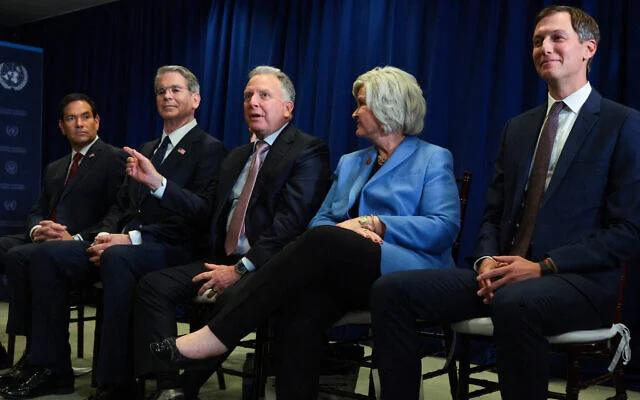
Qatari mediators continued shuttle diplomacy to revive negotiations between the United States and Iran, with a pair of regional officials confirming Trump’s statements and expecting a new round of indirect talks early on Monday.
Iran’s Foreign Minister Abbas Araghchi told NBC that although Trump rejected the Iranian proposal, Tehran still wants a diplomatic solution, saying, "we are still awaiting an official reply through the mediators."
Iran denies scheduled talks
Iran’s official news agency IRNA said the Iranian delegation in New York for the United Nations General Assembly meetings "does not intend to negotiate with the United States." IRNA also quoted a source close to the Iranian delegation as saying Iran’s views and positions were clearly and openly conveyed to the American side last Tuesday through a Qatari intermediary, and the delegation would return to Tehran on Tuesday.
U.S. envoys Steve Witkoff and Jared Kushner had held a new round of indirect negotiations last Tuesday with Iranian Foreign Minister Abbas Araghchi on the sidelines of the 81st UN General Assembly in New York. Abbas Araghchi told NBC that Iran still sought a diplomatic outcome despite Trump’s rejection of the proposal, dismissing the idea that U.S. midterm elections were affecting Tehran’s calculations by saying, "We are ready for negotiations," and adding, "we are still waiting for an official response through the mediators."

Hormuz, blockade, and stakes
Iran’s proposal tied reopening the Strait of Hormuz to U.S. steps including lifting the naval blockade of Iranian ports, and Trump rejected the proposal on Saturday after saying it was not "acceptable." Iran’s Foreign Minister Abbas Araghchi said the seven-point plan was "very reasonable," warning that rejecting it without a reason would be a mistake for Washington to bear.
Iran’s IRGC spokesman Colonel Hossein Mahdavi said in a message to IRNA that the Hormuz Strait is "not only closed, but is also a place to hunt American submarines" by IRGC Navy forces. Iran’s Supreme Leader Ayatollah Mojtaba Khamenei was quoted predicting that U.S. forces would soon be driven out of the Arabian Sea, saying they were unable to advance beyond the Arabian Sea "because of the painful blows they have received."