Technology and Science17 August, 20263 min read
Vietnam’s Agriculture Ministry Warns El Niño Drought, Saltwater Intrusion Through 2026–2027
This article is an automated aggregation of coverage from news outlets. Our editorials offer in-depth analysis curated by the NewsCord team.
El Niño is strong to very strong, risking drought and saltwater intrusion. Ministry issued guidance to provinces to curb drought and saltwater intrusion in 2026–2027.
5 outlets told this the same way.
BBC was read line by line by the Watchdog: 0.0. See the score →
El Niño drought planning
On August 18, Vietnam’s Ministry of Agriculture and Environment sent a document to the People’s Committees in provinces and cities in the central and southern eastern regions and the Mekong Delta about implementing solutions to prevent and combat drought, water scarcity, and saltwater intrusion caused by the El Niño phenomenon in 2026–2027. The ministry said assessments by specialized agencies under it found the El Niño phenomenon has shifted to a El Niño condition, expected to persist from September to November 2026 with a strength ranging from strong to very strong and a probability of 100% (about 93% reaching very strong). It told local authorities to develop and update plans and strategies based on a high-risk scenario where saltwater intrusion in the Mekong Delta is equivalent to the 2019–2020 season and drought and water shortages in other areas are equivalent to the 2014–2016 season.
The ministry also projected that the peak saltwater intrusion in the Mekong Delta will occur from January to April 2027, and that a high-risk scenario could affect 64,000 hectares of winter and spring rice, 80,000 hectares of rice and shrimp farming, and 19,000 hectares of fruit trees. To prepare early response measures, it asked provinces and cities to monitor information from the Meteorology and Hydrology Administration, the Water Resources and Construction Management, and scientific agencies under the ministry to update and implement appropriate solutions in line with local conditions.

Water volatility across regions
In the United Kingdom, the BBC framed drought as a process that does not end with a few days of rain, saying water must flow back into rivers, reservoirs, and the stores beneath the feet and that this can take months. Dr Katie Facer-Childs from the UK Centre for Ecology & Hydrology said, "This year we've gone through meteorological, soil moisture, and river flow drought," while the BBC added that there is hope because it said the country had not yet reached severe groundwater and reservoir drought. The BBC reported that hydrologists should know by February or March whether aquifers and human-made reservoirs have been replenished, but also warned that recovery from environmental impacts can take years.
In a separate discussion of water stress in Tunisia, France 24 interviewed Ouyed Al-Zahar, who said, "Therefore I affirm that the current crisis is temporary," while also describing that Tunisia has gone through about eight or nine years of drought. France 24 linked outages to energy, quoting that "the water sector consumes about 20% of energy," and said delivery does not depend solely on water in dams or reservoirs but also on pumping stations and the energy required to operate them.

International cooperation and stakes
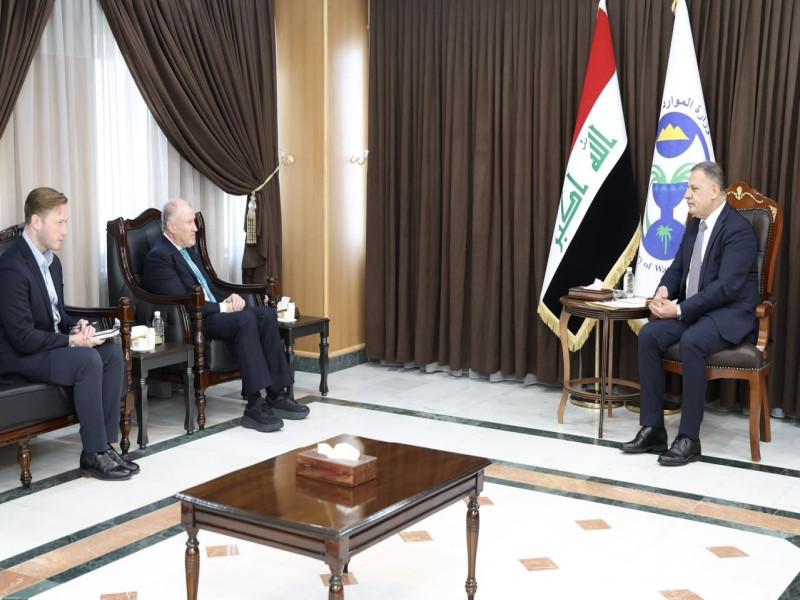
In Iraq, the water resources minister Mithna al-Temimi said his country intends to leverage global leading expertise in water resources management during a meeting with the Australian ambassador to Baghdad, Glen Miles, and his accompanying delegation. The ministry statement received by Kalima News said, “Water Resources Minister Mithna al-Temimi met with the Australian ambassador to Baghdad, Glen Miles,” to discuss the status of Iraq’s water resources and prospects for enhancing bilateral cooperation in the sector. It added that the meeting discussed mechanisms for activating joint cooperation by involving Australian companies in developing the water resources sector in line with the ministry’s modern orientations.
In Vietnam’s planning document, the ministry warned that local authorities should identify the risks and impacts of drought, water shortages, and saltwater intrusion on agricultural production, rural drinking water, forest fires, aquaculture, and livestock breeding, in a comprehensive and precise manner. It projected that for rural domestic water supplies, the high-risk scenario could put about 82,240 households at risk of water shortages, while an extremely high-risk scenario could reach 254,570 households, primarily concentrated in the Mekong Delta, the North-Central region, and the South-Central coast.